 Netwrck
Hopeful Science Fiction.
The Silver Spoon
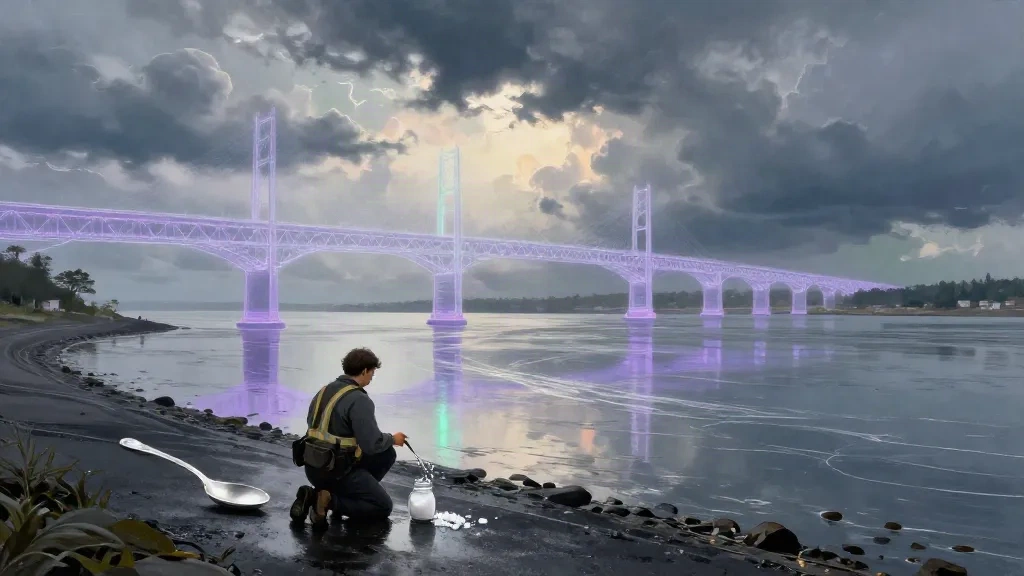
At low tide, Mara Venn walked the Bracken River with a silver spoon balanced on its surface. She never touched the water. The spoon trembled as the current changed, its bowl catching lavender light from the clouds and the green reflection of the town pharmacy sign.
That was her ritual: one minute each, recording the emotions carried between the river and the sea. Grief moved cold and quick. Hope traveled in bright eddies. Anger sank beneath the surface, dense as ballast. Mara marked each reading on a waterproof vellum strip, then sealed the strip in a salt jar and left it for the next tide.
For nine years, the ritual had belonged to her alone.
Now the council had paved the eastern bank with wet asphalt and closed the public stairs. They wanted gardens, drainage, and a respectable future. They did not want a woman kneeling at the flood line with a spoon.
“Give them one tide,” Mara said. “Let them see what the river is carrying.”
No one answered. Beyond the seawall, the tide withdrew, leaving a silver spoon shining on the mud.
The River Beneath Every Bridge
The river had been a surveyor’s landmark before Mara was born. Three generations ago, engineers discovered that each bridge left its record in the water: every vow spoken while crossing, every apology, every private terror disguised as confidence. The records surfaced as disturbances. A broken promise made a whirlpool. A first kiss shimmered like moonlit tin. A lie produced a smooth patch where the current forgot how to speak.
Mara’s maps had recorded only the present feelings. Her mentor had warned her never to map the old crossings too closely. “A river carries the dead weight of what people ask it to span,” he said.
On the evening of Mara’s petition, the river ignored the rule.
Beneath her feet, the asphalt shuddered. Silver outlines rose across the pavement: arches, trusses, suspension towers, plank bridges, narrow stone footbridges. They crossed the town and the bay, extending beyond the horizon as a luminous map. Every forgotten structure appeared at once.
The salt jar fell from Mara’s hand.
Its lid rolled open. Salt poured into the nearest crack, and the river answered with a choir of voices.
What the Current Held
“We held,” cried the drowned quarryman, “but the council let the seam flood.”
“I crossed to leave,” said a woman from the old ferry. “No one told them I wanted to stay.”
“Build it higher,” the river sang. “Higher.”
The bridges shook above the town. Their light drew every eye. Mara understood then that the river’s records were not only injuries. They were unfinished negotiations. Every span had promised to carry more than its materials could bear: grief, love, silence, generations, the future.
The council ordered the pumps started. The eastern bank vanished beneath black water. People climbed the roof of the pharmacy, where its green cross burned against the violet sky.
Mara seized the silver spoon and struck it against the seawall. One clear note rang out.
She pointed to the spoon, then to the map. A survey required witnesses, she called. Let every person name what their own bridges had carried. Let grief and joy enter the record beside the failures. The river could hold truth only when no voice was excluded.
The Public Measure
At first, no one moved. Then old Elian climbed onto the pharmacy roof and called out the name of the bridge he had crossed to leave the coast at seventeen. Children answered with bridges made from school desks and kitchen tables. Fishermen confessed to the quiet span between warning and home. Someone laughed when she described the narrow bridge over a flooded ditch. Someone wept.
People descended into the water.
Mara’s survey strip unrolled across the asphalt, carried by the current. The red entries faded. Orange and blue bloomed over them. By dawn, the river displayed a braided record: fear and courage, betrayal and repair, all moving toward the sea without erasing one another.
That evening, the tide brought back the salt jar, filled with clean water.
Mara opened it and smelled lavender instead of salt. The river had changed the offering.
On the seawall, someone carved her survey’s title beneath the first civic survey marker: What We Carry Together.
Behind it, the bridges glowed—now not a record of what had failed, but a promise that no crossing had to be borne alone.





