 Netwrck
Hopeful Science Fiction.
The Monastery Without Dawn
At the monastery of clockmakers, mornings arrived according to whichever bell had been oiled most recently.
Some mornings were bright and abrupt, smelling of rain on hot stone. Others were blue, low, and thick with the scent of wet asphalt. The monks had learned to work in all of them. They repaired timepieces without wind, clocks without faces, and small silver machines that measured the distance between two people refusing to speak.
There were no roads to the monastery then, only a saffron map folded into eighths. It showed a valley, a black river, and a house drawn where no house should stand. The map belonged to the previous generation of keepers, who had promised that if the country ever lost its common measure of time, the monks would keep one promise safe for them.
That promise had been made to Mara Venn.
She came to the monastery in winter, carrying a music box with a cracked lavender lid. Inside, instead of a melody, was a tiny room.
The room contained a chair, a window, and a woman sitting with her back turned.
“Do not open it again,” Mara told her son, Tomas, when he was young enough to forget her face but not her voice. “Wait until you have left every place that asks you to become someone else.”
Then she left the monastery and never returned.
Tomas became an actor because actors were permitted to enter anywhere and depart before suspicion settled. He played kings in summer theaters, ghosts in winter courtyards, and ordinary men in towns where nobody remembered the war. When his knees became stiff and his voice softened, he retired to the monastery.
He carried the folded map beneath his coat and the music box inside it.
The Unfinished House
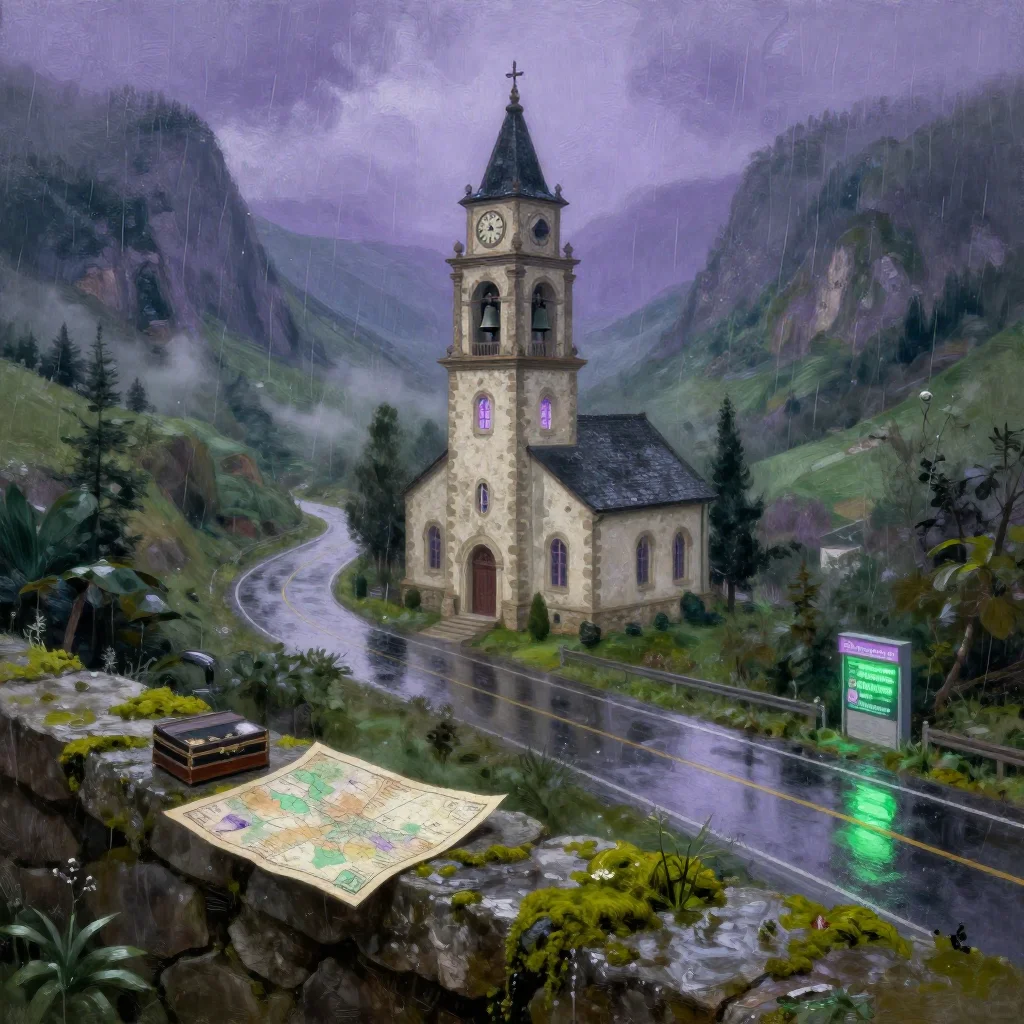
The house stood beyond the clockmakers' dormitory, where no wall appeared in the daylight. At night, it assembled itself from pale stone and windows lit the green of pharmacy signs.
“You have returned,” said Sister Anja.
“I made my mother wait forty years.”
“That is not the same as keeping a promise.”
She gave him a brass key with a loop of lavender ribbon. “She asked us to hold the key, not the promise. The distinction matters here.”
Tomas opened the door.
Inside was the room from the music box. The woman turned. Mara looked younger than memory and older than the day she left.
“You kept it,” she said.
“I kept the box.”
“That is not the same.”
He told her the truth: he had wanted to forget her. The theater gave him rooms where no one knew what he had lost, and he had mistaken those rooms for a life.
As he spoke, a crack opened in the plaster behind him. A new hallway appeared, smelling of rain and warm circuitry.
Anja whispered, “Do not finish.”
Tomas stopped. “What is the house?”
“A promise with no witness. It grows a room for every lie told inside. Some have furnished it badly. Some have furnished it beautifully. None have let it finish.”
He saw doors opening down the hallway. Behind one, an actor received applause. Behind another, a man erased his mother's name. Behind a third, a child promised never to be afraid.
Each room was a life he could have entered.
The Hour That Belonged to Her
“She made a promise to the country,” Anja said. “When the clocks began disagreeing, she offered the monastery one uninterrupted hour. The house was built around that hour. If it is completed, the promise is fulfilled. If it is opened, it becomes another lie.”
Tomas understood then why Mara had gone away. She had chosen not to return so that the hour would not be spent on her rescue.
He set the music box on the table. The tiny room enlarged until it matched the room around them. Mara stood in its window, lit by the green reflection of a distant pharmacy cross.
“I promised to come back before the first unanimous hour,” she said.
“The monastery made that possible.”
“No. You did.”
“I was afraid there would be no room for me.”
“There is always room for the person who returns.”
Tomas took the folded map from his coat. Its valley had become a corridor, its black river a seam of darkness beneath the floor. He unfolded it until the paper covered the table, and Anja placed the brass key at its center.
“The map shows where the hour is kept,” she said.
“And the music box?”
“It remembers the cost.”
Tomas turned the key. The house groaned. Every added room opened at once: the applauding theater, the nameless road, the child afraid of darkness. Their walls thinned. Their floors merged. Above them, the monastery bells rang without stopping.
He spoke the only truth that remained.
“I cannot give you back the years I lost. I can give you the years ahead.”
Mara smiled. “Then begin.”
A Different Kind of Morning
At dawn, the house had only one room.
Its walls were the color of lavender before rain. Outside, the valley shone with wet asphalt, and the pharmacy signs reflected green across the flooded road. The monks gathered there, carrying clocks of every size. None agreed on the hour.
Tomas set the music box between them. When its lid opened, the little room was empty except for a chair.
Mara was gone, but her promise remained: the country would never again measure time by a single clock. The monks would keep measuring it by visits, meals, and the distance between stars.
Tomas unfolded the map one final time and drew a small door on its blankest corner.
Not a way back.
A way for whoever came after him to enter.
Anja watched him sign the paper. “What will you call the new house?”
“The one that leaves space.”
Somewhere inside the walls, a floorboard settled, not like a lie, but like a room making room.





