 Netwrck
Hopeful Science Fiction.
Platform Nine at the End of the World
Silas Vale retired from the theatre on a Friday because actors eventually forget which lives are theirs. He kept the railway tickets, though, and his grandmother’s folded map, and the small music box whose tune had never returned to the same note after being wound.
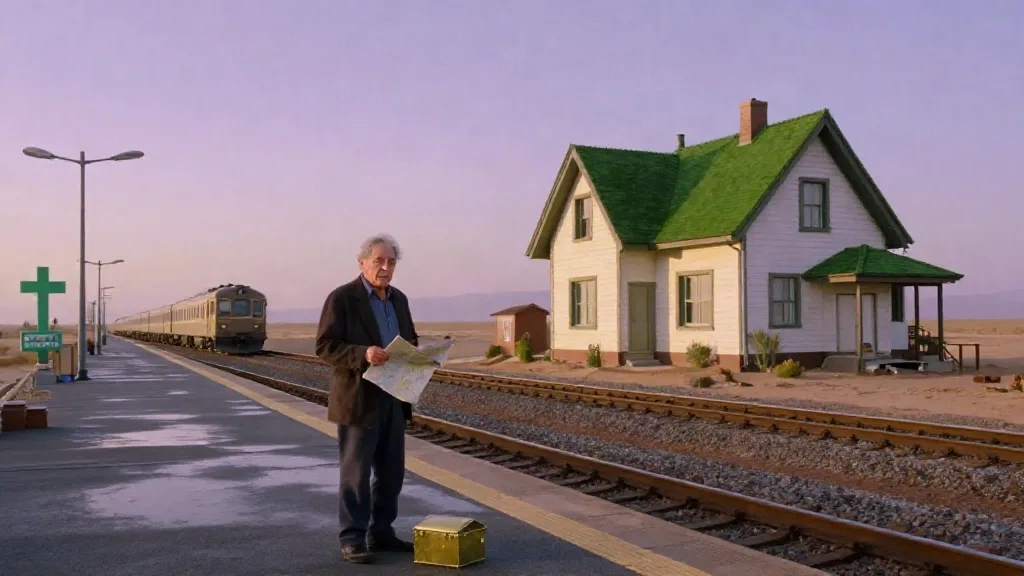
Now, beneath a lavender sky, he sat in the waiting room of Duneweather Junction. Wet asphalt shone outside, though rain had not fallen for eleven years. Across the tracks, the green cross of a distant pharmacy flickered on and off like a patient eye.
His grandmother Inez had promised her husband, Lucien, that she would wait at platform nine when his train returned. In 1968, Lucien boarded a train marked 2146 — Provisional. She waited until dawn. Then she made Silas promise that if the train ever came back, he would finish her watch.
At 18:12, a locomotive emerged from the heat haze without sound.
The Passenger Who Remembered Home
The conductor was a young woman with silver dust along her cuffs. She recognized the music box before Silas showed it to her. When its broken melody escaped, she looked toward the empty platform and said, “He missed his stop.”
Then Lucien stepped down carrying a leather suitcase. He was older than the photograph on Silas’s map, but only forty years older. The map was folded into quarters so often its creaves had become white as salt. Silas handed it to him.
“Inez waited,” Silas said.
Lucien looked at the pharmacy sign. His face crumbled, then steadied. “I know. I heard every lie she told while I was gone.”
From behind the station came the groan of old timber. A roof rose above the abandoned freight office, green tiles appearing one by one. Doors multiplied along its walls. The station timetable had once been a lie: the freight office had burned down before Silas was born.
The conductor shrugged. “You gave it somewhere to grow.”
Lucien opened the suitcase. It was full of folded houses, rooms fitted inside one another, and a century of letters Inez had supposedly sent him.
Rooms Made for Unsaid Things
They walked to the house because the taxi driver said it had appeared that morning behind the pharmacy. Its front door stood open. Inside, the walls were cool and the floors smelled of rain on warm stone.
“We must not enter,” Lucien said.
But the music box had begun moving.
Silas, an actor, understood the lure. A room waited to be performed. He had spent forty years becoming other people in exchange for applause. He stepped through the first door to re-enter the room he had left.
His childhood bedroom returned exactly: chipped blue cup, school photograph, the patch of carpet where he had hidden whenever he refused to leave. Beyond it stood a nursery with two beds. One held Lucien. The other held an old Inez, whispering to him that he had never boarded the train.
Each sentence thickened the walls. A dining room appeared. A music room overflowed with empty chairs.
“The house is building the life she lied about,” Lucien said.
Silas found Inez there, young and furious, carrying the same music box.
“I promised I would wait at the platform,” she said. “I did not promise I would stay unhappy.”
The Door She Left Open
He could re-enter only rooms he had truly left. He had left his grandmother the night he boarded a bus for the city, failing to wake her because her hand was cold and he believed she was asleep.
Silas stepped through the kitchen door. It opened into the hospital room where he had last spoken to her. Inez lay beneath the sheet, old but breathing. The folded map trembled in his hand.
For years he had told himself he kept her promise for Lucien. That was another lie the house could digest.
“You did not abandon her,” his grandmother said.
“I did.”
“You left. Those are different doors.”
He took her hand. The room narrowed until only the two of them remained, then opened into platform nine beneath the green pharmacy sign.
Lucien was waiting there. Inez walked toward him, younger than Silas remembered, carrying the music box. When she passed him, its tune found the missing final note.
The house settled around them, no longer enlarging. It was finished because no one inside needed to become a room.
Silas stayed until the century-aged train began departing. The conductor offered him a return carriage, but he handed back the ticket.
His promise remained kept, but not in the way he had feared. Some inheritances were not debts. They were doors left open for the people who loved us to find their way home.





