 Netwrck
Fairy-Tale Fiction.
The Note Beneath the Frost
Every bridge in Bellweather was a promise made visible: a plank crossing the river, a stone arch over the marsh, a footbridge built from two old words such as stay and return. Every river was a witness. The people believed the water remembered what had been sworn beneath its silver skin, and so they spoke carefully near the banks, even when speaking carefully meant saying less than they meant.
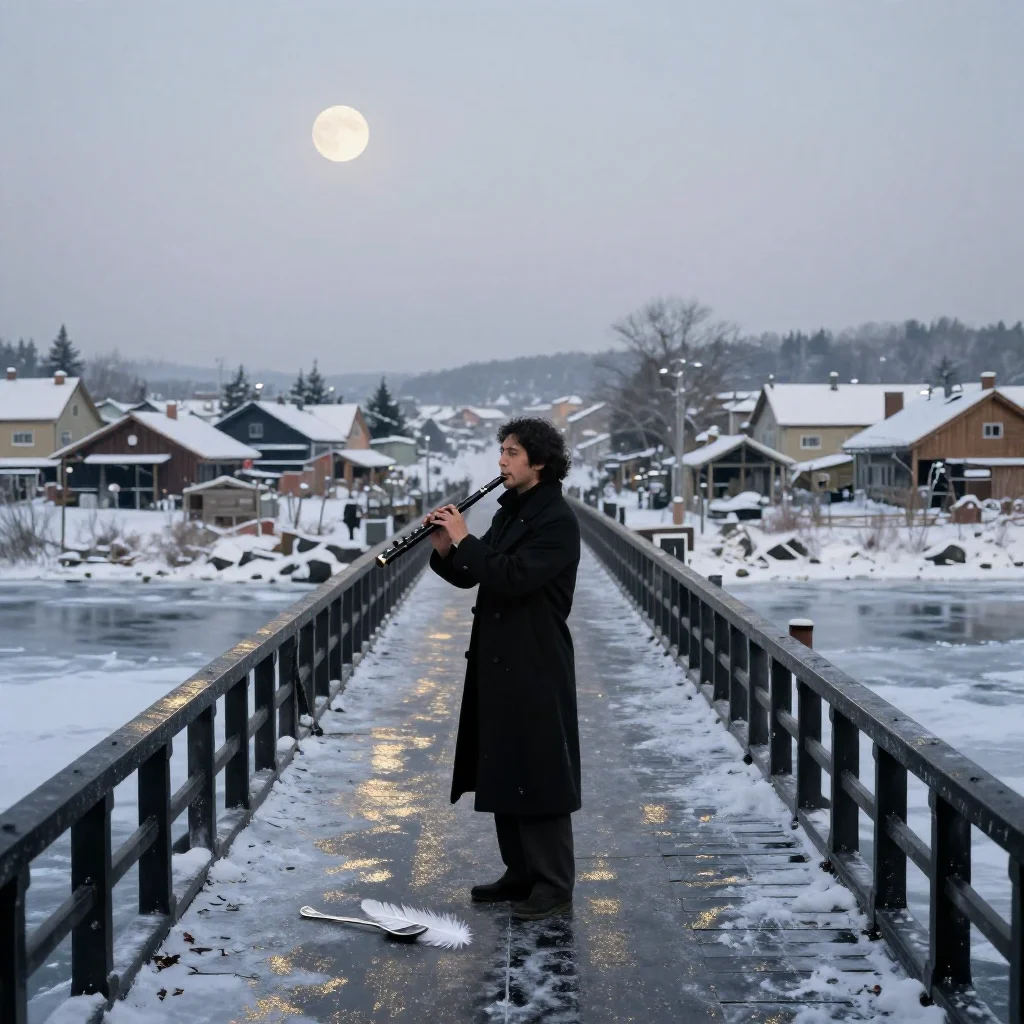
Elian played the black lacquer flute at the eastern bridge each morning. Whenever someone told the truth, the flute produced a note he had never heard before. A baker once admitted that his bread had burned; the note came bright and low, like a bell beneath water. A child confessed that she had frightened her brother on purpose; the note climbed upward, thin as winter grass. Elian copied every sound into a small book, but the book was not enough. A book could close. A bridge could fall. A song might be forgotten after the singer had become dust.
His desire was simple, and therefore dangerous: he wanted to build something that could survive the storyteller.
He imagined a bridge made of truth-notes, each one fitted into the next so firmly that no singer or season could pull it apart. He began gathering them in a copper case beside the river. In its lining lay a white feather, soft as falling ash, and a silver spoon, bent from the heat of the baker's first accidental confession.
When the River Stopped Moving
Winter arrived before the leaves had finished changing. It arrived with no wind, no cloud, and no warning beyond a thin crackle of ice appearing along the river stones. By nightfall, the water had stopped moving. By morning, the bridge was sealed in black lacquer. Frost climbed the railings in intricate gold-dust patterns, and the moon hung low, cold enough to burn.
At first the townspeople called it a hard winter. Then the children grew taller while the same snow remained in the same places. Their grandchildren learned to skate across the frozen river, but the river did not thaw for them. One generation passed beneath the unwavering moon. Songs changed, yet the first melody Elian had ever played remained frozen in the air above the eastern bridge.
With each truth, the winter answered. Whenever a neighbor admitted envy, a crack opened in the black ice. Whenever someone lied, the ice drew closer. Elian heard the notes now without playing: from locked houses, from beds, from the unspoken truths that gathered like sleet beneath every roof. The melody of Bellweather was becoming a single unendable chord.
He climbed the frozen river and found its witness. Beneath the surface lay the old promise on which the first bridge had been built, preserved in a bubble of clear water: No bridge shall be taken by force. The promise had been broken once, generations ago, when soldiers burned the eastern span to stop an invasion. The river had waited all this time for the bridge to be rebuilt freely.
The Bridge That Remembered Him
Elian tried to make the truth-notes into planks. He cut them from the air with a knife, but they dissolved before they touched wood. He bound them with the white feather, believing softness might prevent them from breaking, but they vanished. He struck the silver spoon against the ice, and one enormous note rang through the town. Every truth spoken that day returned to him, not as sound, but as weight.
He understood then that a promise was not the sum of its words. It was the choice made after the words. Winter had lasted a generation because Bellweather had stopped choosing to keep rebuilding. The town had preserved its promises in stories, but stories could outlive the people who kept them.
So Elian asked the townspeople to meet him at the river.
They came carrying their griefs: the soldier who had burned the bridge, the mason who had refused to repair it, the child who had inherited the story and mistook it for a reason not to cross. Each spoke plainly. Some confessed cowardice. Some confessed pride. Some confessed that they had benefited from the broken span and pretended not to know why they prospered.
Their notes rose without sound. Elian laid them inside the black lacquer bridge, and the lacquer split into warm seams of gold. The white feather became the first joint. The silver spoon became the last, its bowl holding a small moon-shaped piece of the frozen river. The bridge did not build upward. It built downward, fastening itself to the old promise beneath the water.
The Promise Afterward
At dawn, the ice cracked from the eastern bank to the western. The river moved beneath the new bridge, carrying away one winter's worth of silence. The moon withdrew without melting, leaving the sky washed in pale gold.
Elian played no flute that day. The bridge sang by itself, a soft chord assembled from footsteps, arguments, apologies, and children singing badly as they crossed. It sounded different every morning, and no one could reproduce it exactly. That was how Elian knew it would last. It had survived him because it had not belonged to him alone.
Years later, when a young storyteller claimed that he knew the whole history of the eastern bridge, Elian corrected one detail. The bridge had not been built from the truth. It had been built from the courage to hear it.
The storyteller changed the story, as storytellers do. The bridge remained.
At night, when the moon returned to the cold river, the white feather trembled in the wind and the silver spoon gave a single clear note. Somewhere beneath the water, the old witness kept its promise. And somewhere on the bridge, someone always told the truth, whether or not anyone was listening.





