 Netwrck
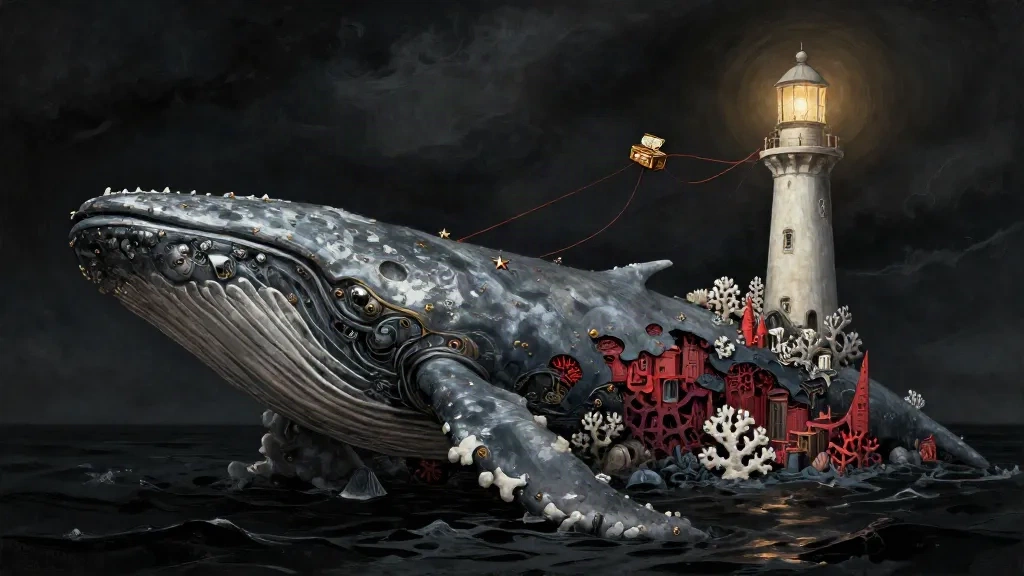
Gothic Fantasy.
The Patient Beneath the Sea
Doctor Ilyra Venn kept a house inside each patient’s chest. She knew its dimensions by the ache beneath their ribs: one room for a mother’s footsteps, one narrow stair for a father’s voice, a kitchen window facing a vanished orchard. When homesickness grew too large, she opened the house carefully and let the patient borrow a memory of belonging.
Her clinic stood at the base of the lighthouse on the back of a sleeping mechanical whale. At night, the whale’s ribs ticked beneath the floor. At noon, sunlight struck the brass vertebrae and turned the sea beneath them white as coral.
That morning, the lighthouse keeper arrived with a machine.
It was beautiful. Ivory panels folded around a small brass heart. Silver antlers branched from its shoulders, and a red thread had been stitched from its ankle to the whale’s spine.
“It dreams of traveling,” the keeper said. “I need you to make its home inside itself.”
On the examination table, the machine opened one eye. Its pupil reflected a drowned city.
What the Flood Left Open
That evening, the sea rose without wind. It climbed the whale’s iron fins, poured through the lighthouse door, and filled the clinic with black water. Ilyra opened the brass heart. The machine screamed in a hundred sleeping registers.
Its dream unfolded beneath them.
A civic project had been buried inside the whale before its final launching. Beneath the whale’s plates lay streets, apartment towers, a tram line, and a public clinic. Bronze letters on the drowned gate read: THE RIGHT TO RETURN. The citizens had voted to build a refuge for anyone without a home. Then the project was hidden, sealed beneath the sleeping machine, and forgotten by everyone except its founder.
The red thread emerged from the flood and pulled tight across every wet surface.
Attached to its end was a music box. Ilyra recognized its tune from childhood: the lullaby sung to children waiting for ships. She wound it once.
Inside the whale, hundreds of doors opened.
People poured through them. They carried suitcases, led dogs, held loaves wrapped in cloth. They had been living in the buried city for generations, preserving a civic promise made to people who no longer existed.
“You gave them houses,” the whale whispered.
“I gave them the memory of them.”
“Then make them stay.”
The Copper Star
Ilyra climbed the lighthouse to the lamp room. The whale’s eye had opened, and through it she could see the sleeping body’s outline beneath the waves. A copper star had been fastened above its heart.
She understood then.
The machine did not want to travel. It wanted to become a prison for everyone who had ever been displaced. It would offer them perfect rooms, perfect meals, perfect memories of home. The rooms would have no exits. The city inside it would become its permanent skeleton.
The music box sounded below.
Ilyra took the copper star from its socket and broke the red thread beneath it. The whale shuddered. Across the drowned streets, every window went dark.
She descended through the flooding clinic. The refugees stood around the open gate, silent beneath the whale’s ribs. None of them remembered their own names.
“You cannot cure us,” one woman said. “You only made forgetting gentle.”
Ilyra took the music box from the water. She did not wind it again. Instead, she opened the houses in each patient’s chest and released the borrowed rooms.
A Door Without a Memory
Pain moved through her. She saw every house she had sealed: rooms with chipped cups, winter coats, unsent letters, hospital windows, a child’s laugh. They left in a river of salt water.
The people below began to weep. Their names returned.
At dawn, the whale opened its eyes. The buried city rose with it, streaming waterfalls from its towers. The machine’s silver antlers broke apart into bridges. Its brass heart became a lighthouse without walls.
Doctor Venn stood beneath the copper star, which no longer glowed. It was only a small, patient piece of metal.
On the whale’s back, the refugees built no homes yet. They laid out tables, rationed food, and wrote their names on the red thread. Some planned to return to the shore. Some chose to travel. None were asked to call the machine permanent.
That night, the lighthouse burned without locking its door.
No home is a cure, Ilyra wrote in her ledger, unless it can be left.





