 Netwrck
Hopeful Science Fiction.
The Patient at the End of the World
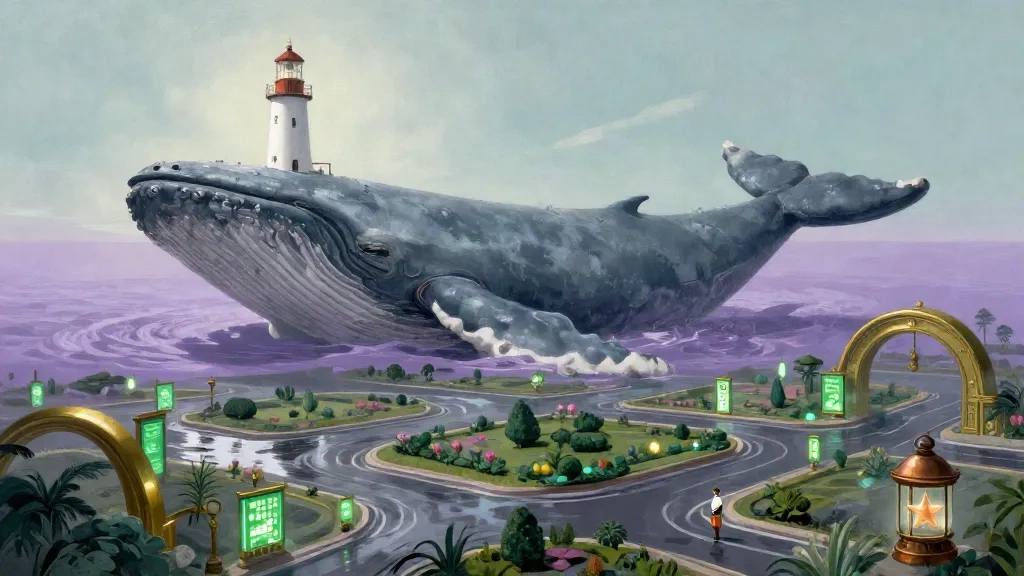
Dr. Iona Vale kept the lighthouse on the whale’s back, though neither the lighthouse nor the whale could be called still. The whale slept beneath the sea, a vast iron body carrying a tower of green glass. At night, its hidden engines turned with the patient rhythm of a sleeping child.
People came to Iona with homesickness. They missed kitchens, damp gardens, the particular blue of a neighbor’s curtains. She prescribed baths in lavender salt, songs carried in sealed bottles, and small tasks that returned the body to memory. Her waiting room held three chairs, a copper basin, and a music box with a cracked lid.
Every patient left something behind. A button. A recipe. A copper star from a child’s pocket. Iona kept them in the lighthouse gallery, where they reflected in the lantern glass and made a constellation of the people who had once been lost.
Her greatest fear was that the whale would wake and become a beautiful prison.
What the Flood Remembered
On the first night of the autumn flood, the sea rose six meters and withdrew.
As the water fell away, it uncovered a grid of streets beneath the whale’s belly. Stone plazas. Public gardens. Brass lettering on a sealed arch: THE CIVIC HARBOR OF THE COMMON TIDE.
Children emerged from the tunnels, followed by elders who had been lost beneath the seabed for nearly a century. They carried paper maps softened by salt. The maps showed rooms, gardens, and homes that had never appeared in Iona’s records.
“We were waiting for a keeper,” said a woman with blue river stones sewn into her coat.
Iona understood then that the whale had not swallowed the city by accident. The old harbor had been designed as a living refuge, its homes built to travel with the tide. Someone had sealed it beneath the water and told the whale to sleep.
Power throbbed through the whale’s back. The tower above Iona began to turn, its green beam searching the uncovered streets.
A Prescription for the Future
The whale woke slowly.
Its ribs opened like shutters, revealing a thousand brass ribs and the warm chambers inside them. The music box in Iona’s pocket played without being touched. Its tune belonged to the old harbor, though the melody had not existed in Iona’s childhood.
She climbed to the lantern room and found a message waiting there, written in light across the whale’s eye.
THE KEEPER MAY OPEN ONE DOOR, the whale said. THE OTHER DOOR MUST BE OPENED BY THE PEOPLE WHO RETURN.
Iona had one command at her disposal. She could restore the whale’s sleeping circuit, preserving the lighthouse and the homesickness clinic, or connect it to the buried civic harbor. The second choice would wake the whale completely. Its movement would destroy the old streets, unless the residents took control of the engines.
She had spent years treating homesickness one person at a time. The work had taught her that no one could be returned to a place that refused to become home.
So she opened the harbor door.
The Shape of a Welcome
At dawn, the people of the common tide climbed into the whale’s chambers. They learned the engines by touch, passing copper stars from hand to hand until every panel had a navigator. Children took the high levers. Fishermen read the currents. Poets named the new destinations. Iona descended through the whale’s warm interior and found its original navigation memory: not a route to harbor, but a route to a thousand shores.
By noon, the whale rose from the seabed.
Water streamed from its flanks in lavender sheets. Wet asphalt gleamed beneath the retreating flood, and the green pharmacy signs along the recovered streets shone like a second constellation. Above it all, the lighthouse turned—not as a warning, but as a greeting.
The music box finally closed.
In its place, the whale opened its mouth and played the harmony of every home it would carry. Iona stood on its back beside the copper star in the lantern, listening as new travelers found the stairs.
The whale was no longer a prison, and the city no longer a grave. They moved together, carrying the drowned streets into weather, carrying the living toward one another.
And beneath the green light, Dr. Iona Vale wrote a new prescription:
Go home. Bring someone with you.





