 Netwrck
Hopeful Science Fiction.
Tomorrow’s Rejects
At dawn, Iona unlocked the theatre and found another ending in the dust.
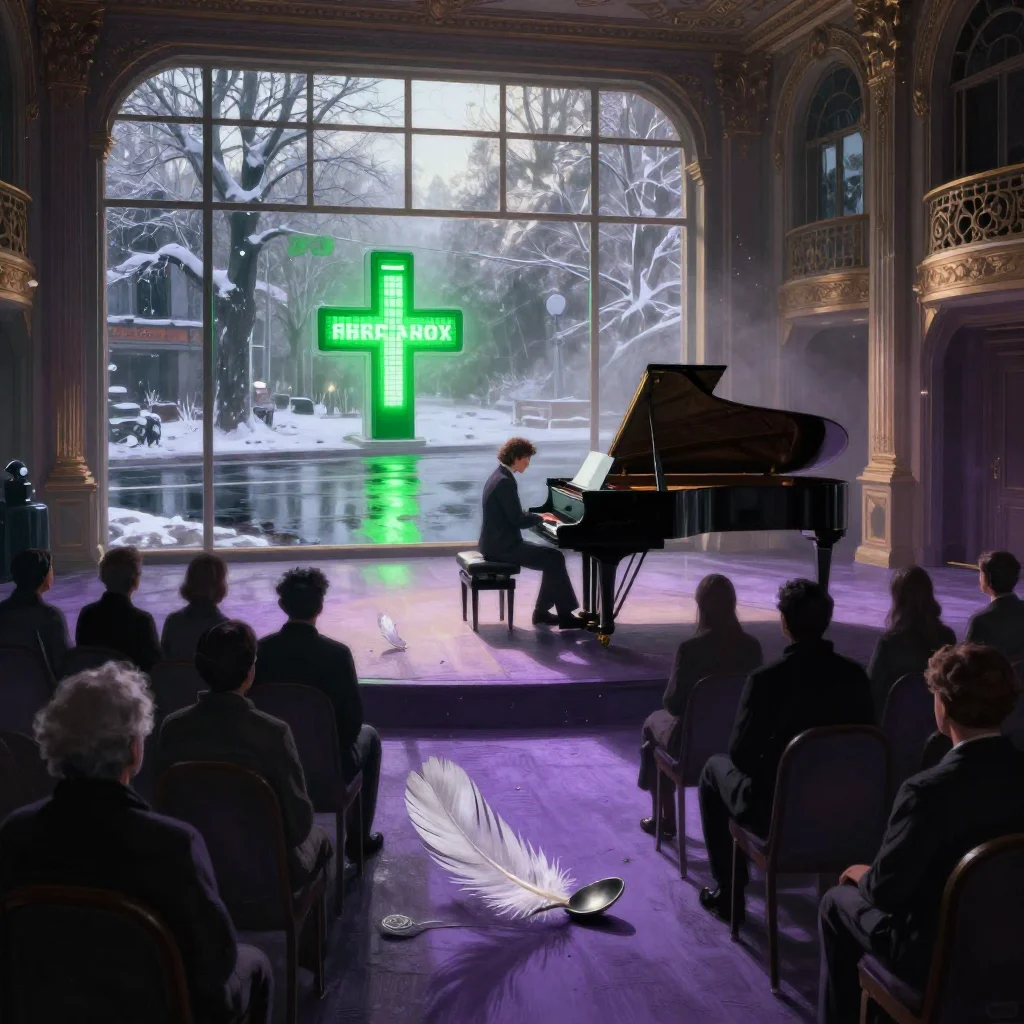
It lay beneath the third row: a plaster sun cracked down its middle, a paper city under snow, a child’s silver spoon still warm beside a white feather. The theatre performed tomorrow’s discarded endings. Every night its audience brought in futures that had failed, and every morning the ushers swept them into the basement before the real day began.
Iona tuned the house piano while the others arranged the debris. Years of practice had taught me to hear faults in the machinery, bad keys, loose pedals, strings breathing badly in the damp. Then Lio, sweeping up the cracked sun, whispered, “I wanted to be remembered.”
A note sounded inside my chest, clear and new.
It was not from the piano. It rose whenever a person spoke truly, different for each confession. Lio’s note had the trembling edge of candlelight.
“You heard that?” he asked.
“Tell me another true thing.”
His eyes met mine. “I’m afraid winter will take everything we build.”
The second note was low, but beneath it I heard a ringing gold.
The Winter Under the Stage
By midsummer, the city had forgotten June.
Rain became sleet by noon. Gardens kept their leaves, but the apples would not ripen. Generations learned winter as the only reliable season. They hurried between warm buildings, trading green-lit pharmacy signs for hot soup, counting heating allowances by a white feather that never shed and a silver spoon that always returned, polished, to the communal kitchens.
The theatre basement was warmer than the streets. Behind the rejected suns and drowned cities, we found the source of the weather: an old stagehand named Orra, wrapped in a winter coat sewn from curtain fabric.
She said the first winter had lasted one night. Each retelling made it heavier. Fear taught it to spread. Every time someone said, “It will never end,” winter gained another inch of snow.
I had spent years building things meant to outlast me. I wanted to build something that could survive the storyteller. Not a machine, not a building, not even a song. Something that could keep the truth after everyone afraid of it had gone.
So I asked the theatre to perform the winter’s first night.
A Score No One Could Edit
We had one rehearsal.
Actress Mave, baker Tun, old ferryman Sek, and eighty others stood beneath the ghost light. Orra conducted. Iona played every truth they spoke, weaving the notes into a melody that opened outward instead of staying in the room.
Some were small. “I miss the river.” “I was proud of my brother’s work.” Some were costly. “I wasted the money.” “I wanted to leave.”
Winter listened. The windows whitened. Frost reached across the stage, silencing the violins one by one.
Then Lio said, “I love this city.”
The note struck brighter than the others.
We followed it. Tun admitted the bread she hoarded. Sek confessed he had abandoned a boat. Mave said what the winter had hidden from her: the city was not empty. Every pharmacy sign, every warm kitchen, every theatre built to hold difficult stories proved it.
Our song made a circle.
Winter could not become an ending if someone remained ready to continue it.
The Morning After the Last Tale
At sunrise, Orra removed her coat.
Under it she was young, startlingly young, and no older than the first night of snow. The spell had given her a generation of life so the story could have a witness. With her last breath, she whispered, “I taught it to end.”
Her note lasted until the theatre doors opened.
Outside, the sleet became rain. The green pharmacy crosses glowed through it, reflected in wet asphalt. On the pavement lay the white feather and the silver spoon, no longer enchanted, only small and real.
We buried Orra beside the theatre. Iona placed the spoon in her hands and the feather in her pocket.
Then we reopened the doors and played. New endings arrived, imperfect and unwanted. We did not throw them away. We gave each one a place in the morning.
What we built together was not a monument to any storyteller. It was a promise that no voice, even the coldest, would be the last one heard.





