 Netwrck
Mythic Fiction.
The Recipe of the Empty Table
Mara Venn inherited the Blue Kettle with its cracked blue spoon and a recipe written in her grandmother’s cramped hand: Cook for those who cannot come, and they will come. The town of Bellwether called it a family joke. Its bridges were promises, its rivers witnesses, and its people practical enough to refuse any miracle that required extra washing.
Yet every seventh night, Mara set six plates beneath the kitchen window. She made barley soup with river mint, roast squash, and the black pepper saved for funerals. As steam rose, the chairs filled with people who had once eaten at her table.
Her father appeared first, young and silent, before the bridge collapse that had made his body impossible to find. Then came Aunt Cece, who had left Bellwether during the drought. Last was Iven, the ferryman, carrying the same black umbrella he had used to shelter her grandmother from a rain that fell upward.
They never touched the food. They only watched Mara eat.
The Legend Her Mother Refused
When Mara was a child, her mother claimed the family had once crossed the river without paying the toll. The old gate beneath the dry riverbed had opened for her grandmother, or so the story went, because a cook fed the ferryman and he forgot his name.
Mara wanted to prove it. She wanted the legend to be a fact, a key left by the dead for the living, not a comfort invented by frightened women.
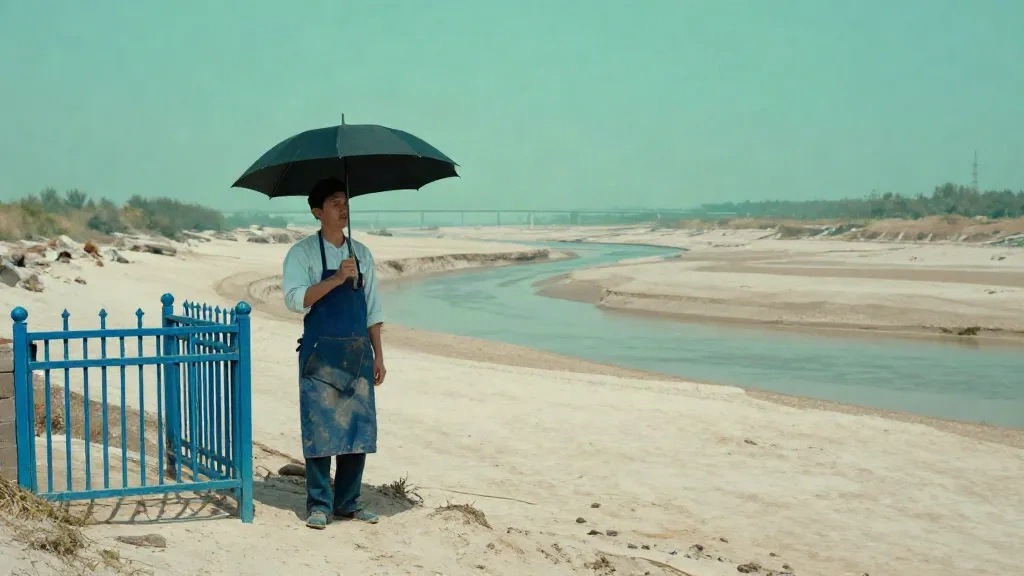
So she asked Iven where the gate was. He pointed beneath the willows, where the river had withdrawn centuries ago. “The river remembers,” he said. “The dry bed only waits.”
They walked together at dawn. Sea-glass green sunlight trembled over the stones. Sand filled every crack. In the middle of the bed stood a cobalt iron gate, small as a kitchen door, with a black umbrella resting against it.
The Price of Opening
The umbrella was warm beneath Mara’s hand. When she lifted it, the gate spoke in the voice of her grandmother.
Bring the one meal you cannot forget.
Mara understood too late that a recipe did not summon the dead. It summoned appetite, and appetite was the oldest creditor in the world. She had already fed the dead seven times. One plate remained, and it was reserved for the person she loved most.
Iven stepped forward. “Give me the memory of your father crossing the bridge. I will pay for the gate.”
“No.”
He tilted the umbrella. Rain began inside its black canopy, falling upward in silver threads. “The cost cannot be paid twice,” he said. “If I pay it, you lose the proof. If you pay it, the town loses the bridge where your father vanished.”
Mara looked at the gate. Behind it, she could hear a river running with remembered voices. Somewhere above them, the town’s bells rang for a wedding no one had announced.
What the River Witnessed
She set the black umbrella over Iven and stepped through the gate before he could stop her.
The price was her last taste of her mother’s cooking: the burnt crust, the honeyed tea, the spoon tapping twice against the bowl. Mara surrendered it willingly. The memory went out of her like smoke through a cracked door.
The gate opened.
On the other side stood the bridge her father had crossed. Beneath it, the river shone in all the colors of her childhood. A small boat waited at the bank, empty but for a blue spoon.
Mara took it. The river witnessed her choice. The town’s bridges held. Her father remained lost, but his promise had been kept.
At sunset, Mara returned to the dry riverbed with the black umbrella under her arm. She could no longer remember her mother’s kitchen, but she remembered the recipe.
That night she cooked for the living. No ghosts came. The soup tasted faintly of salt.
Outside, the river began to run.





