 Netwrck
Fairy-Tale Fiction.
The Spoon at Low Water
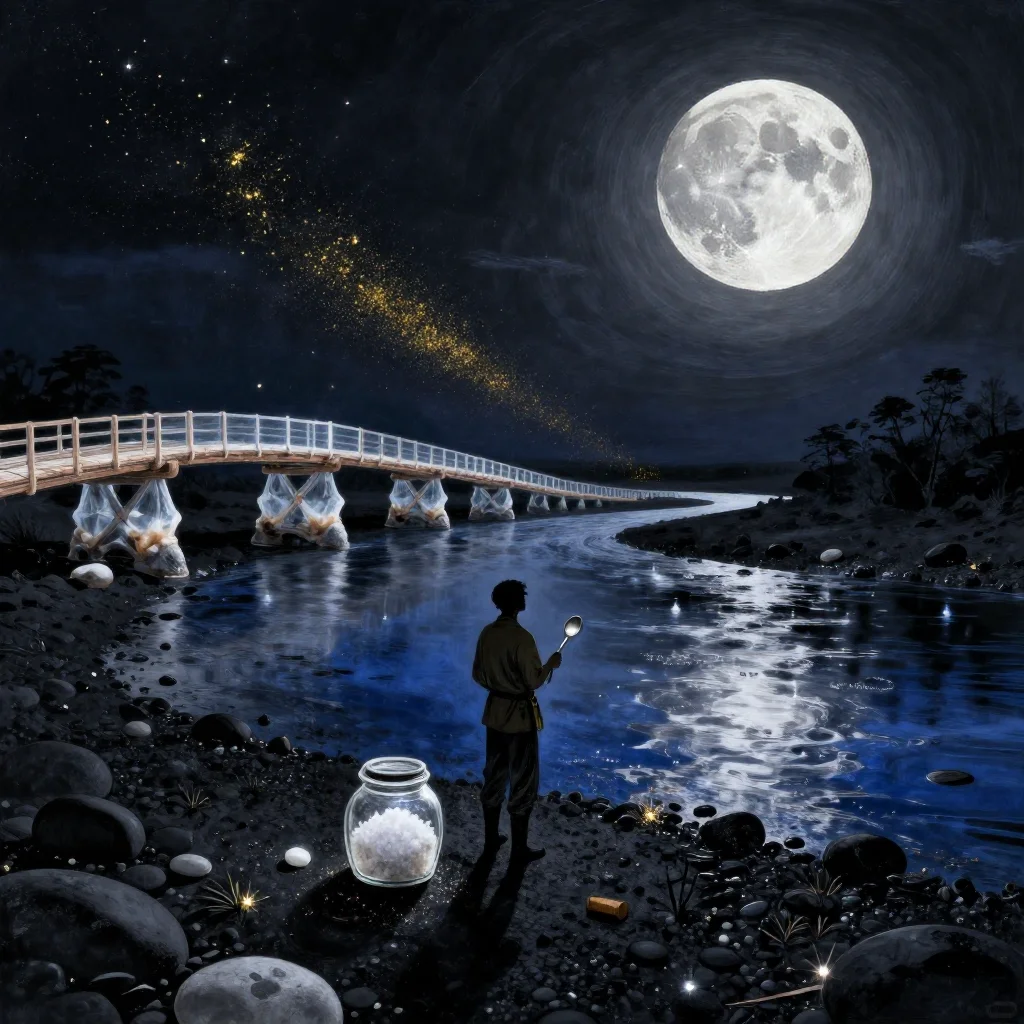
At the hour the moon turned pale, Ilma Venn walked onto the mud flats with a silver spoon in her coat pocket and a jar of salt under her arm.
Every tide brought back one forgotten object. Not treasure, exactly. A glove, a cracked spectacle, a key soft as bread. The town woke each morning to find the sea had been rummaging through its memory.
Ilma was a river surveyor. She mapped emotions on a moving surface, measuring the little swells that gathered beneath the ferry pier and the currents that turned when someone on shore spoke a lie. Her charts were private. She kept them in a black lacquer box beneath her bed, each page marked with the day, the weather, and the feeling’s weight.
Her ritual was simple: place a silver spoon at the tide line, fill the salt jar with one pinch for every person who had crossed the river without apology, then draw the water’s shape in charcoal.
That morning the spoon was already waiting for her.
What the River Kept
It lay between two black stones, shining with no moon. When Ilma touched it, the river rose beneath the flats.
She saw a bridge of pale wood spanning a narrow gorge. A woman crossed carrying a loaf of bread. Behind her, a man shouted a name that dissolved before the sound reached the far bank. The bridge sank, but its outline remained, pressed into the current.
Then another bridge appeared. A stone bridge over a flooded market. A black bridge made of salt cakes. A bridge built from the ribs of a whale. Each one carried voices, footsteps, declarations, betrayals, and the small silences of people who had loved one another badly.
The river was recording every bridge ever built.
Ilma stepped back. The silver spoon trembled against her palm. Beside her, the salt jar grew heavier, as if an unseen hand had filled it to the brim.
She had always known the water remembered feelings. She had not known it remembered structures: the places where people agreed to cross together, and the places where that agreement failed.
The Reading of the Banks
The council wanted the river tamed.
By noon, cartloads of black lacquer and gold dust had arrived from the mainland. Engineers promised to build a great span over the estuary, strong enough to stop the water from carrying its memories. They placed silver spoons along the proposed route. They set salt jars at every pier. They declared the river’s secrets a hazard to navigation.
That evening, Ilma climbed into the lantern tower and opened her private charts.
She could draw the shapes she had felt alone: homesickness moving downstream like a shoal of fish, anger branching around submerged stones, grief returning always to the same bend. The charts were accurate, beautiful, and useless to anyone who had not felt them.
She lowered the tower’s brass horn to the river.
“Listen,” she said.
Her voice traveled over the roofs. People stepped into the streets. Fishermen lifted their heads from the harbor. The salt jars rattled in the wind.
Then the river spoke through the horn, carrying every bridge it remembered.
When the Tide Returned Them
The water rose black and silver beneath the moon. Gold dust lifted from the shore and hung in the air. For a moment, each bridge appeared across the estuary: the wood bridge, the whale bridge, the bridge of salt cakes, the bridge no one living had crossed.
Then the tide withdrew.
On the mud lay the silver spoon, empty. Beside it rested a salt jar, uncorked and white as bone.
Ilma descended from the tower. The town waited. No one asked her to explain what she had heard. They simply placed small objects in her hands: a child’s bracelet, a soldier’s button, a widow’s comb.
She set them on the black lacquer table beneath the lantern market and began to map their journeys in public. The river shifted beneath the board. Each feeling found its line.
At dawn, the sea returned a silver spoon and a salt jar. The spoon was warm. The jar was full.
Ilma smiled only once. Then she opened the door for the first person waiting outside.





