 Netwrck
Folk Horror.
The Book No One Kept
Mara Venn had been librarian of Bellwether for eleven years, and in that time the sea had given back exactly forty-seven things.
A brass button in the hourglass of the drowned hotel. A child’s red mitten, stiff as coral. A door that opened onto a kitchen where no one had cooked for a century. The town council called them salvage. The ferryman called them weather. Everyone agreed not to ask who had been missing them.
Mara kept the returned objects in the basement beneath the library, where the stones sweated and the walls held the cold of deep water. Each had a label in her careful hand. Each had a gap on the shelf where it belonged.
On the morning after the twenty-seventh storm, she found the book.
It lay on the circulation desk, wrapped in sailcloth green with age. No one had entered during the night. The brass bell above the door had not rung. The book was titled A House for Those Returned, and beneath the title someone had written: Borrow only if you intend to let them in.
Mara opened it.
The pages were blank except for one line of blue ink, fresh enough to wet her thumb.
There is room in the west room.
She should have reported it. Instead she carried it beneath the counter and waited for the first person to ask.
Borrowers
That person came on a Tuesday, when the fog erased the horizon and the fishing boats came home with empty nets.
Elias Rook, the town’s oldest ferryman, stood across the desk with salt in his beard. He did not look at the book. He looked behind her, into the west room, where the reading tables were covered and the windows had been painted shut.
“You have a room that isn’t on the plan,” he said.
“No,” Mara replied.
He nodded. “Good.”
She lent him the book for seven days. He returned it before dawn, wet through, with a page filled in handwriting that leaned backward.
Elias Rook, returned. Does not sleep. Does not leave.
The next borrower was Nella Vane, who sold milk in the market and had buried a daughter beneath the chapel wall. She returned the book with an empty teacup balanced inside its cover.
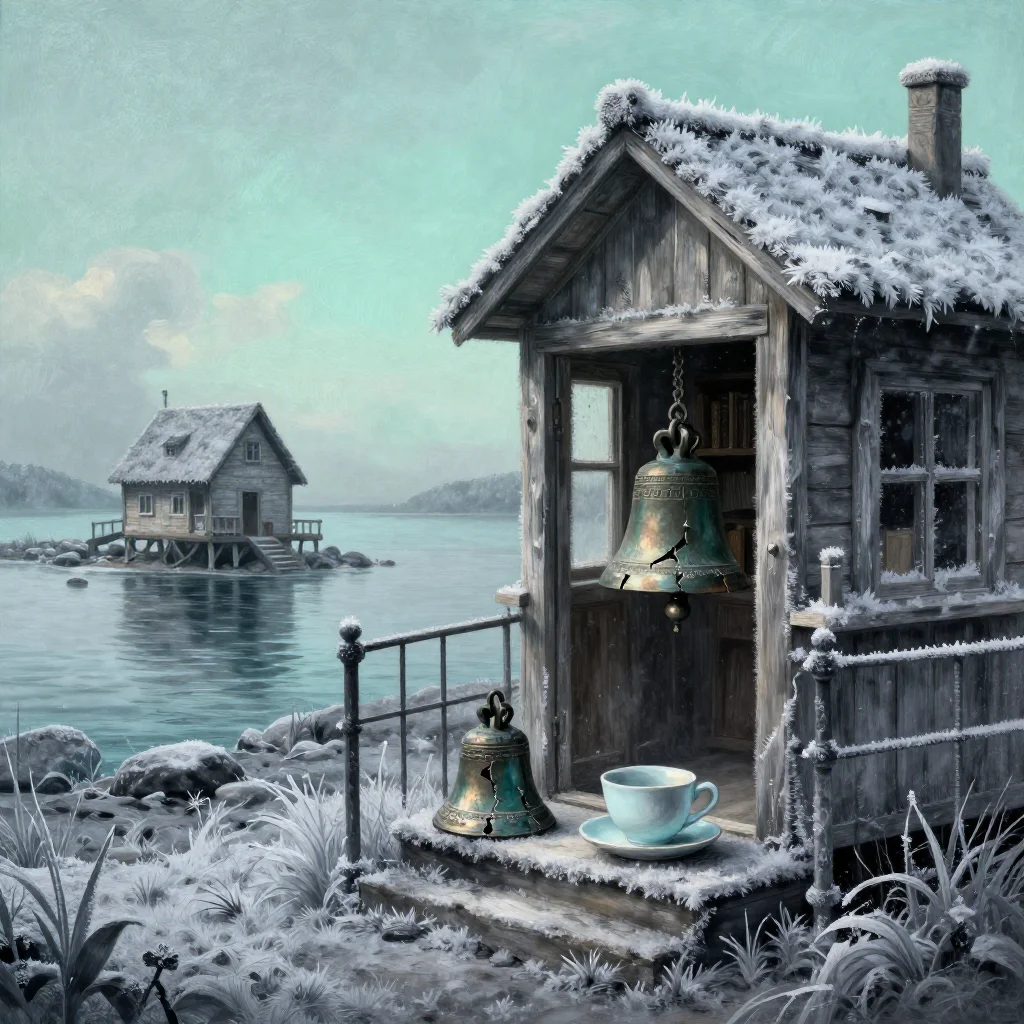
The cup was pale blue, chipped at the lip, and warm to the touch.
“She says she doesn’t want the west room,” Nella whispered. “She says she wants a door.”
Mara looked at the cup. It contained no tea, no water, only a thin darkness moving at the bottom.
“Then we’ll find her a door,” she said.
By winter, the library had nine borrowers. A drowned man who remembered a road that no longer existed. A woman who had been buried twice. A dog with six shadows. A child who carried the smell of iron beneath the salt. They returned the book, and each page named something the town had agreed not to see.
Mara began sleeping in the west room.
She had wanted a home that accepted impossible residents. Now she had one, but it had no windows. Every night, the walls breathed with the tide.
The Child at the Waterline
On the first clear day of February, a girl named Tilde came into the library carrying the cracked bell.
It was blackened bronze, split down one side, and no larger than a apple. Tilde was seven, barefoot, and dressed in a coat too large for her.
“You lost this,” she said, placing it on the desk.
Mara had not seen the bell leave the town. She had heard it once, years ago, ringing from beneath the pier at the hour when the sea withdrew farther than it ever should.
“Where did you find it?”
“Where the thing is hiding.”
Mara’s fingers closed around the bell. A vibration moved through her wrist, iron and ancient.
“What thing?”
Tilde pointed through the painted window. “The one everybody agreed to overlook.”
Mara looked. The library had always seemed ordinary beyond its walls. Salt-bright afternoon, gulls, roofs, the black line of the sea. But Tilde saw something Mara did not.
Between the pier and the horizon stood a house. It was small, grey, and half-submerged. Frost silvered its roof. Iron rails ran down its front steps. In one upstairs window burned a soft cyan light, the color of a dawn that had never happened.
Mara could see it too.
Then it was gone.
Tilde tilted her head. “It’s waiting for the bell to ring.”
“Why?”
“Because you are.”
That night, the returned objects began moving. The drowned door opened in the basement. The mitten climbed the stairs. The teacup walked across the floor without spilling darkness. In the west room, someone drew a chair beside the blank wall.
Mara brought the cracked bell to the shore.
The tide was out. The mud shone with frost, and the sea waited beyond the waterline. Tilde sat beside her, silent for once.
“If I ring it,” Mara said, “what comes back?”
“Everything you forgot.”
“And if I don’t?”
Tilde looked toward the invisible house. “Then you have to keep being the one who sees.”
A Home Without a Door
Mara lifted the bell.
She did not strike it. She set it beneath the lowest step, where the sand met the sea, and waited for the water to return.
The tide came in silently. It touched the bell, then covered it. The cracked metal filled with light.
From the grey house came a sound like a book opening in a room full of sleeping people.
Every returned thing began to move toward the shore.
They did not rise. They did not drag themselves across the mud. They slid, rolled, and hopped as if drawn by a current beneath the world. The drowned door reached the water first. It opened, and cold air spilled out smelling of rain on stone.
Then the house appeared.
It stood behind the returning tide, its roof bright with frost, its steps dark with iron. The cyan window opened.
People came out.
Not monsters. Not ghosts. A woman in a burial dress. A ferryman with water in his lungs. A child with salt in her hair. They stood on the porch, looking toward the library, the bell, Mara.
Tilde took Mara’s hand.
“They need a room,” she said.
Mara looked back at the town. Bellwether had been built by people who left the sea behind. Its houses had doors, but no windows facing the water. Its roads bent away from the harbor. It had survived by making itself small enough to forget.
She understood then that the library had never been a building. It was a refusal.
Mara returned the bell to her bag and walked down to the house.
At the threshold, the woman in the burial dress spoke. “We have nowhere to go.”
“Neither do I,” Mara said.
“Then you can give us a home.”
Behind Mara, the tide continued to rise. Behind her, Tilde carried the empty teacup with both hands.
“We can,” Mara said. “But not by forgetting you again.”
The Dawn Under the Floorboards
They carried the bell into the library and placed it beneath the floorboards of the west room. The drowned door became an entrance. The returned mitten hung by the hearth. The impossible residents gathered around the long table, quiet at last.
Mara removed the labels from her basement shelves. She did not write new ones.
The town woke to frost on the windows and iron in the harbor. By noon, people stood outside the library, waiting.
No one could say what they remembered. They only knew the west room was full.
When they opened the door, the house at the waterline was gone. In its place, the library cast a soft cyan light across the floor.
Tilde slept beneath the reading desk with the cracked bell beside her.
Mara sat at the window with the empty teacup in her hands. It was still warm. The darkness inside had become water, and the water reflected a dawn that was not yet morning.
Then, beneath them both, something rang.
Not a sound.
An agreement.





