 Netwrck
Hopeful Science Fiction.
Maps of the Missing
On the night the city stopped appearing on ordinary maps, Mara Vale received a moth wing.
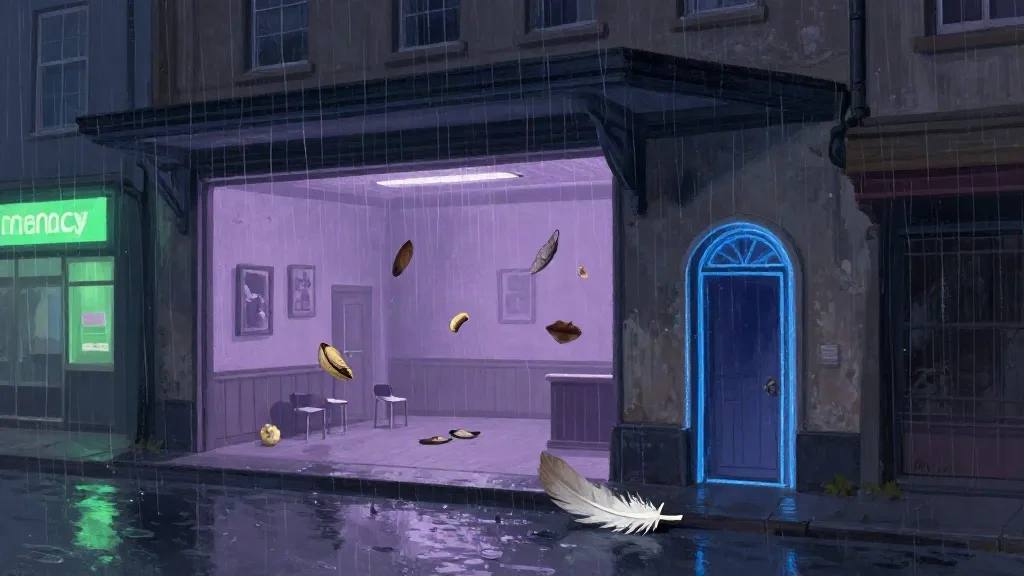
It arrived in a paper envelope with no address, resting against her name at the theatre's old ticket window. The wing was lavender, powdered with fine dust that smelled of rain on warm pavement. Mara held it beneath the green glow of the pharmacy sign across the street.
She was sixty-three, retired from the Cartographic Office after forty-one years spent drawing coastlines, vanished villages, and roads whose destinations had been renamed. Since then, she had worked only in the theatre, a narrow building that performed tomorrow's discarded endings.
Each play began where a different future ended. The audience watched marriages abandoned at breakfast, cities returning to dust, messages left unsent for centuries. Mara's job was to survey the scenery. She knew which endings were tender, which were dangerous, and which had been thrown away because no one wanted to hear them.
On her desk lay a map of places that no longer existed. It had no legend. The paper was soft from handling, its edges worn white. When Mara drew a door on it, the door opened nowhere she could describe. A lost thing could pass through and find rest.
The Market of Expensive Truths
The first market appeared between acts.
It stood behind the theatre's stage wall, where no wall should have been. Lanterns floated above tables crowded with objects: a child's silver shoe, a jar of unmelted winter, a letter carrying every sentence except the one it had been written to say.
The vendors wore the faces of people who had already died. They displayed prices in clear water.
The cheapest things were true enough to be useful. The expensive things were always true.
Mara set down her envelope. The moth wing trembled.
“That will cost you a memory,” a vendor said.
Mara pointed to a brass key. “I have already paid for more than that.”
The vendor shook his head. “Not the memory you have lost. The memory you have kept.”
She understood then. A true thing could not be exchanged, altered, or overlooked. It demanded the whole story that made it bearable.
On a table near the end of the lane lay a white feather. It glowed against the wet asphalt, pure and unnaturally bright. The vendor beside it whispered that it belonged to an angel who had forgotten how to descend. Mara wanted it because the theatre's walls had begun to crack.
She had come seeking a place where lost things could rest, not another thing to collect. The map in her satchel grew warm.
A Door Without a Destination
Mara drew on the theatre wall with a stick of blue carpenter's chalk. The map beneath the plaster showed a vanished shoreline, and she added a door beside a place marked only by the white feather.
The wall opened.
Beyond it was a room made from endings. There were no ceilings, only lavender sky and the green reflection of distant pharmacy signs. On shelves rested unnamed colors, cancelled journeys, and the final breaths of stars. Everything waited in perfect stillness.
The moth wing lifted from her envelope and flew through the doorway.
Then the market rushed toward her.
Vendors held out impossible objects. Each one whispered a truth she had spent her life avoiding. You were afraid of the sea. You abandoned your brother. You mapped disappearance because it was easier than remaining. The words struck like nails, each one exact.
Mara gripped the white feather. It did not offer comfort. It demanded surrender.
She understood the theatre had never been empty. Every abandoned ending had been pressing against the walls, asking for somewhere to go.
“There is room,” she said.
She drew another door, not on the wall but on the floor, then another on the ceiling, and another beneath the audience seats. The lines joined into a map of the entire building, an invented place where loss could remain without becoming a prison.
The Last Remaining Door
At dawn, the market folded into the wings.
Its vendors were gone, its tables reduced to chalk outlines. The true objects remained, though they had lost their shine. Mara sorted them carefully. She gave the unmelted winter to the actors, the silver shoe to a child waiting backstage, and the unfinished letter to the playwright who had never stopped revising.
The white feather she placed beside the moth wing.
Neither belonged to her.
The theatre opened its doors. People entered carrying the things they had lost, though they could not name them. A widow brought the sound of her husband's laugh. A courier brought a road taken before delivery. A young man brought the shape of a future he had decided not to live.
Mara stood at the ticket window and drew them all into a place that did not exist yet.
By evening, the theatre was full. Beneath the lavender light, lost things rested in green-lit rooms, while the audience watched their discarded endings become quiet, patient doors.
When the final play began, Mara heard a knock behind the stage wall. She took out the map. A new door had appeared, drawn by no hand.
She opened it, and let the stranger enter.





