 Netwrck
Speculative Fiction.
The Ledger Beneath the Market
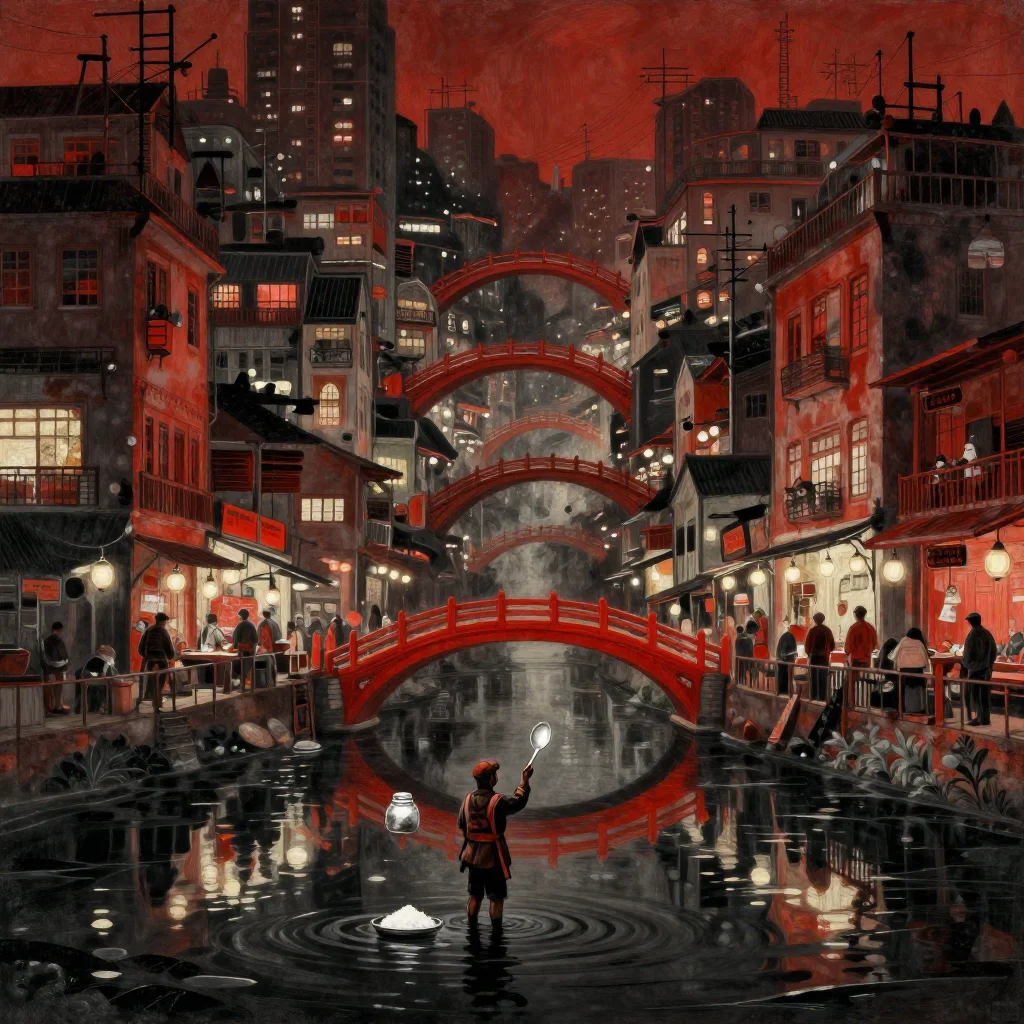
At midnight, the night market opened beneath a city that had no street below the first floor. Stalls descended from the foundations by iron ladders and secret lifts, their lamps hanging in the damp air like orange moons. Above them, floors crowded with chimneys, water tanks, and sleeping rooms. Below, the market traded in salt, silver, smoked eels, and memories no one could prove were theirs.
Ilara was a river surveyor. Her instruments consisted of a brass compass, a red pencil, and a shallow silver spoon. She mapped emotions on moving surfaces: grief as a dark slick beneath the current, joy as a bright seam where two currents met. The river ran under the market, though no river had ever been mapped there. It carried the records of every bridge ever built.
Each bridge left a layer in the water. Roman arches, rope crossings, iron footbridges, the pale concrete spans that had vanished in war. Ilara read them by tilting the spoon across the flow. The spoon caught the light of things that had happened, not things that were happening now.
Her own ritual remained private. Every dawn, before the stalls opened, she touched the spoon to the salt jar and measured the silence between one heartbeat and the next. The jar held the salt of her mother's kitchen. The ritual told Ilara whether her mother was still alive somewhere, or whether the river had taken even the possibility of that.
The Bridge That Remembered Her
On the third night of winter, the river changed direction.
It moved uphill through the market, lifting cups from tables and turning silver ladles toward the ceiling. Vendors swore it was draining the city. The black water climbed the stairwell and spilled across the first-floor threshold, though the river remained below it.
Ilara stepped into the current with her spoon and salt jar. The spoon showed a bridge made of voices. Beneath the arch, thousands of people repeated the same sentence: I will remember you after I leave.
Then the bridge surfaced.
It was small, painted red, and stood in the water where no bridge had ever stood. Its planks carried the marks of her mother's hands. Ilara scraped salt onto the spoon. The taste was winter air, iron rain, and flour burning on a stove.
Her mother had taught her that a promise needed a witness. A bridge was a witness, because it stood where two places could see each other.
The river gave Ilara the bridge's last memory: a woman crossing toward a hospital, carrying a blue bowl, refusing to look back. The image broke before she could see the face. The river had preserved the promise but not the person.
Make the Record Public
Until then, she kept her ritual in darkness. Now the river demanded a witness.
Ilara climbed onto a stall table. The market gathered below her, their faces pale in the winter light leaking from the ceiling. She opened the salt jar and held it above the black water.
“I measure what remains,” she said. “And tonight the water has measured me.”
She drew the red pencil across the bridge in the river. The mark widened. Silver flashed. Every voice in the current rose above the market noise, not as a whisper but as a crowd. The promise her mother had made, and all the promises the bridges had carried, passed through the room.
For one moment, the lost faces appeared in the underside of every hanging lamp. Ilara searched them. Then she saw her mother at the far edge of the crowd, older, turning toward a door.
Ilara stepped down into the river.
The current accepted the salt and carried her forward.
What the City Heard
By morning, the market had changed. People no longer whispered private griefs into stalls. They spoke them aloud beneath the bridges, naming the loved ones they had lost, the places they had left, the roads they had promised to return.
The river kept none of it. It released the records into the city, where they became rust on iron, damp in brick, and pale light beneath the first floor. Ilara climbed back up with the empty spoon and the salt jar.
At the next dawn, she performed the ritual in the open. A child asked whether the river could bring back anyone.
Ilara looked into the spoon. The surface held a narrow bridge over a black flood. Beneath it, one red plank shone with winter light.
“It can show where they crossed,” she said.
Then she poured the salt into the market, and the city began to listen.





