 Netwrck
Speculative Fiction.
The departures board
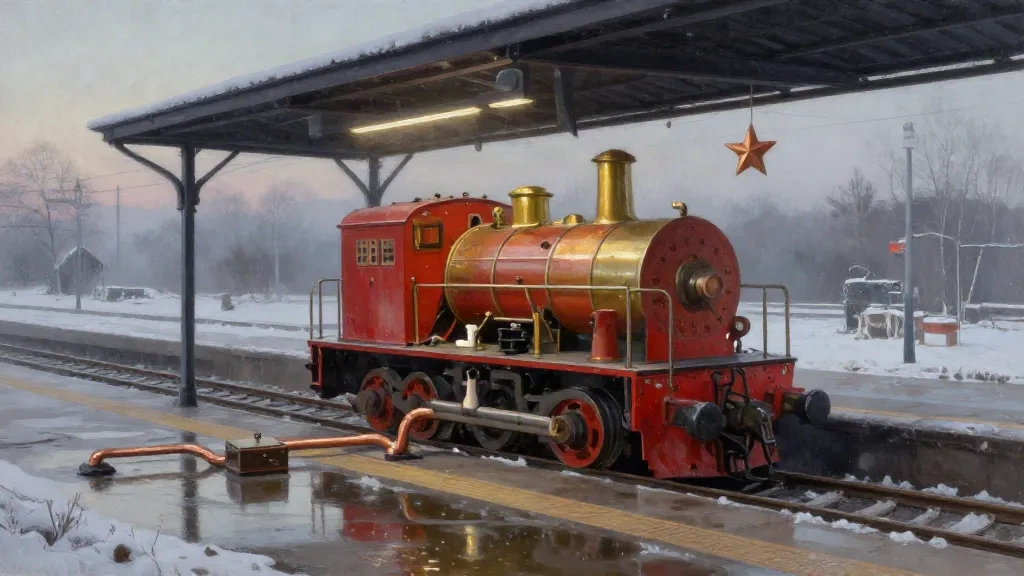
By the third week of frost, the station had learned to announce summer in a voice like a kettle left on the stove. Passengers gathered beneath the charcoal iron roof, their breath thinning in the pale light. The departures board clicked from WINTER to APRICOT, then to the private heat of JULY.
Dr. Sera Venn stood beside the ticket window, listening to their complaints. A woman with ink-black gloves had lost the smell of her childhood kitchen. A boy carried a red mitten that no longer belonged to any hand. A railway clerk dreamed of a house with a south-facing orchard, though he had been born in a town where apples could not survive.
Sera treated homesickness as she treated fever: by finding its source, then prescribing a small, deliberate return. She gave the woman crushed rosemary from the station kitchen. She gave the boy a wool thread from his mother’s sewing basket. To the clerk she offered a photograph of the imagined orchard, though the fruit in it had been painted white.
At the center of the hall stood the machine.
It was beautiful in the way a church organ is beautiful, all polished brass and narrow windows of colored glass. A music box sat on its console, playing six notes whenever the platform changed seasons. Above it hung a copper star, the only ornament no one was permitted to touch.
What the flood uncovered
On the night the river broke its banks, water entered the station through the old mail tunnel. It rose over the benches, swallowed the lower platforms, and carried a thousand paper tickets into the dark. The music box kept playing beneath the water, its melody muffled but exact.
Sera descended with two station engineers and a child named Oren, who refused to leave the tracks. The flood had uncovered a buried pit beyond the north wall. Inside it lay brass rails, copper pipes, and rows of glass cases. Each case held a model of the station rendered in a different season. One showed spring floods beneath the platform. Another showed autumn leaves turning in the signal lamps. A third displayed a summer city, bright and empty.
A plaque rested against the wall: MUNICIPAL CLIMATE ADAPTATION PROJECT. PROPOSED BY S. VENN.
Sera recognized her own signature.
She had been a child when the project was abandoned. The city had called it impractical. Her father had called it hopeful. The machine, she now understood, was not bringing passengers to alternate seasons. It was bringing their possible homes into the present and keeping them there.
The prison with a timetable
Inside the machine, the copper star was not decoration. It regulated the exchange. Summer heat fed the engine; autumn rain replenished its reservoirs. Homesickness was the fuel. The more precisely a passenger described the life they wanted, the more real the machine made that life become.
“Then why do they still feel ill?” asked Oren.
“Because a place can be true without being theirs.”
The station began boarding. Passengers stepped through the brass doors in borrowed clothes, carrying umbrellas, beach chairs, jars of fireflies, keys to houses that had never been built. Each one looked relieved. Each one looked frightened.
Sera climbed onto the console and opened the music box. The six notes lengthened into a melody she remembered from her father’s kitchen. He had used it to call her home from the orchard, though no orchard had existed there.
The copper star spun loose. A crack ran through the colored glass. Pale winter light entered the machine, exposing its pipes: not veins, but sentences. Every destination had been written into the travelers’ bodies.
Sera could shut it down. She could also become its final passenger, letting the machine make one perfect home for her.
A return
She cut the melody instead.
The music box opened beneath her hands. Inside was no mechanism, only a narrow room, white as winter, with a table and two chairs. Her father sat on one side. On the other sat a boy who looked exactly like Oren, holding a copper star in both hands.
“You made this place,” he said.
“I made the need for it.”
She took the star. The room vanished.
Across the station, the borrowed homes dissolved. A woman found herself beneath her real kitchen ceiling. The clerk stood in a bare apartment with a south window, though no orchard waited beyond it. Oren returned to the platform clutching one wet ticket, its destination scratched away.
At dawn the river receded. The buried pit remained open, its civic project reduced to rails, pipes, and thousands of small glass rooms. Sera did not repair them. She left the machine silent beneath a sheet of tarpaulin, and at its center placed the copper star.
Not as a key, and not as a promise. As a weight.
Then she opened the clinic. The first patient was the woman with ink-black gloves, still homesick for a kitchen that no longer stood. Sera listened, and prescribed no return.
“Go home,” she said. “Stay long enough to discover what it has become.”
Outside, the station announced nothing at all.
Somewhere beyond the rust-red doors, winter waited without needing to be escaped.





