 Netwrck
Speculative Fiction.
The physician of impossible departures
Dr. Elian Vale arrived at Veyrn Station with a black medical bag, a brass stethoscope, and one rule: never ask where a passenger wanted to go. That was how the sickness took them. They could name every childhood street, every kitchen smell, every winter morning, and still wake on the platform weeping for a place that had never existed.
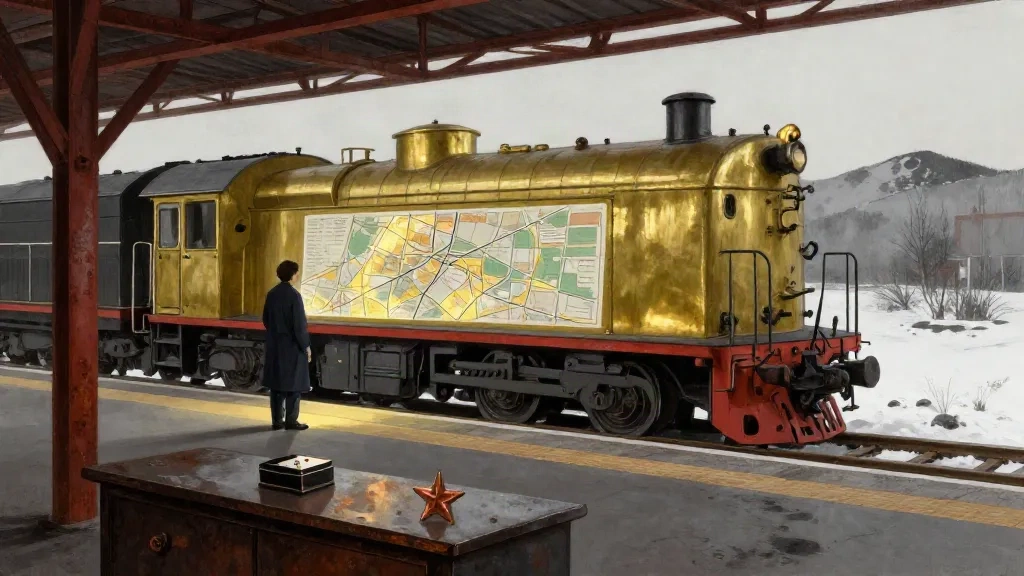
The station stood beneath a rust-red iron roof, its clock frozen at 4:17. Frost silvered the timetable. Beyond the glass, charcoal hills vanished into pale winter light. Yet the departures board promised SPRING, HIGH SUMMER, THE YEAR AFTER RAIN, and other seasons not sold on any railway.
His first patient was a coal porter who longed for a yellow house beneath citrus trees. His second was a violinist who wanted a city where every street ended at the sea. Vale listened to the stories, examined their hands and pupils, and prescribed destinations rather than cures.
On the platform's eastern wall, beneath three layers of paint, waited the station's oldest comfort. A music box played eight notes whenever a season door opened. Beside it hung a copper star, the kind awarded to children who had finished a difficult year. No child had ever taken it down.
The beautiful machine
Vale knew the station's conductor, Mara Venn, because she had spent thirty years treating homesickness among railway workers. She showed him the central mechanism: a vast brass engine beneath the tracks, its wheels turning without rails.
“It opens the nearest possible season,” she said. “Not the one they remember. The one that fits them.”
Vale rested his palm against the casing. It was warm and patient. That was the trouble. A machine that made a perfect place could also become a beautiful prison, polished by use until no passenger remembered wanting to leave.
He asked about the station's founding. Mara pointed beneath the floor. “The first charter is there. The flood took the records in 1912.”
That night the river rose through the ticket hall. Water burst from the drains and scattered across the floor, revealing pale tiles beneath the charcoal linoleum. Lines appeared in the white grout. Mara went rigid.
“That's a map,” she said.
It was a map of the city beneath the station: a network of shelters, wells, kitchens, and wards, laid out beneath the rails decades before the station was built. At its center, where the brass engine rested, someone had painted a copper star.
What the flood returned
The map changed the work. Vale understood that the engine had not first been a gate to other seasons. It had been a civic furnace, warming shelters during a winter flood, while the station above served as its chimney. The citizens who built it had later converted survival into spectacle. Their names had been filed away with the charter.
For three days, water rose through the station. Passengers boarded into spring and returned with pollen in their hair, salt on their sleeves, and expressions of terrible calm. Some would not leave their chosen season. Others returned crying because the place inside them no longer matched the world outside.
Vale treated them without asking their destinations. He described exits: the smell of rain on a real road, a cracked ceiling in a childhood bedroom, the ache in a foot after a long walk. He gave each traveler a copper star from the wall, though there was only one, so he made replacements from brass buttons and roof nails.
“You are turning a machine into a prescription,” Mara accused him.
“No,” he said. “I am turning it back into a tool.”
A station with doors
He cut the engine's final locking gear. The brass teeth came away cleanly. Every season door trembled.
Then the music box played a ninth note, sharp and clear. The copper star on the wall began to glow beneath the rising water.
Vale understood the first design. The station had never needed the star to guide travelers. It needed one witness: someone capable of seeing that every place offered was also a door, and that a door could be opened from both sides.
He took the star down. Cold water swallowed his boots. Across the hall, Mara pulled the release. Summer poured through the western door, carrying heat and insects and the green smell of leaves. Then autumn, winter, and the strange rainless dawn of the year after.
The engine stopped.
Passengers stepped out, not because their seasons had ended, but because the station had. Some found the city above waiting exactly as they had left it. Others found no return. Vale could not promise either outcome. He could only tell the truth: home was not a perfect place. It was a place that permitted departure.
Later, the station was rebuilt with open platforms, small furnaces, and no locked gates. The map remained beneath the floor. Visitors walked over it without seeing, though the copper star stayed bright in winter light.
Whenever a new engine was installed, someone set the music box beside it. The first note was always the sound of a door opening. The last was the sound of someone choosing to walk through.





