 Netwrck
Speculative Fiction.
The Measure Below the Bridge
Every night at midnight, the river in Vey crossed itself. It did not divide or flood. It folded, east bank sliding beneath west bank with the soft inevitability of a knife under silk, then rose again on the opposite side. By dawn, the town had its familiar shape again. No one crossed the change. No one spoke of it in daylight.
Mara Venn was the town’s river surveyor. She mapped emotions on a moving surface: grief in the broad brown smears beneath the eastern houses, appetite in the quick silver eddies below the market, resentment in the black water that collected around the old customs house. Her charts were rolled in charcoal paper and kept in a brass tube beneath her bed.
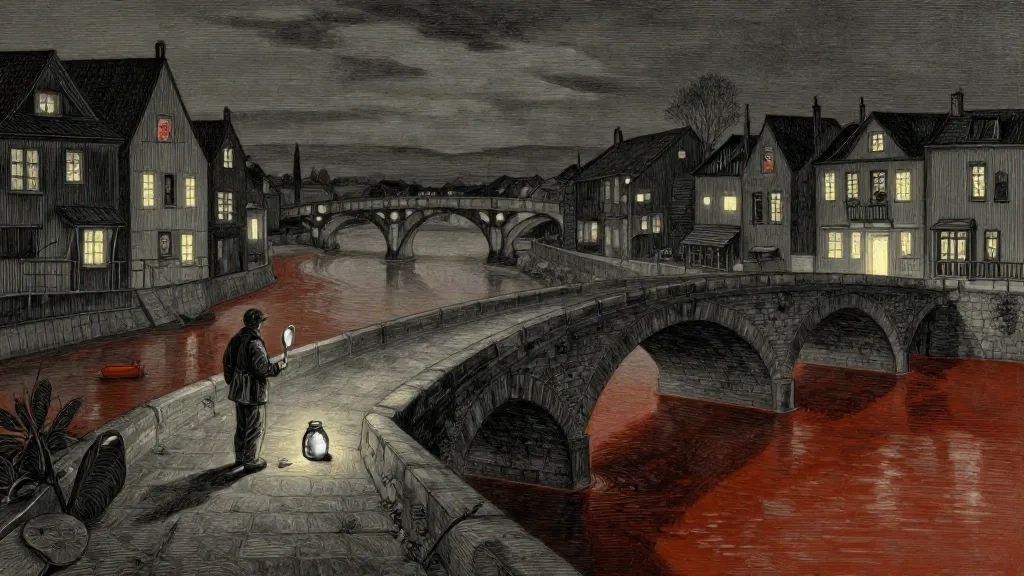
Each night, she performed a private ritual. She carried a silver spoon and a salt jar to the footbridge, waited for the river’s turn, and threw one grain of salt into the current. Then she pressed the spoon against the water and listened. The river gave back a voice. Usually her mother’s. Sometimes her own. Once, the voice of a drowned man who had never existed.
For six years Mara had kept the ritual secret. She wanted it to be public.
What the Water Held
On the seventh night, she arrived before the midnight bell. The bridge lamps made pale winter light across the iron ribs. Below them, the river shone rust red near the tannery and charcoal where the banks fell into shadow.
Mara climbed onto the bridge rail and raised the salt jar. The town watched from behind closed shutters. Fear loosened the water beneath her feet. Curiosity made it quicken. Anger, old and cold, pressed against the pilings like a hand testing a locked door.
She cast the salt. The grains struck the surface and became silver marks. The river opened.
Beneath the bridge, a second bridge appeared. Not reflected. Built. Stone arches stretched across the hidden channel, each bearing a date in a language Mara knew. She saw the footbridge itself, repaired in 1881. She saw a timber crossing that had burned in 1680. She saw a rope bridge made from fishing line and prayer. Every bridge the river had ever carried rose in the buried water, each keeping its own record of who crossed, who waited, and who failed to arrive.
The silver spoon grew warm in her hand. In its bowl, the small distorted face of her mother smiled.
“You wanted witnesses,” the voice said.
Mara looked toward the houses. Every window was open now. Faces hovered behind glass, pale as winter moons.
The Public Crossing
“I wanted the town to know the river changes,” Mara called.
“You wanted them to hear you ask it to change back.”
No one had told her the difference. The buried bridges began to rise. Water poured through their arches in columns, and the river’s fold deepened. The eastern bank slid west, carrying half the town with it. Lamps leaned toward the current. A dog barked from a rooftop. Someone screamed, then became silent.
Mara dropped the salt jar. It broke against the bridge, and salt spread over the stones in a white seam.
She remembered why she had started the ritual. Her mother had vanished during the river’s turn twenty years earlier. No body had been found. Every year, Mara had asked the water one question, hidden from the living.
She raised the spoon.
“Show me which bridge she took.”
The river answered with a roar. All the buried arches collapsed inward at once, their records striking together. Mara heard thousands of crossings: soldiers, children, lovers, fugitives, her mother’s hesitant footsteps on the old timber bridge. Then one set of footsteps stopped in the exact center of the hidden river.
Not drowned. Waiting.
Mara understood the public act she had been avoiding. The ritual was not a question. It was a crossing.
She stepped from the footbridge into the fold.
The Morning Map
The water closed over her, cold as iron, bright with reflected lamps. Every record passed through her hands. She carried bridges in her pockets, their old stones warm against her ribs. She carried the town’s fear, its appetite, its stubborn love, all of it moving beneath a pale winter moon.
At midnight, the river turned back.
Mara surfaced beneath the eastern bank, clutching the silver spoon. The salt jar lay in two pieces on the bridge, its white trail leading toward home.
By dawn, the town had crossed itself. Not one building had been lost. The customs house stood on the correct side of the water, and every resident remembered hearing a voice beneath the bridge. Some remembered their mother. Some remembered a child they had buried. Some remembered the person they had become when the river changed.
Mara opened her chart. Beneath the charcoal streets, she drew a bridge in rust red, crossing the border twice. Then she pinned the map to the customs house wall, where anyone could read it.
At the next midnight, people came with bowls, coins, letters, and locks. They wanted the river to carry what they could not say.
Mara stood beside them, spoon in hand, salt in her pocket. The river turned. The bridge appeared. For the first time, the dead did not move in secret.
They crossed in public, and the town learned the shape of its own grief.





