 Netwrck
Fairy-Tale Fiction.
The Survey of Unquiet Water
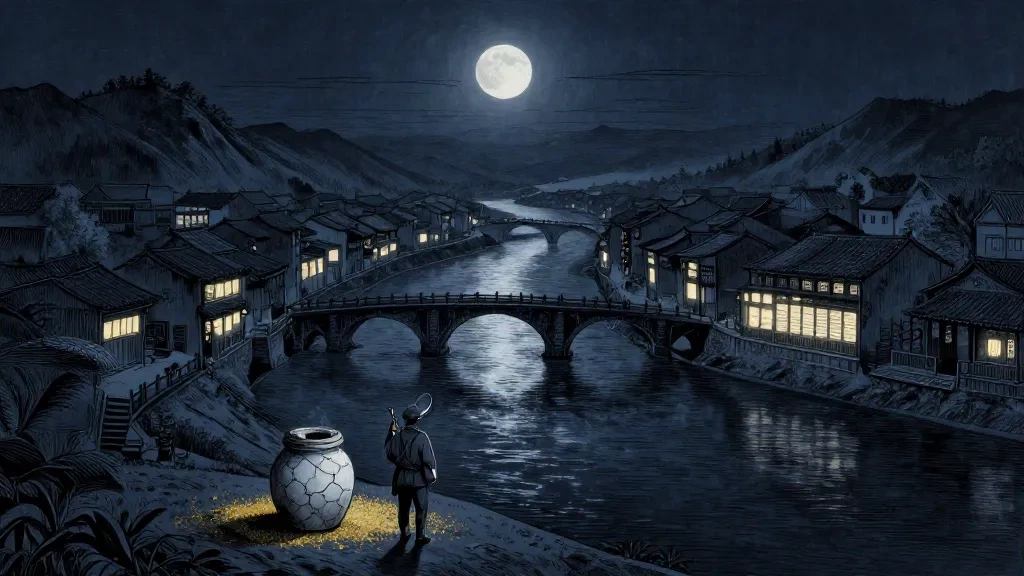
At the edge of Veyr, where the river divided the town, Elian kept a silver spoon beneath his left hand and a salt jar beneath his right. Each night, when the bells stopped, he measured the water’s sorrow.
He called it a survey, though the river surveyor’s maps were drawn on water. They appeared as pale lines whenever moonlight touched the current: a curl for fear, a straight silver stroke for hope, a trembling knot for an old kindness. By dawn, the maps had vanished, leaving only damp footprints on the quay.
For eleven years, Elian had kept the ritual private. The town’s people came to him with troubles, but he never told them what the river revealed. A widow asked whether her son had forgiven her. A baker wanted to know if his sister’s anger had finally cooled. Elian looked into the water and said only what seemed safe.
On the night of the autumn equinox, he decided to make the ritual public.
He carried his tools to the old toll bridge and hung the salt jar from its rail. Beside it, the silver spoon caught the moon. When the first stroke of midnight came, the river changed direction.
It turned as neatly as a page lifted by an invisible thumb, and every crossing on its surface began to glow.
Bridges Remembered by the Current
The water carried pieces of wood, iron, rope, and stone. From them rose images of bridges that had stood in Veyr for generations: the wishing bridge burned in a summer drought, the footbridge washed away before anyone could name it, the narrow plank bridge where two children secretly exchanged red ribbons.
Each bridge carried records. Not words, but impressions pressed into the current—the weight of promises made while crossing, the shape of betrayals, the warmth of hands taken and released.
Elian stepped onto the toll bridge. The salt jar cracked. A white line climbed over its rim and ran down his sleeve.
He remembered the night he had crossed with his own father, long before the surveying began. His father had held the spoon, and the river had shown a single gold speck beneath the bridge.
“You will always know the way home,” his father had said.
But Elian had left that home years later without a map, without a promise, without returning. He had made the private ritual because he did not know how to ask forgiveness in daylight.
The river turned again. The river’s record opened beneath his feet.
The Public Crossing
People emerged from doorways along both banks. They had heard the bells, then the strange singing of the water. They carried their own small offerings: wedding rings in handkerchiefs, hospital bands, birthday candles, locks rusted shut from doors they had no wish to enter.
Elian lifted the silver spoon. Around him, the river displayed the hidden weather of their lives. At the north bank, a man’s grief moved in black lacquer waves. At the south bank, a woman’s hope flashed beneath the surface like gold dust under a skin of ice.
“We are not alone,” he said.
No one answered. They were watching the water.
Then a child pointed toward the current. A new bridge was forming—not of wood or stone, but of memories laid end to end. The faces of the drowned appeared in its boards. The names of abandoned roads appeared in its rails.
Elian understood. The river had preserved every bridge because no crossing was ever truly finished. Every departure continued somewhere inside the living.
He dropped the salt into the dark water.
The river opened, cold as a blade, and carried away the sharpest edges of what he had hidden. His father’s gold speck surfaced again, no longer beneath the bridge but at its center.
“I was afraid to return,” Elian said, loud enough for both banks to hear.
Then he stepped onto the memory bridge and walked toward the north bank, where the water was flowing home.
What the Morning Kept
At sunrise, the river resumed its proper course. The bridges disappeared from sight, but the people did not.
They began crossing openly, carrying their offerings into the water. The widow placed her son’s name on a piece of salt. The baker shared the last of his bread with his sister. The man with the black lacquer waves let another person take his hand.
Elian kept his survey at the quay, no longer alone. The silver spoon marked the center of each chart, and the salt jar held back the names of those who were not ready to be remembered.
At midnight, the river still turned. It no longer waited for Elian to keep its secrets.
Now, by the people’s choice, it brought every hidden crossing to the surface, and the town learned that a public act begins when a private sorrow is given a witness.





