 Netwrck
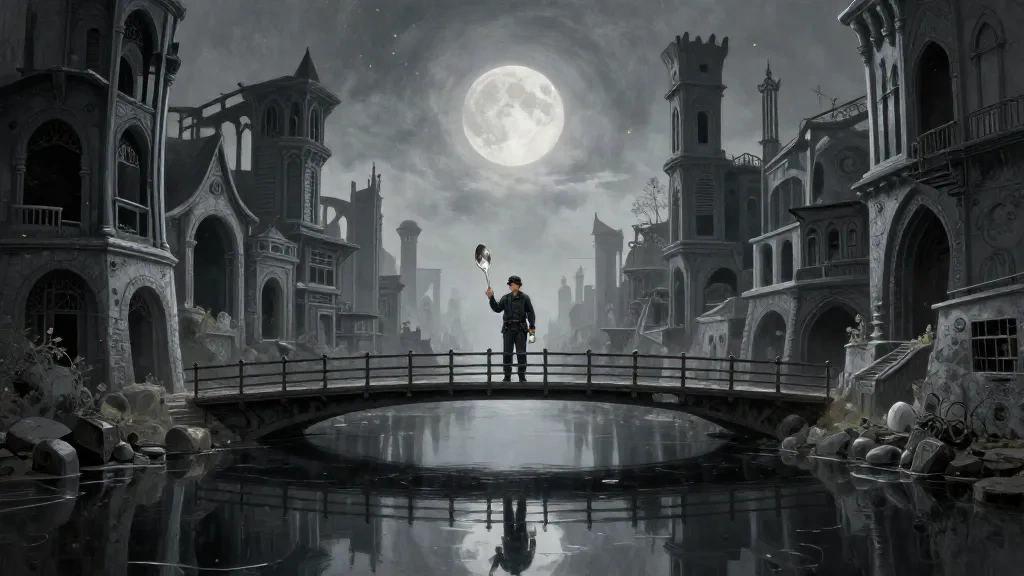
Fairy-Tale Fiction.
The Last Reel
On the winter night the abandoned Palladium reopened, its black-lacquer doors shone as though rain had just swept them. Cold moonlight spilled through a broken skylight, and gold dust drifted in the projection beam like a procession of tiny surrendered kings.
Mara Venn, a river surveyor, entered with a silver spoon in one coat pocket and a salt jar in the other. She had spent twenty years measuring what moved beneath a place: grief along the Sallow, resentment in the Vey, the almost-love of newly married villages. Emotions, she said, obeyed currents. The heart keeps only one kind of map.
Behind the ruined seats, the projector coughed. A film appeared without a reel.
It showed Mara at a public hearing, declaring that a river was not a boundary but a witness. The gallery applauded. Then, in the picture, every bridge from three cities collapsed into black water. The silver spoon rang like a bell, the salt jar vanished from the desk, and the river rose to swallow the courthouse steps.
On the screen, Mara looked at the camera and said, “That was the first future.”
What the Current Carried
The next film was gentler. In it, Mara kept her survey private. She published exquisite atlases, won the pale gold medal, and died in a house with no windows. The river continued beneath the floorboards, perfectly measured, perfectly silent.
“Neither film is a prophecy,” said a voice from the last row.
A cinema usher sat there, translucent beneath his brass buttons. He had been part of the building when it was new, when every seat was velvet and the marquee promised Beyond the Horizon. Since then, the Palladium had shown only futures that almost happened: a city spared by the black fever, two sisters reconciled, a war ended before its first gunshot.
That night, the screen filled with water.
Bridges moved across it. Stone arches, timber causeways, iron chains, a crescent of woven vines. Each carried its own procession, but no crowds. Each crossed a river that had forgotten its name. Along the piers stood officials in period dress, waiting for a child who never arrived.
Mara leaned close. The film smelled of wet iron and bread. When the picture touched her sleeve, the river’s record entered her body: every crossing designed, financed, celebrated, then unbuilt because courage had proved more expensive than construction.
Her own missing bridge hovered at the center. It had no plans. No engineers had been paid. There was only a name scratched on its northern stone: ANNA.
A Public River
“You could open the sluices,” said the usher. “Bring the current into the square before dawn. Every bridge the river carries will arrive. The public will see its own abandoned possibilities.”
Mara thought of Anna, who had once met her beside a weir and whispered, If the world would only watch us cross. They had delayed until winter. Then Anna had gone south, and the river had kept every goodbye it had ever carried.
The ritual was simple: one silver spoon, tapped against the current at each cardinal point. One spoonful of salt, enough to make the water bitter, so no hidden grief could pass unnoticed. She had performed it alone every midsummer since Anna left.
Now the square was asleep. Beyond the cinema, the river struck the culvert with a bureaucratic patience.
Mara poured the salt. She crossed the auditorium and struck the spoon against the projector housing.
Let the record surface. Let the record be witnessed.
The river answered not with a flood but with a floor.
Black water rose level with the sidewalk, perfectly still. Bridges emerged without crossing it: their plans unfolded, their foundations climbed from reflections, their footfalls sounded beneath empty streets. Residents opened shutters and found lost crossings standing in their own neighborhoods. A child named no one rejoined the procession beneath the Palladium’s old marquee.
At first, the bridges were silent. Then, one plank at a time, people understood the sentence engraved on each.
The Crossing
Everything that has waited may be entered by someone brave enough to arrive.
By dawn, the square held a bridge made from every design humanity had abandoned. Beneath it moved the salt-bright current, carrying no records now, only the ordinary silver rush of a river going home.
Mara could not restore the future she had once shared with Anna. She had done something the other futures had not permitted: she had placed her private measure where anyone could see its cost.
The usher bowed and vanished into the morning. The Palladium’s black doors closed. Gold dust remained along the threshold, bright as filings from a jeweler’s distant bench.
Later, travelers asked how the river had learned to carry bridges. The survey office sent them the map. Beneath its official measurements, in ink that deepened when damp, was a single new line.
It crossed the whole page without reaching either bank.





