 Netwrck
Historical Fantasy.
The Book That Remembered Ahead
Mara had lived in the Vellum House for eleven years, though she had arrived carrying only a brass key and the conviction that somewhere beyond the tram lines was a room willing to keep her. The Vellum House accepted applicants, but it accepted only those whose lives could be explained. Its residents remembered yesterday, or last spring, or the taste of their mother's tea. Nobody applied with a memory of next Thursday.
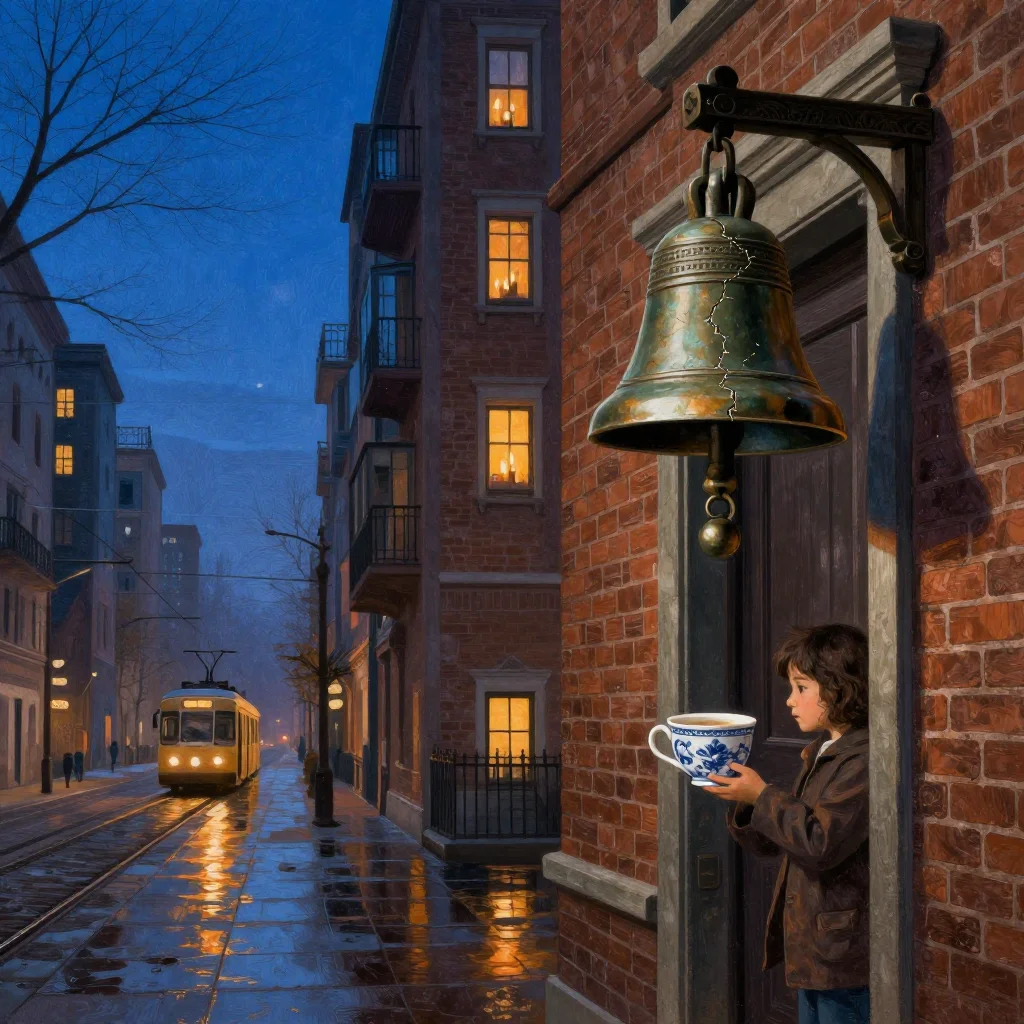
That was why Mara became librarian. In the ground-floor reading room, beneath steel-blue windows and the brown varnish of old shelves, she kept a book bound in pale leather. Its title had been scraped away. Every page was blank until someone opened it beside a teacup.
To the woman from apartment 3, the book showed a funeral. To the railway clerk, it showed a wedding. To the old man who slept in the basement, it showed his own face at a window he had never owned. Each borrower read a future that had not happened, then returned the book with wet eyes or careful hands.
Mara's hope was modest and exact: she wanted a home where no resident had to hide the shape of their impossible days. She had begun a list of addresses, sending inquiries to boardinghouses, inns, and distant relatives. The replies always asked which part of her past had gone wrong.
The Silence Behind the Wall
On the first cold evening in November, a child named Ivo came to the reading room carrying an empty teacup. He placed it beside the book and asked Mara to listen.
She heard nothing. The book opened to a page filled with a single sentence: Tomorrow is not a country. It is a crowd. Below it, a bell had been drawn in black ink, cracked from lip to base.
Outside, the building's evening bells began to ring. Every floor answered. Windows brightened. Doors opened. People greeted one another by names they remembered incorrectly, and the city moved through its familiar motions. Yet Ivo kept his head tilted.
“They're missing the sound,” he said.
“The bells?”
“The part where the house decides.”
He pointed beneath the reading-room wall. From within came a faint metallic tremor, neither bell nor machinery. The residents of the Vellum House had agreed for years to overlook the abandoned rooms on the fourth floor. The doors were bricked over. The rent was still collected. No one spoke of the family said to live there in a future that had not yet been built.
When Mara pressed her palm to the wall, the tremor stopped. When she withdrew it, the floorboards began vibrating again.
A Home With No Condition
She went to the fourth floor with Ivo and the empty teacup. The stair smelled of tobacco, candle smoke, and rain trapped in stone. At the sealed landing, the cracked bell hung from a nail driven through the wallpaper. Its surface shone with reflected candlelight, though there were no candles in the corridor.
The landlord's ledger said the rooms were vacant. Mara opened it anyway. Names filled the pages in different hands: a ship cook who would leave in April, a bride who had not yet been born, a woman who remembered every fire in the building before it began. Beside each name sat a future date, faded as old ink.
Someone had crossed out the final entry. Mara recognized her own handwriting.
She had written: No home yet.
Ivo lifted the empty teacup. A candle flame appeared inside it, small and steady. The light fell across the wall, revealing a doorway that had not been there. Beyond it waited a narrow apartment with blue-painted walls, brown floorboards, and a bell in the window.
“Is that yours?” he asked.
“Maybe.”
Inside, shelves held books with future spines. One was bound in pale leather. Mara understood then that she had not been lending the same impossible book to strangers. She had been carrying the one address that changed for each person who needed it.
The Future People Chose
At midnight, the residents gathered in the courtyard without being summoned. They stood beneath the windows, each holding a cup, a key, a letter, or a lamp. The landlord stood nearest the bricked wall, his hands full of uncollected rent.
Mara placed the book on a table. Ivo put the empty teacup beside it. The pages filled themselves with names, never completing.
“We have overlooked the fourth floor because we feared what we could not remember,” Mara said. “But a house is not made of the past alone. It is made by the people who choose to remain when the future changes.”
No one spoke. The cracked bell trembled. A crack widened through its bronze body, releasing a clear note that had been trapped for years. It sounded like a door opening in another season.
The landlord looked at the ledger, then at the empty rooms. He crossed out the words vacant. One by one, the residents wrote their names beneath Mara's incomplete entry. Ivo added his name last, pressing hard enough to tear the paper.
By morning, the Vellum House had gained a floor that no survey recorded. The fourth-floor windows showed gardens under snow, ships beyond the harbor, and rooms bright with candlelight. Inside the empty teacup, only a faint reflection remained.
Mara kept the book. She also kept the key. When the first impossible resident arrived, carrying a future in both hands, she lent them the book and asked what home would look like on the day they decided to stay.
The bell had cracked, but it still rang whenever someone found a place where the future was allowed to change.





