 Netwrck
Magical Realism.
The Courtyard Without an Hour
Mara had been appointed municipal gardener of the Clockmakers’ Monastery before anyone told her the courtyard had no hour. The notice said only: Plant what the city has forgotten. She arrived at noon, though the monastery bell had been cracked for decades and struck whenever the wind disagreed with it.
The country had no reliable time. Clocks were repaired there, but only their hands. The monastery stored hundreds of mechanisms in pearl-white rooms, each keeping a different vanished hour: the hour of a treaty signed too late, an eclipse, a wedding, a flood. Monks wound springs and labeled faces, while the outside provinces measured days by hunger and the color of the sky.
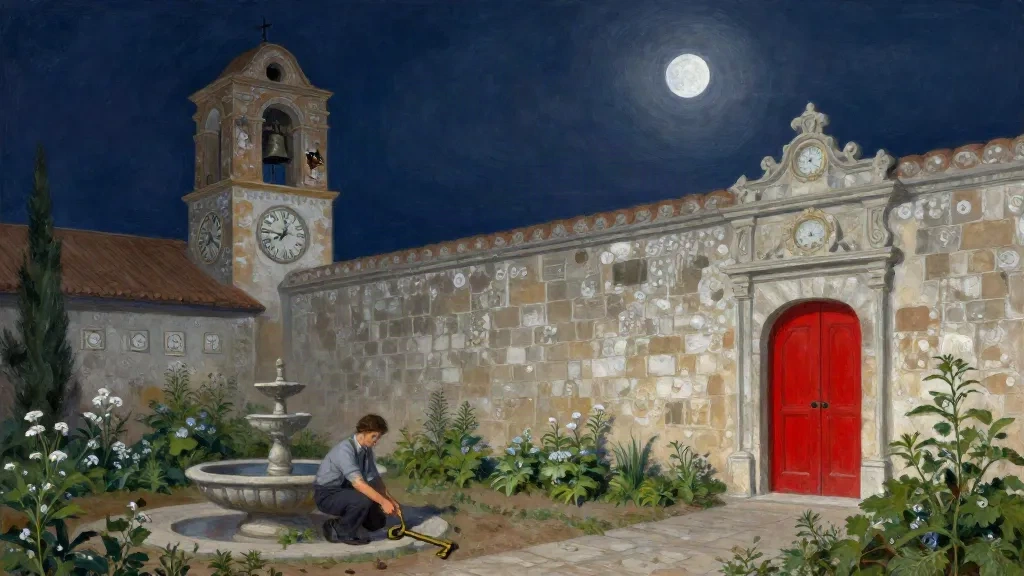
Mara’s work lay in a neglected courtyard behind the bell tower. She found nettles growing through the joints of the paving stones, a dry fountain, and a brass key buried beneath a cracked stone. She planted stories instead of flowers: her mother had taught her to press a sentence into the soil, then water it with rainwater collected from rooftops. Each story needed a forgotten object and a person willing to leave something behind.
Her family story was simple. Her grandmother had kept a garden during the winter of the long curfew, feeding neighbors who had lost their houses. Mara planted it beside the fountain. A red door appeared overnight, set into a wall that had been solid that morning.
The Machine of Unbelief
The key fit the door.
Behind it was not a room but a mechanism: a brass housing the size of a cupboard, with a single glass window and a lever. A label said, Relief engine. One family story. Many sheltering walls.
The monk assigned to the courtyard explained that it worked only when nobody believed in it. “Belief is the oil in the wrong gear,” he said. “The engine draws power from doubt. Offer it a certainty, and it locks.”
Mara doubted the machine. The cracked bell rang then, a low iron note that shook dust from the walls. The red door opened wider. Inside the courtyard, strangers appeared: a woman with a dead husband’s passport, three children carrying different names, an old man who had walked for a year without arriving anywhere.
They slept beneath sheets made of the family story. In the morning, Mara found them arguing about whether the shelter had always existed. Each certainty made the brass walls contract. One child said the garden was a miracle. Another said it was only a story. The engine’s lever sprang upward.
What the Bell Kept
Mara pulled the lever down. Nothing happened. The cracked bell rang again, and she felt the answer in its fracture: the shelter could not survive certainty, but it could survive doubt. She told the strangers she had invented the garden, that the key was buried under a stone, that the monastery was abandoned and unsafe.
They looked at her with embarrassment. The woman with the passport laughed first. “A municipal gardener who lies about her own work,” she said. “That is believable.”
Doubt spread through the courtyard. The strangers began leaving small uncertainties everywhere: a child claimed the red door had three hinges, though Mara had counted two; the old man insisted he had arrived by a road that vanished behind dawn. Their doubts fed the machine, and its walls widened into rooms. The courtyard filled with beds, water jars, shelves, and lamps.
By the third night, the monastery monks came to inspect the impossible construction. One of them said he recognized the garden from his childhood. Another said he had never heard of it. The cracked bell split into two notes, and the engine began counting backward.
Mara understood its danger. The machine had been fed by doubt so generously that it was beginning to doubt itself. If it stopped, the shelter would collapse. If anyone declared it real, the walls would close.
The Door That Stayed
She planted a second story beside the first: the story of herself planting stories, with no ending supplied. Then she gave the brass key to the old man. He had walked longest and believed least.
“You do not know whether it works,” she said.
“No,” he replied.
He turned the key. The engine inhaled. The red door opened onto a courtyard larger than the monastery, its fountain running with clear water, its stones warm beneath the midnight-blue sky. The cracked bell struck once. The sound did not mark an hour. It marked a place.
Mara stayed on the threshold. Behind her, the shelter filled with strangers who could not agree on what it was, or who had saved them, or how long they had been there. That uncertainty became the machine’s strongest bell.
At sunrise, the monks found only nettles, a dry fountain, and a brass key in the dirt. The red door remained, but nowhere it had been. Mara kept tending the courtyard, planting only stories that could survive being doubted.
Some shelters are not built from certainty. They are planted where no one can prove they belong.





