 Netwrck
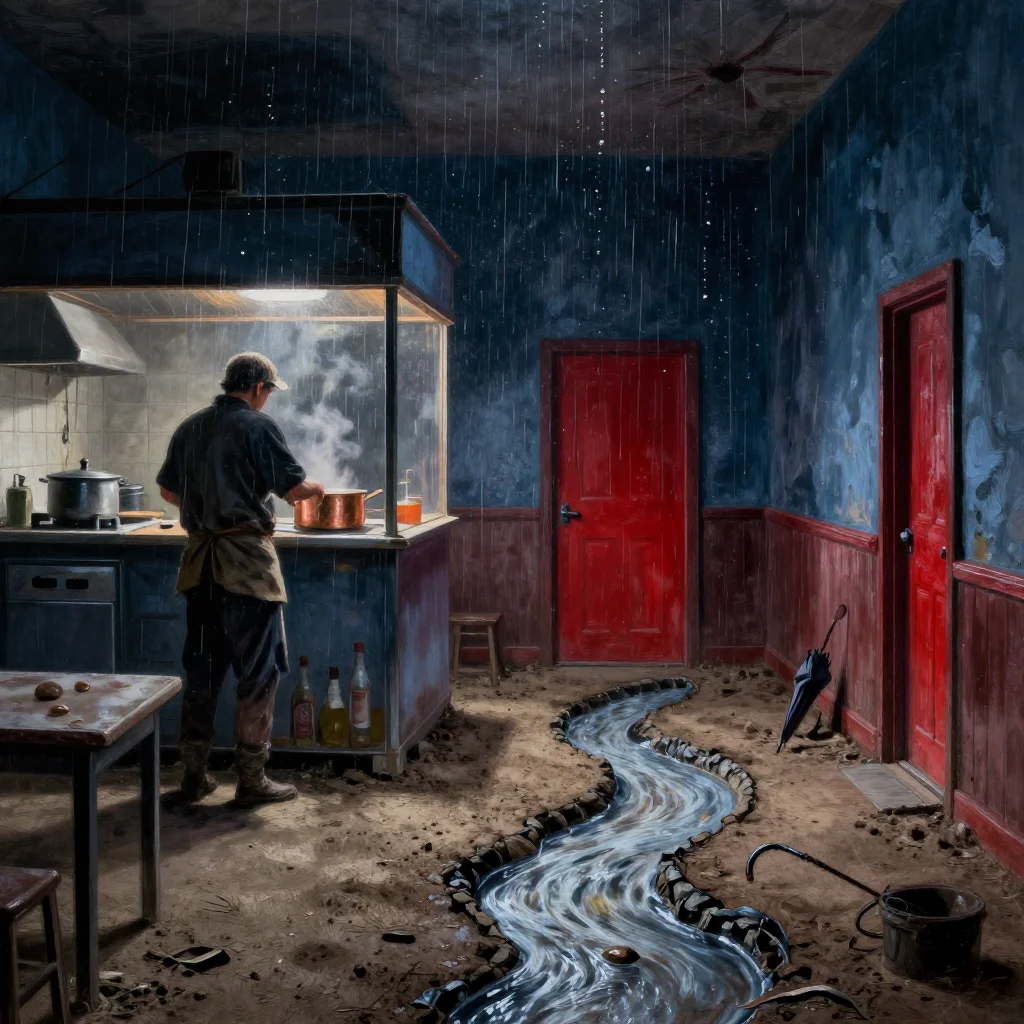
Magical Realism.
The Kitchen Beneath the Screen
Mara arrived at the abandoned cinema with a suitcase of spices, a dented copper pot, and the recipe her grandmother had hidden inside a prayer book. The building stood behind a rusted shopping mall, its pearl tiles dark with rain, its ticket booth filled with dead moths. Above the entrance, a blue neon arrow pointed nowhere.
Inside, dust lay in long curtains. The auditorium smelled of warm resistors and old rain. On the screen, a woman in a midnight-blue coat opened a red door and stepped into a city that had never been built. The audience consisted of empty seats, yet every head turned toward the door.
Mara set up her kitchen behind the projection booth. She peeled ginger, bruised cardamom, and simmered bones until the air changed. The legend said her grandmother's cooking summoned everyone who had once eaten at her table. Mara had dismissed it as a comforting lie, until the night the first guest appeared.
Her father entered carrying a red scarf. He was forty years younger than the man she remembered and sat without looking at her. Then came her aunt, soaked through, followed by the shy delivery boy who had stolen peaches from the kitchen. Each person ate silently. Each vanished when the spoon touched the pot.
“One meal brings one memory,” Mara whispered. “That is the family legend.”
Future Films and Borrowed Rain
The projection ran unattended. A film began: Mara at her mother's funeral, refusing to open the black umbrella her mother had carried for thirty years. Another showed her selling the cinema, marrying a stranger, and waking in a house where no kitchen window faced the sun. The films were not predictions. They were possibilities that had nearly happened, preserved like beetles in amber.
On the fourth night, a girl with pearl-gray gloves appeared in the last row. She wore a ticket stub around her neck.
“You want to prove the legend,” the girl said. “The screen can show the future, but the red door opens only after a cost that cannot be paid twice.”
Mara asked the price. The girl pointed toward the projection booth. Beneath the floorboards ran a dry riverbed, pale as bone, carrying a black umbrella in its current though no water moved. The umbrella belonged to the evening Mara's family left their first home. Her mother had opened it, said goodbye to the rain, and never returned.
“The cost is the way you came in,” the girl said.
The Recipe for Absence
Mara remembered the story differently now. The legend was not that cooking brought the dead back. It was that the table made the living choose which part of themselves they would keep. Her grandmother had fed the lost for years, receiving her own relatives in exchange for pieces of their lives. Her mother had kept the red door shut by giving up the memory of her mother's face.
Mara cooked the last recipe: bitter greens, burned rice, a broth made from the rain collected in childhood shoes. When the flavor settled, the auditorium filled with every person her family had ever lost. They did not eat. They waited.
The girl with the pearl-gray gloves took the black umbrella from the dry riverbed. Beneath it appeared a small red door in the projection screen.
“You can restore one person,” she said, “or preserve every future that might still happen.”
Mara understood. The gate did not demand money, blood, or a spoken promise. It demanded the first thing she would be willing to lose. If she opened it, her family would return, but no one would remember the road that had led her here. Her mother would live, and Mara would become a stranger to the daughter she had been.
The Red Door
She put the umbrella over her shoulder. The black fabric hid the pale riverbed. Then she opened the red door.
For one breath, she heard the kitchen of her childhood, oil crackling, her father laughing, her mother singing behind the pantry door. Mara stepped through. The room was warm. Every chair was occupied. Her mother turned, and for an instant the whole room became the future Mara had wanted.
Then the door slammed.
Outside, the cinema had returned to dust and darkness. The dry riverbed was empty. The black umbrella lay folded beside the copper pot. On the screen, a new film played: a girl in pearl gloves standing outside a house where a cook was making dinner for strangers.
Mara watched until the credits ended. Then she lit the stove.





