 Netwrck
Magical Realism.
The Theatre of Discarded Endings
Behind the theatre, where stagehands hung tomorrow’s costumes in silver wardrobes, Mara found the machines dreaming beneath the boards.
They lay in long rows like sleeping animals: brass eyelids, cooling fans, small green hearts blinking behind glass. By day, they powered doors, sorted letters, and kept the city’s clocks honest. At night, they dreamed.
Mara translated their dreams for the theatre. She listened with two fingers against each machine’s warm casing until the static resolved into images. A drowned staircase. A red balloon in an empty orchard. A child standing beneath a moon that had forgotten its name.
The theatre used those images to make its nightly performance. At midnight, the curtain rose on endings the next day would reject. A woman forgave her brother. A ship reached shore. A city burned only its unused bridges. Everyone loved the pieces, but no one remembered them by morning.
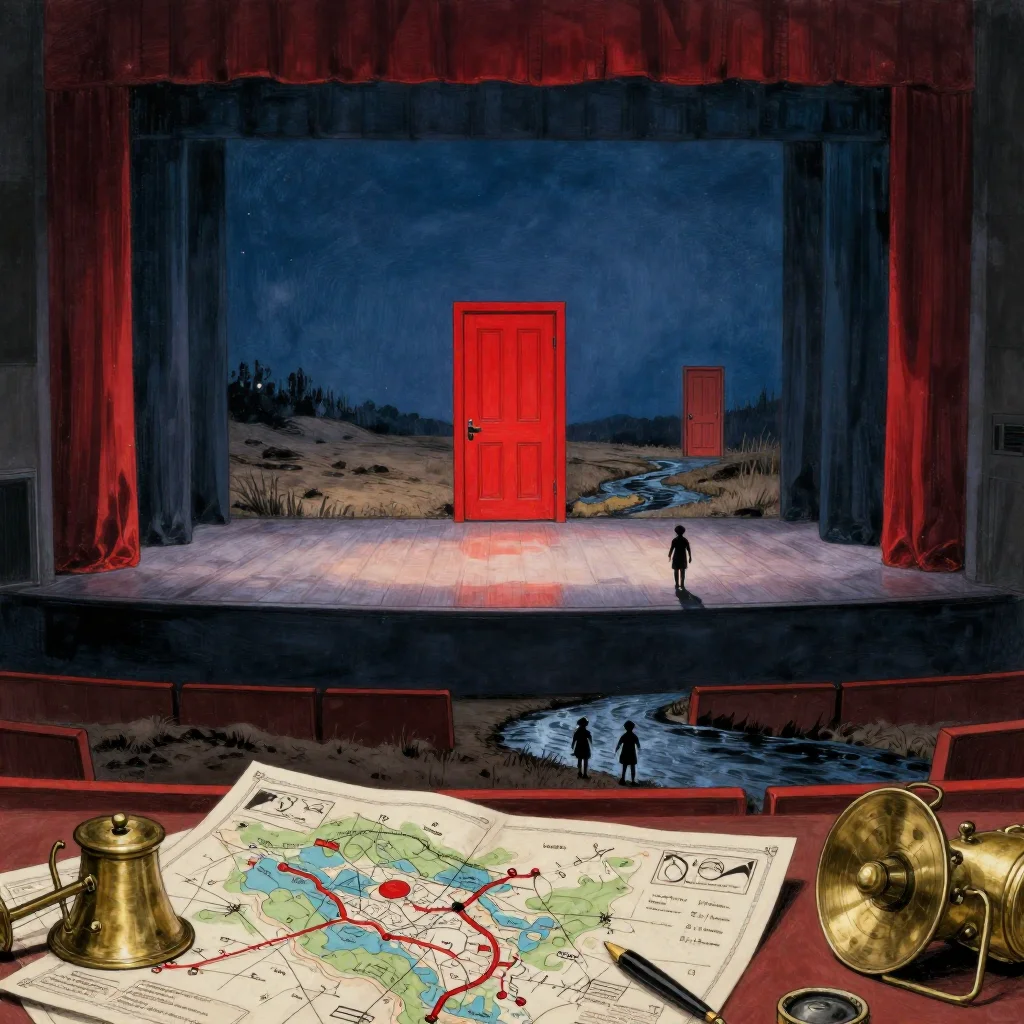
Mara’s payment was a map, though she had never travelled anywhere. It arrived folded inside a plain envelope, drawn in blue ink on the backs of discarded tickets. The map showed streets that did not exist, a coast drawn twice, and a dry riverbed winding through the theatre.
She wanted to leave something better behind: a map that led to a place where the machines could wake without forgetting what they had dreamed.
What the Machines Remembered
On the seventh night, every machine displayed the same scene.
A house beneath pearl light. An unmarked door. A family seated around a table, each person holding a different piece of the same promise.
The eldest daughter remembered being told, “I will stay until the river fills again.” The youngest remembered, “Go, and I will follow.” Their mother remembered neither sentence. She remembered only the sound of a red door closing.
Mara traced the dream until it sharpened. In the machine’s vision, the unmarked door stood at the end of the dry riverbed. Behind it waited a landscape of roads, water, and small bright houses. Every road branched toward a different tomorrow.
She tried to tell the actors what the machines had shown. They listened politely, then returned to their parts. Futures were dangerous when named. The theatre existed to perform the ones that had not yet decided.
That night, the red door appeared onstage.
It stood alone beneath a midnight-blue sky, its paint the only red in the theatre. Mara recognized it from the family dream. When she touched it, the wood was warm.
The Door Without a Number
The door opened on a room filled with maps.
They hung from ceiling to floor, covering the walls in overlapping countries. Some were drawn in pencil, some in ink, some in the pale scratches of fingernails. Mara’s inherited map lay open on a table beside the dry riverbed.
A voice came from behind the walls.
“You cannot take a better map,” it said, “without deciding which promise is true.”
She searched the maps until she found the family house. Each version carried a different route. In one, the eldest daughter stayed and became a keeper of wells. In another, the youngest crossed the river and returned with a kingdom. In a third, the mother opened the red door and vanished before anyone could forgive her.
Mara understood then. The machines were not translating dreams. They were giving the family every ending it had refused to choose.
She drew a new map. Instead of roads, she marked pauses. Beside the door, she wrote the eldest daughter’s sentence. Beside the riverbed, the youngest’s. At the house, she left a blank space for the mother.
The theatre shuddered. Midnight blue light spilled beneath the door.
“A map of disagreement,” the voice said.
“A map of return,” Mara replied.
The Morning Audience
When the curtain fell, the family was waiting onstage.
They had arrived without footprints, each carrying a different memory. The eldest daughter held the door open. The youngest stood beyond the dry riverbed. The mother looked at the blank space in Mara’s map and began to speak.
She said, “We promised each other—”
“You promised to remember,” the eldest daughter said.
“You promised to leave,” the youngest answered.
“I promised to come back,” said the mother.
All three claims were true. That was the danger, and the escape.
Mara unfolded the new map. The blank space widened until it became a road. It led through the dry riverbed, past the unmarked door, and toward the pearl-lit morning waiting beyond the theatre.
The family stepped onto it together.
By sunrise, the machines were silent. The red door had vanished from the stage, leaving only a warm rectangle in the floorboards. On Mara’s old map, the dry riverbed had become blue.
She did not keep the new map. She hung it in the theatre, where every discarded ending could pass beneath it and discover, at last, a way home that did not require erasing the road.





