 Netwrck
Hopeful Science Fiction.
Signal 902
On the last night of her working life, Inez Vela spread a map across the observatory floor and drew a door.
She drew it in the empty place between two vanished lakes, using the black ink reserved for coastlines that had been swallowed by sand. The door had no hinges and no handle. It had a small brass number fixed to its lintel: 902.
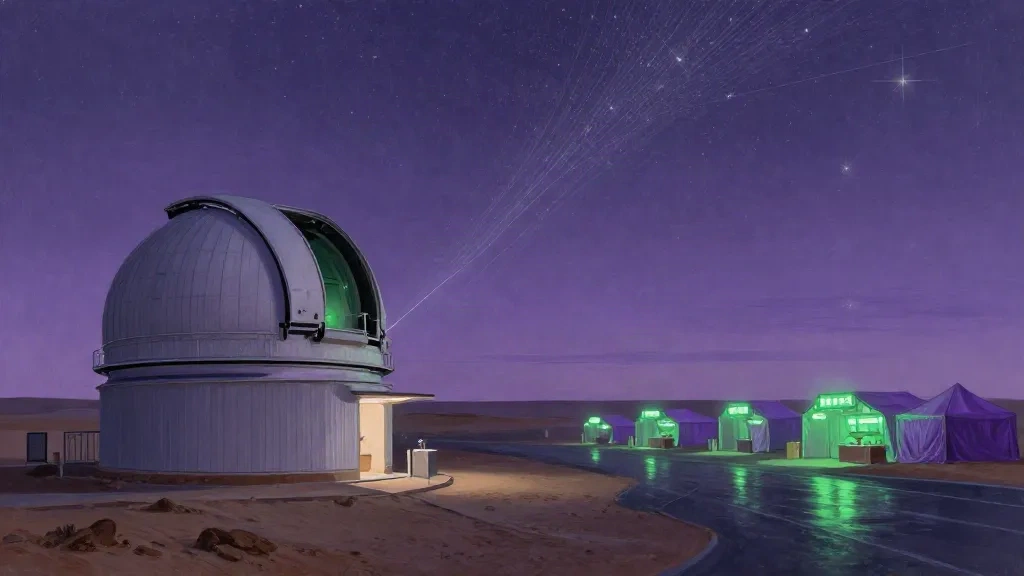
Outside, the desert sky trembled with signals. The observatory tracked stars that sent messages to Earth, though the messages never arrived as light. They arrived as missing objects on desks, unfamiliar songs in sleeping mouths, names remembered by no one.
“You are late,” said the receiver, watching the needle tremble.
“The signal was faint.”
“The signal is not faint. You are.”
Inez looked at her map. The mountains had moved since morning. The road behind the station no longer led to the highway, and the highway had no memory of her. In the glass, her reflection appeared younger, then older, then young again.
She had spent forty years drawing places as they should have been. Now she wanted to draw one place where lost things could rest: a lost key beside a lost glove, a childhood dog near a forgotten song, a door removed from a demolished house.
The Market of Expensive Things
In the valley below the observatory, a market opened only when the stars aligned. Its stalls stood beneath lavender awnings, and the ground smelled of wet asphalt after an impossible rain. Green pharmacy signs glowed between the tents, each one marking a different kind of forgetting.
There the expensive things were always true.
A brass compass pointed toward whatever its owner had lost. A cracked mirror showed the face someone would never see again. A bottle of blue water contained the exact breath last taken before a person died.
The merchant wore seven rings and no face. “Truth costs what you can least afford to keep,” he said.
Inez pointed to the map. “I need a place for lost things.”
“A name?”
“No.”
“A memory?”
“No.”
“Then you have brought me nothing valuable.”
From the sleeve of her coat, she drew out a moth wing. It was gray, almost transparent, and larger than her palm. Beside it lay a white feather, soft as fresh snow. She had carried both since childhood, though she could not remember where she had found them.
The merchant leaned closer. “Those are expensive.”
“What do they remember?”
“The first place you forgot. The last place you chose to leave.”
He named a price: one true memory. Inez gave him the memory of her mother’s garden, including the cracked blue cup and the smell of wet soil after rain. As he took it, the market’s signs dimmed.
Her map opened.
A Door Without a Handle
The new place was not made of stone. It was made of distances.
Rooms appeared wherever two absences overlapped. A red mitten rested beside a railway platform that had ceased to exist. A violin case leaned against a door from a childhood house. On a shelf, hundreds of misplaced keys waited beside a small green pharmacy cross.
Inez began to build the refuge. She gave the rooms warm lamps, a well, and windows facing different seasons. She made the floors forgiving. She drew paths that led not to exits but to quieter rooms.
But the market followed.
Each true thing she had purchased began demanding a place. The compass pulled toward grief. The mirror reflected doors that opened only for people who no longer existed. A child’s shoe grew larger whenever someone tried to leave.
“You cannot keep truth without giving it shelter,” the merchant said. He had followed her through the map, his blank face reflecting the rooms she had made. “Every lost thing wants to be found. Every found thing wants to become lost again.”
At the center of the refuge, the receiver’s needle began to spin.
Signal 902 was beneath the floor.
The Room That Remained
Inez cut open the map with her smallest knife. Below it was a white feather, perfectly whole. Under the feather lay a moth wing, glowing softly in the dark.
When she touched them, the refuge stopped shaking.
She understood then: the objects were not memories of places she had lost. They were reminders that places did not need to remain visible to be real.
She drew one final door, not on the map but on the observatory wall. It opened onto the market, the desert, and the sky. Above it she wrote no name.
The merchant looked through. “What have you made?”
“A place where lost things can rest.”
“And if they leave?”
“Then they were never lost. They were traveling.”
The green pharmacy signs went dark. The lavender awnings folded flat. One by one, the rooms found their proper windows.
At dawn, Inez stood beneath the observatory dome. Signal 902 had gone quiet, but on the sand below, a line of small doors appeared in a long curve toward the horizon. Each one was open. Beyond each waited a different morning.
She took out the moth wing and the white feather. The wind lifted them toward the first blue sky.
Then Inez walked down the hill, carrying her map like a lantern.
Every lost thing deserved a road home, even if home was only the next place.





