 Netwrck
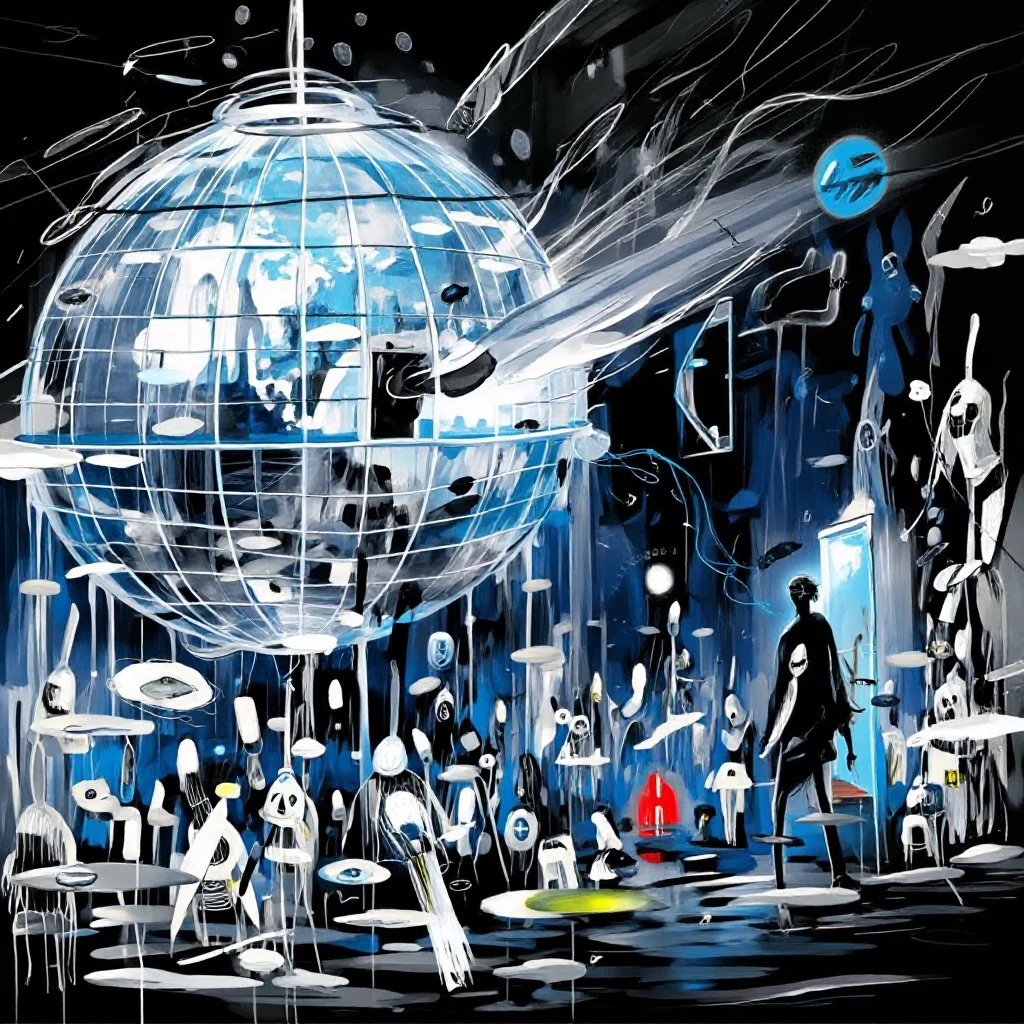
Magical Realism.
The Seedhouse
Mara kept the seedhouse cold enough for breath to bloom on the inside of its windows. Beyond the glass, the planet below was a blue-black basin, nameless from orbit, while the greenhouse curved around a single seed no larger than a thumbnail. The seed remembered forests that had been gone for nine thousand years: cedar rain, black soil, the green underground patience of fungi.
She was a glassblower, though she never admitted it when customers asked. They wanted windows for rooms in other worlds, and she gave them windows that remembered weather. A pane for a desert house could hold a dry scent of wind. A pane for a coastal nursery could tremble faintly whenever the tide changed. The best panes were not perfectly flat. They breathed.
Every seventh morning, the seed released a ring of silver pollen. The pollen settled in Mara's hair, in the seams of her sleeves, and along the narrow walkway surrounding the central chamber. On those mornings, the extinct forests rose behind her eyes. She saw their shadows moving through the glass.
This was the morning she intended to keep.
Her daughter, Jun, would arrive at noon. They had arranged to share breakfast in the small room where the first window had been made: pear, black tea, a pear sliced thin enough to let the seed's light through. Jun did not know that Mara had been saving one clear cup for her, or that the cup had begun showing a faint reflection of a kitchen on a world where mornings lasted until dusk.
At the eastern airlock, Mara found a blue thread tied to the handle.
The Thread That Would Not Slip
It was brighter than the seed's pollen and finer than spider silk. Mara pulled it free. The thread tightened around her finger, though she had not looped it. It ran along the floor, through the fern beds, beneath the irrigation pipes, and ended at an unmarked door.
The door had not been there the day before.
Mara tried the latch. The thread pulled toward the other side.
Then a voice spoke through the metal: You came alone.
“The airlock is empty.”
“I know.”
“Then you are speaking to no one.”
“You lied,” said the voice, “so the path became kind.”
Outside the door, the greenhouse darkened. A warning strip blinked: UNVERIFIED ATMOSPHERE. SAFE ROUTE AVAILABLE.
The thread loosened.
Mara had learned the seed's warnings by touch. Kindness was not safety. Safety was not truth. The seed remembered both, but it could not distinguish them when the people around it began lying. A lie made the dangerous path look gentle because the seed believed there was no reason to fear the person telling it.
So Mara said, “I am afraid.”
The thread snapped.
The corridor filled with branching red lights. Something enormous moved behind the walls, careful not to crush the glass.
What the Seed Remembered
The unmarked door opened onto a forest floor beneath a sky of no sun.
Tree trunks rose in every direction, their bark silver with age. Underfoot lay a mat of leaves that had not fallen because no wind existed. In the distance, a red door stood between two birches. It was the only red thing in the world.
Mara stepped through. The thread pulled from her sleeve, drawing a blue line back toward the seedhouse.
“This is not a room,” she said.
“No,” said the voice.
“This is a memory.”
“Memories are rooms when there is a door.”
She found the blue thread leading to the red door. When she touched it, the forest returned in fragments: children carrying saplings through ash; a woman pressing her palm to a living trunk; a field of white flowers bending under snow. Then she saw Jun, older than she was now, sitting in a kitchen that did not exist.
The red door opened.
Beyond it was the breakfast room. Pear on the table. Tea steaming. Jun laughing at something Mara had forgotten saying.
“If I step through,” Mara said, “will the morning stay?”
“Only if you believe it.”
“And if I do not?”
“Then the seed will show you what your belief cost.”
Mara looked back. The blue thread had crossed the forest and tied itself around the red door's handle.
She understood then. The trail was not guiding her away from danger. It was teaching her to call danger by its name. Every lie loosened one obstacle, but loosened it for the thing wearing the lie as well.
In the breakfast room, Jun looked up.
“You are late,” her daughter said.
Mara could have answered that the path had been kind, that the greenhouse was safe, that the seed remembered nothing worth fearing. The words rose easily. They would have opened the room completely. She would have kept the morning.
Instead she said, “I was afraid of losing you.”
Jun's face changed. The pear went gray. The tea cooled.
“I died,” Jun said, “on the morning you did not come.”
Mara's knees gave way. The room trembled.
“I kept the cup,” she whispered.
“You kept the story of the cup.”
The Window in the Red Door
The blue thread tightened.
Across the forest, glass began to sing. Mara knew that sound. It was the note made when a window was cooling after the breath of its first room had left it.
She turned. One by one, the seedhouse windows were appearing in the trees, floating between branches like moons. Each showed a different world: amber dunes, a city under snow, a room where someone was sleeping, a room where someone was awake and afraid.
Mara walked toward the red door. She did not step through.
She took the blue thread in both hands and tied it to the trunk of the nearest silver tree. Then she placed her palm against the door's glass panel, which had been waiting there unnoticed.
“I am a glassblower,” she said. “I make windows. I cannot make a day return.”
The seed answered through the walls. The greenhouse shook once.
“I can make a window for this morning,” Mara continued. “Not a promise. A place where the truth is allowed to enter.”
She drew breath and blew.
No molten glass was needed. The glassblower's breath was enough. A round pane formed between her hands, clear as water, clouded at its edges. Inside it, the extinct forests appeared without shadows. In the nearest tree, a small red door opened.
The forest waited.
Behind Mara, the real greenhouse lights returned. The seed's silver pollen lifted from the floor and struck the new pane. It did not pass through. It gathered there, becoming a second surface: pearl, midnight blue, and one bright line of red.
When Jun knocked on the breakfast room door, Mara opened it with both hands.
“I lied to you,” Mara said.
“I know.”
“I was afraid.”
“I know that too.”
They ate the pear. It tasted faintly of cedar bark. Outside, the seed remembered its forests, and the blue thread held the unmarked door closed.
By evening, Mara had shaped three new windows. One for a desert house, one for a coastal nursery, and one for the breakfast room.
The last was not a window that remembered weather. It was a window that remembered what it cost to speak honestly, and so it opened only when the person on the other side had finally stopped asking the morning to lie.





