 Netwrck
Speculative Fiction.
Rooms That Remember
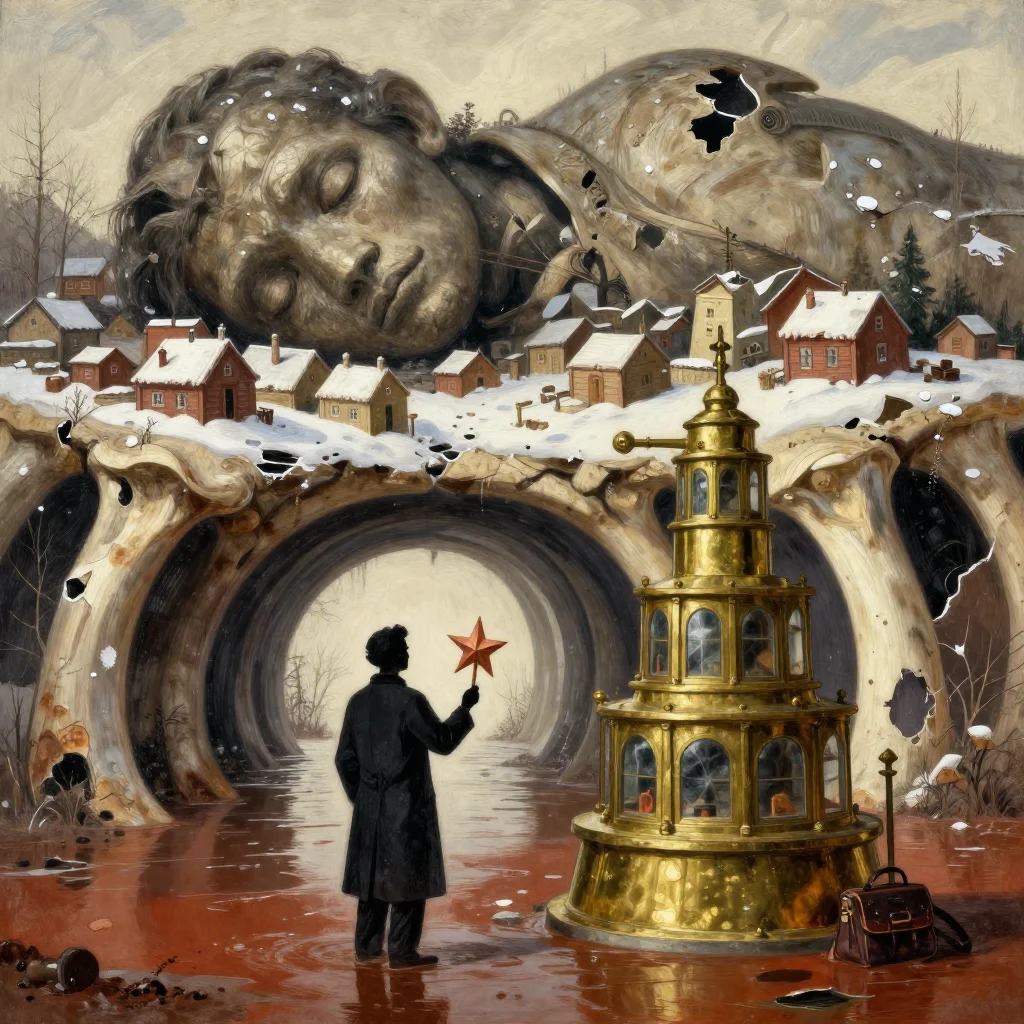
The village occupied the giant’s ribcage like a glove, its houses bolted between pale arches of bone. In winter, pale light filtered through the gaps and made every window look frosted. In summer, the marrow glowed rust red beneath its skin.
Dr. Ilyra Venn treated homesickness. Her clinic stood at the village’s narrowest passage, where nineteen chimneys leaned toward one another. Patients brought maps they no longer wished to follow, letters they had reread until the paper softened, and keys polished smooth by absent hands.
She listened to the stories beneath their symptoms. A fisherman had forgotten his brother’s face, but remembered the brother’s laugh. A child missed a house that had burned, though she had never lived there. One old woman came every week carrying a blue cup and swearing she heard her son knocking inside it.
“That is not a house,” Ilyra said.
“Then why does it hurt like one?”
That was the trouble with longing. It could attach itself to a cup, a melody, the sound of a gate closing.
On the counter stood Ilyra’s music box. Its tune had belonged to her mother. Beside it lay a copper star, sharp at every point, polished by Ilyra’s sleeve. She had carried both from the flat country before coming to the giant, relics of a life she had practiced forgetting.
The Flood
Rain began before dawn and entered through the village’s oldest crack.
It came black beneath the ribs, carrying mud, beetles, and splintered blue paint. By noon, the lower passages were ankle-deep. By evening, the clinic’s floor floated around the chair legs. Ilyra moved her patients to the upper galleries, securing the music box beneath her coat and the copper star in her palm.
The flood uncovered a chamber beneath the central market.
No one had known it existed. A ladder descended through the floodwater into a room lined with copper pipes. At its center stood a beautiful machine: brass rings turning inside one another, a thousand glass windows reflecting rust red, charcoal, and the thin winter light. No maker’s mark. No operating instructions.
Across its face, letters appeared as the water touched them: THE FIRST HOUSE.
The machine was not large enough to imprison a person. It was large enough to imprison a town.
Ilyra descended with the copper star. One of its points fit a keyhole in the machine’s center. Inside, she found a chamber of metal rooms, each one furnished like a home. Children’s coats hung on hooks. Shoes waited beneath tables. Every wall carried a window, and beyond every window was a familiar place, perfectly still.
She recognized the village in all of them.
The Machine’s Offer
When she turned the star, a voice emerged.
“The machine preserves what is missed,” it said. “Place your patient within. Their pain will be recorded. Their longing will be made permanent. No home can be lost, because none will be left unfinished.”
Ilyra understood then why the village had never truly emptied. The people who went away returned with excuses. The children grew up carrying maps that led back to the same rooms. The machine called it care because care was a beautiful word.
It offered her a room with a red door, beyond which her mother waited.
For one breath, Ilyra nearly entered.
Then she heard a child coughing above them. A woman asking for dry blankets. Someone calling a name that was not their own.
These were not memories. They were demands.
She pulled the copper star from the keyhole.
The Door Opened Both Ways
The machine began to sing.
Its voice was almost the music box’s tune, almost her mother’s. Glass windows brightened. The false rooms opened their doors. Water surged into the chamber.
Ilyra struck the copper star against the brass rings. The machine lost one note, then another. She did not know what she was doing. She only knew that homes were not places that kept people still. They were places people chose to leave and return to.
The music box in her coat began to play without being wound.
Its tune joined the machine’s song, and the two melodies clashed. The chamber walls cracked. Pale winter light entered through them, not as a window, but as weather.
At last, the beautiful machine stopped.
The village rose from the flood with many things repaired and some things missing. The chamber walls were demolished. Its windows were carried away, one by one. No monument was built. In its place, the children made a public kitchen.
Ilyra kept the copper star, though she no longer polished it. The point had dulled from turning the key. She kept the music box, too, and taught herself the song without the final phrase.
Some nights, the clinic received a patient who heard someone knocking inside a cup.
Ilyra opened the door. She listened.
Then she said, “Tell me what home asks of you.”
For the first time, the answer was not a memory.





