 Netwrck
Fairy-Tale Fiction.
The Theatre of Unfinished Nights
At the edge of the black-glass city, where the last streetlamps gave up and snow began without weather, stood the Theatre of Unfinished Nights. Its doors were carved from black lacquer, polished until the moon appeared twice: once overhead, once kneeling at the feet of anyone who entered.
Inside, the theatre performed endings that had not happened yet. A king abandoned his kingdom in the third act. A bride crossed the sea but arrived before she left. Every morning, the stage manager collected the discarded pages from beneath the orchestra pit and burned them to keep the theatre warm.
On the night the winter arrived, Mara sat at a piano with one broken key. She was a musician of modest gifts, known best for playing softly enough that ghosts could rest beside her. Whenever someone spoke truthfully, she heard a new note rise from the instrument: sometimes a silver chime, sometimes a low thunder hidden beneath the strings.
That evening, the note arrived when the stage manager confessed, “I have been hiding the final page for thirty years.” The theatre shuddered. From the wings came the sound of a hundred actors clearing their throats at once.
The Machine Beneath the Stage
Mara's mother had left behind a workbench and a sentence in her handwriting: Build something that can survive the storyteller. Mara had always thought it a riddle about music. Now she understood. Stories changed when their tellers died. Truth did not. If she could gather the notes hidden in the theatre and fix them into a machine, perhaps the truth of this endless winter could outlast the person who first described it.
She worked beneath the stage, among wires, velvet curtains, and jars of forgotten endings. Her machine had a wooden heart, brass lungs, and a hundred silver keys. She hammered the keys into the shape of a melody. The theatre's black lacquer walls drank the sound, but the melody returned warmer.
On the workbench lay two objects she did not remember owning: a white feather and a silver spoon. The feather had appeared in her pocket during the first snowfall. The spoon had been found beneath the piano, polished bright as moonlight. Together, they seemed to promise two different forms of nourishment: air for the living, milk for the starving.
The Winter That Refused an Ending
The machine completed itself before dawn. When Mara turned the final key, every note Mara had heard from truth emerged in a single chord. The theatre doors flew open. Snow streamed inward, carrying the smell of buried gardens and distant bells.
“You have made an ending,” said the stage manager.
“I have made a way through it.”
He smiled, then confessed the final page: the winter would last one generation because the city had rejected its own conclusion. Every ending had been discarded, including the one in which the cold withdrew. The season had become self-sustaining, fed by the belief that it had no alternative.
Outside, Mara's people began to forget their faces. Names loosened from letters. Children slept beneath frozen tables while adults argued over the last warm room. The machine played, but its melody could not persuade the winter to leave.
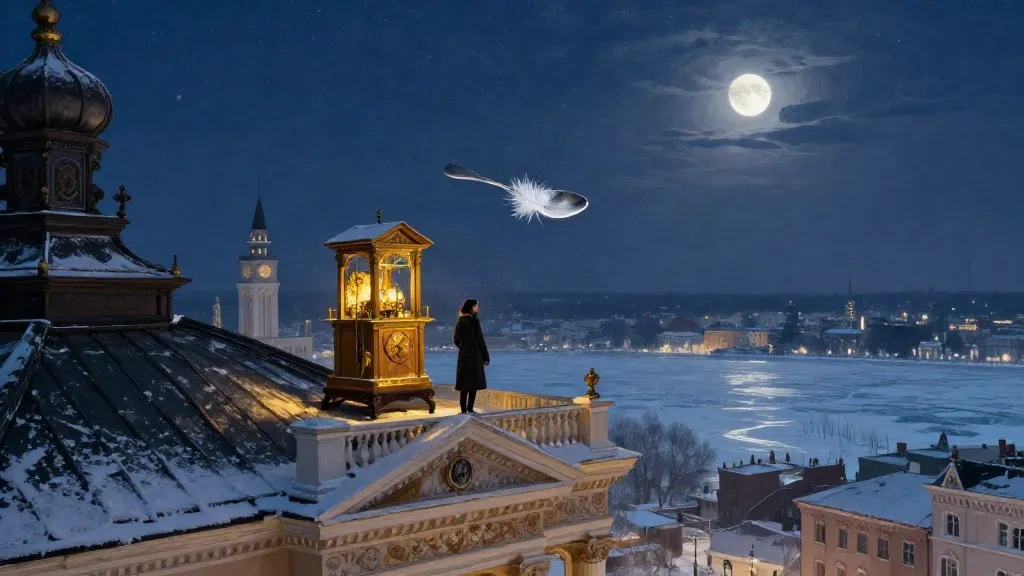
Then Mara noticed the feather lifting itself in the black wind. It pointed toward the theatre roof. She climbed with the silver spoon in her boot, and the stage manager followed, shouting that no ending could be trusted.
On the roof, the city spread white beneath a sky without stars. Mara held the feather above the machine's speaker. The spoon fell from her boot and struck the roof with a bright, impossible note. Truth and hunger answered each other across the silence.
What the Survivors Kept
At dawn, the winter ended—not gently, and not for everyone. The theatre sank into the lake, carrying its discarded endings with it. Mara's machine stood on the roof, black lacquer beneath a skin of gold dust. It played one melody every morning, the melody of the truth that had saved the city.
She never learned who had left the feather and spoon. She built them into the machine's heart, where they remain: the feather trembling at the center of each winter night, the spoon bright beneath the gold.
Years later, children asked why the old songs never ended. Mara told them that every ending leaves a sound behind, and every sound is a door. Some doors open onto tomorrow. Others keep the winter out until someone is brave enough to build a way through.
Then she sat at the piano and played the note that begins whenever a person tells the truth.





