 Netwrck
Romance.
Platform Four
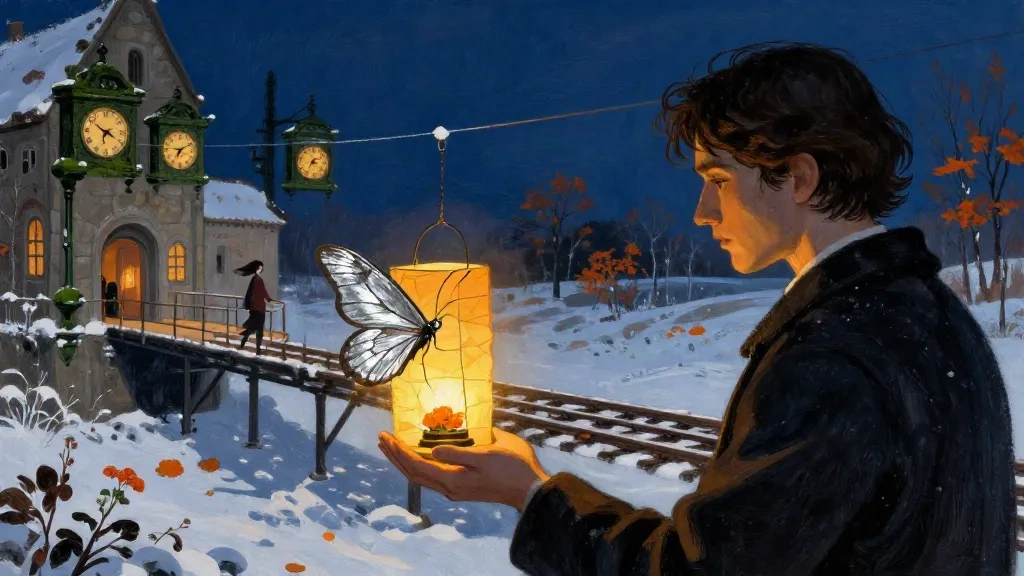
At midnight the winter station shed sleet but kept a dry clarity beneath its vaulted roof. Platform Four held a train with frosted windows and doors that opened onto white orchards, thunder, rain, and other seasons whose names passengers could not pronounce. Ilya Venn walked the platform checking the bronze dials bolted above the tracks. Each controlled a season for the next hour. He made them: clocks for thawing, drought, locust winter, and the blue collapse that made old apologies surface. The smallest ticked only when someone admitted what they had come to lose.
Inside his workshop, Ilya opened the drawer marked WEATHER THAT WAS NEVER USED. A paper lantern waited under it, marigold showing through rain spots. He had built it for Sera before she boarded the spring train and vanished into the chorus. Now he understood the brittle thing pinned beneath its handle: one silver moth wing, cut from the clockwork moth he had made in boyhood. The town archive insisted Sera had built the lantern, but archives were only witnesses with opinions. Before dawn, he would return it to the woman who had made it.
The Conflicting Dead
The choir lived beneath the station clock, and whenever Ilya set the lantern beneath its pendulum, memories answered. The bellboy who regretted leaving his mother wanted it returned. A woman's sharp voice ordered it burned so her promise to wait would be erased. A child's laugh hid the station in snow. Sera's own voice, young and breathless, commanded, Find me, but before the bell could ring. They were not warnings or ghosts. They were memories with interests: some wanted reunion, some wanted oblivion, some wanted Ilya to keep choosing grief.
When he tried to separate them with a seasonal clock, every hand on the dial tightened. The blue-collapse needle broke. Frost webbed the workshop window, and the lanterns along Platform Four leaned toward the tracks as if listening for a train. One voice insisted Sera had made the lantern alone. Another said she had meant to burn it. The choir did not lie, Ilya realized; it sang true fragments arranged into lies. He shut the case. In the sudden quiet, a marigold glow appeared between the autumn trees across the rails.
The Woman Beyond the Tracks
Sera stood on the autumn platform with paint on one thumb, though winter had silvered her hair. She looked at the lantern, then at him, while the choir rushed through her remembered voice. You kept it, she said. I made it for you. I wanted you to come after me, and when you did not, I boarded anyway. The paper trembled in his grip. She reached for it, but a chorus of versions cried at once: she had hated him, forgotten him, waited for him, married him. Ilya saw the memories fighting to make their separate women into the only Sera. He stepped off the winter platform. The return track could hold only one season at a time, and the choir had filled it with every possible parting.
What the Light Kept
He placed the lantern in Sera's hands. It belonged with its maker; the memories could not own it for her. Her fingers closed around the wet paper, and the silver moth wing inside caught the marigold light. Then the choir rushed through the station, voices stripping the departure bell from its hook and hurling it beneath the rails. Ilya caught the bell on its final fall. Sera struck it with the lantern's brass base. One clear note opened a path between winter and autumn. Beyond it waited neither the life she might have lived nor the woman she might have become, only the station, its wet stones, and the first honest choice they could make together. They boarded side by side. Ilya reset the seasonal clocks to winter, then set the returned lantern where its marigold panel caught every departing season. Its small light held steady, no longer a summons or a relic, but a home they had chosen in full view of the dark.





