 Netwrck
Speculative Fiction.
The Surveyor’s Silver Spoon
Mara Venn surveyed the Ashen River at dawn, when the water was still the color of a closed ledger and the frost held its pale winter light along the banks. In the town of Bellwether, every bridge was a promise and every river was a witness. The oldest crossings were named for vows: Mercy Span, Widow’s Step, the Agreeable Stones. The newest had only numbers, but the river remembered each one.
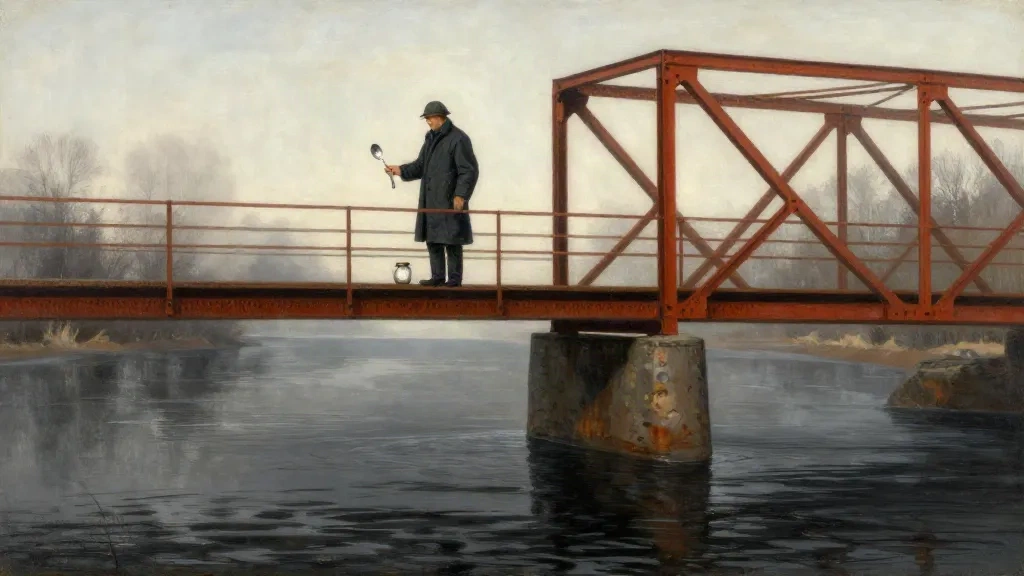
Mara poled her narrow skiff downstream, tapping a silver spoon against the gunwale. Each tap released a thin blue line of feeling into the water. Grief moved upstream in dark spirals. Anger traveled beneath the surface like a bar current. Love, when it appeared, was difficult to distinguish from the river’s ordinary shine.
She had learned the ritual from her mother, who had kept it private. Once a year, on the first night the river carried ice flowers, Mara swallowed a pinch of salt from a blue jar and measured the town’s unspoken desires with the spoon. Then she wrote what she found in a ledger no one else was permitted to read.
That year, the river carried a sensation she had no name for.
The Bridge That Would Not Fade
It began at Mercy Span, where the rust-red paint had peeled until the iron beneath resembled an old wound. Mara lowered the spoon into the current. The feeling struck her wrist: a white flash, then the pressure of many hands clasping a hidden thing.
She brought up the skiff and found a knot of iron filings caught beneath the bridge. They were warm. The river should have carried them away.
Mara unpacked the bridge ledger from beneath her seat. Every crossing in Bellwether possessed one, though the municipal records listed only stone, timber, and repair dates. Her mother had taught her to read the older marks: small vertical strokes where a promise had been made, crossed strokes where it had been broken.
Mercy Span held hundreds of them. The oldest marks ran beneath the present foundations. Some had been deliberately overwritten. She spread the pages across her knees, but the ink blurred whenever she tried to read the deepest lines.
The river was keeping the record. Not the ink. The water.
Mara put away the spoon and drew the salt jar from her coat. The salt had grown damp, though its lid was tight. When she shook it, one grain struck the iron filings and produced a sound like a distant bell.
A Witness Is Not a Keeper
By evening, Mara had crossed every bridge in town. At each one, the river gave her a fragment. A marriage concealed beneath the mill bridge. A contract betrayed near the tanner’s ford. A child’s promise to return, kept long after the child had vanished.
At the Agreeable Stones, she found the record of Mercy Span’s first builder, Aldren Vale, who had agreed to carry the town’s taxes forever in exchange for free passage across the river. His descendants had honored the bargain. Then, sixty years ago, the council had replaced the public oath with a sealed settlement, sending the debt into a private company and erasing the villagers’ rights.
The river had preserved what people had chosen to forget.
Mara understood then why her mother had never shared the ritual. A private ritual kept a private witness. The moment it became public, the witness would have to answer. She could restore the old promise, but the council would call it slander. She could keep the record hidden, but the river would continue carrying the knowledge beneath every waking step.
At midnight, she returned to Mercy Span with the ledger, the spoon, and the salt jar. The town gathered without being summoned. Lanterns appeared in windows. Shutters opened. On the bridge, the rust-red beams shone under the pale light.
The Promise in Public
Mara placed the silver spoon on the bridge’s center line and opened the salt jar. The wind stopped. The river rose, smooth and black, until its surface reflected every face on the bank.
“I have kept this witness alone,” she said. “Tonight the witness belongs to everyone.”
She tapped the spoon once. The river lifted the ledger’s erased lines into the air, writing them in silver across the underside of the bridge. Aldren’s promise appeared first. Then the settlement. Then the names of the officials who had signed it.
The crowd read the record in silence. No one touched the spoon. No one asked Mara to make the feeling disappear.
When the writing faded, the old vow remained. The council could no longer call it forgotten, because every bridge and every living witness had carried it forward.
At dawn, Mara found a new salt crystal inside the jar. She tasted it before realizing what it was: not regret, but resolve.
The river had kept the secret long enough. Now it had become a public act.
Mara pocketed the spoon and walked home beside the brightening water. Behind her, the bridge gave one low metallic note, and the town began, at last, to answer.





