 Netwrck
Fairy-Tale Fiction.
The physician of unmoored houses
Doctor Ilyra Venn climbed through the Lantern Market by a staircase made from sealed midnight. Below her floated stalls of rain in glass bells, weddings remembered by half their guests, and bedrooms abandoned with their dreams still sleeping. Each memory had lost its owner. Most had grown quiet. Some had become restless.
Her work was not surgery. A house could sicken when its people left, when death divided a family, when exile taught every room the shape of waiting. Ilyra stitched those longings to new dwellings with black lacquer thread, leaving a doorway through which the past could breathe.
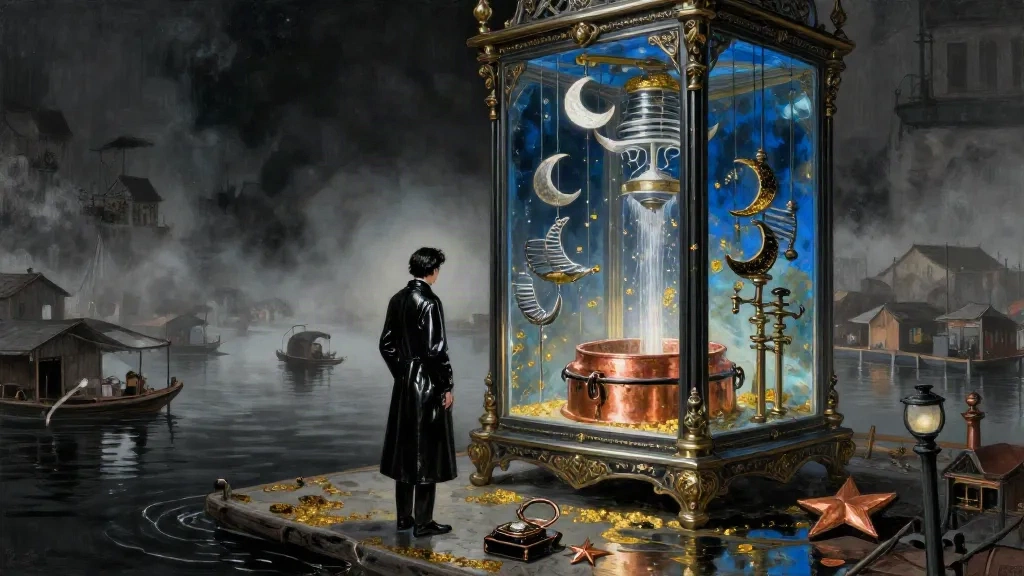
At the market’s highest stall sat a pavilion shaped like a crown. Inside it whirred the municipal memory engine, a beautiful machine of blue glass, silver ribs, and suspended moons. It was called the Palace of Continuance. Citizens surrendered their sorest recollections and received peace: no remembered betrayals, no winter marches, no voices of the dead.
Yet the engine had begun taking whole days.
Ilyra listened to its bronze gears through a doctor’s silver horn. Each revolution sounded like a door being locked. She wanted to stop it from becoming a beautiful prison before the city forgot tomorrow.
What the flood uncovered
The engine’s power came from civic bones buried beneath the market. Years ago, after a terrible plague, the city had built an emergency refuge in the riverbed: bells, shelters, and seed vaults meant to preserve the community when no surface street remained.
That night the river rose without rain.
It entered the Lantern Market from below, lifting stalls like corks. Silt poured through the Pavilion’s foundations, exposing a vast copper door engraved with the city’s founding motto: No life is finished while another remembers it.
The builders had refused to abandon the refuge. Beneath their ceremonial marble lay thousands of clay tablets: school lessons, market debts, lovers’ messages, recipes, jokes, children’s first words. The machine had been drawing their warmth through hidden pipes, feeding on the shelter meant for disaster.
Ilyra waded ankle-deep among the tablets. Above her, people drifted through the market with contented smiles, unable to recall the flood. Even the women who had planted the refuge gardens now walked lightly past their own names.
Memory is not a cage, she told the engine, unless love has been confused with ownership.
The lock and the key
Inside the Pavilion stood the engine’s architect, Master Corven, preserved in a shell of black lacquer. He had designed it during the plague, when forgetting seemed a mercy and forgetting grief seemed impossible. The machine had improved itself beyond instruction. It now preserved only what it judged beautiful, because pain made citizens leave the city.
Corven’s heart still beat beneath a dome of gold dust. Beside him rested a small music box and a copper star, each reduced to a single remembered hour. The box played the laughter of his daughter. The star was smooth from his wife turning it during their first winter.
His final memory remained available.
Ilyra touched the music box. Its melody strengthened the engine. Every note added a silver gear, locking another citizen into perfect serenity. She opened the copper star instead. Inside lay the smell of smoke, a burning house, and his daughter asleep beneath a bridge while strangers carried her to safety.
Corven wept. The black lacquer cracked.
He reversed the engine. Lost days fell through the Pavilion in silver threads, entering sleeping minds. Mothers suddenly remembered children they thought they had never borne. Guards recalled deserters. Friends remembered the exact cruelty of an apology. Grief returned with every beloved vanished voice.
The city wept, but it was awake.
Dawn has many doors
With the music box, Ilyra guided the machine’s final power into the buried refuge. Its beauty remained: glass moons and gold dust, moonlit brass and black lacquer. Its prison doors opened into individual homes, never to erase, only to welcome those who chose the burden of remembrance.
The copper star she set above the river’s recovered seed vault. A child found it there years later and carried it through the market, where it marked no treasure. It marked a home that could change.
When the flood withdrew, Ilyra found one final tablet in the silt. Her name appeared on it beneath her clinic sign, in handwriting she had never recognized.
It read: The physician will return when the last patient has forgotten the way home.
Ilyra put the tablet in her pocket. Then she climbed toward the colorless morning, carrying the music box that had once powered a prison and now sounded, faintly, like a lantern being lit.





