 Netwrck
Science Fiction.
Discarded Endings
At dawn, Maren locked the theatre before its performance of tomorrow. Under the stage, hundreds of endings waited in glass jars: weddings broken by sunrise, cities erased by an unanswered apology, old women leaving gardens they had tended for sixty years. Each bore a number and a destination. Maren read them aloud while the terracotta dust settled on her sleeves.
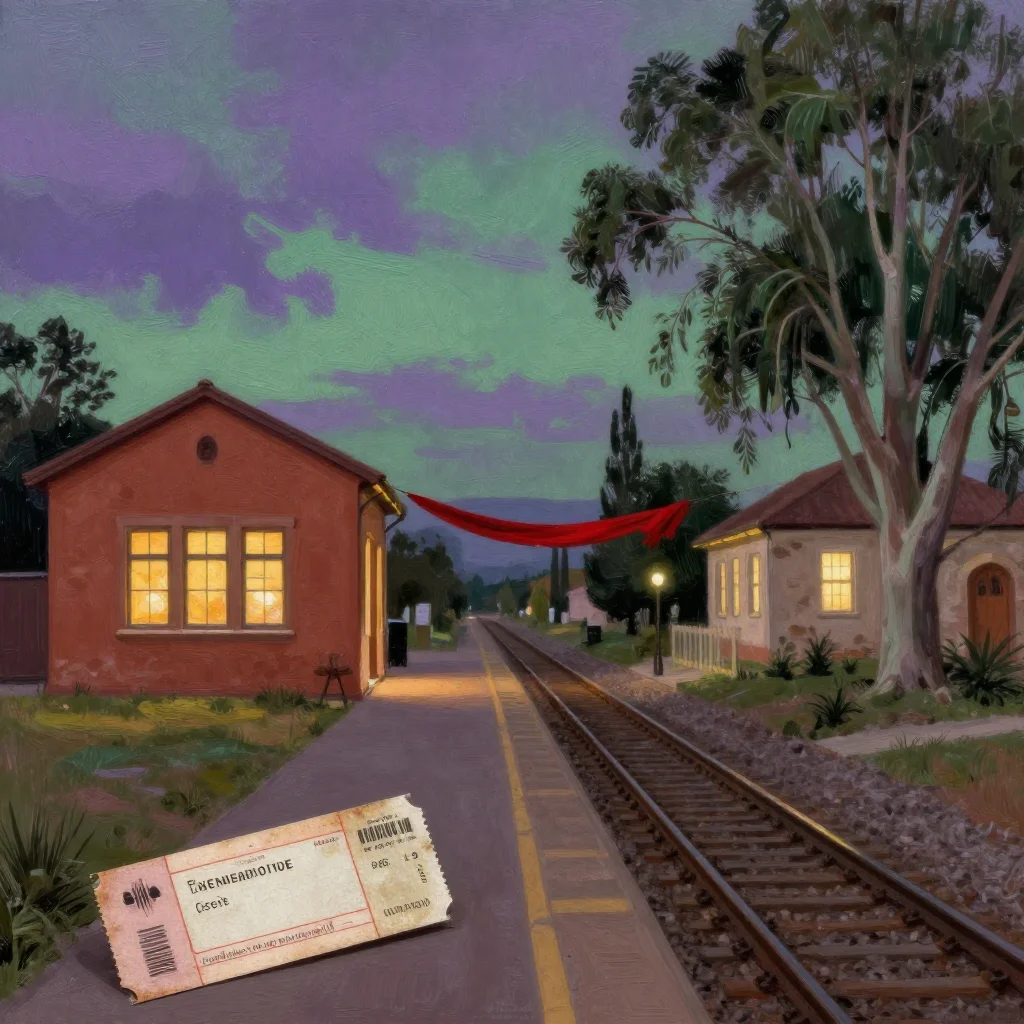
Among them she found Platform Nine: departure, 4:10 a.m. The listed speaker was her sister, Iona. The final property was the green house above the eucalyptus bend, where the plaster chimneys coughed and the blue door swelled whenever rain approached.
“Not that one,” said a voice from the clockwork booth.
Stationmaster Vell leaned through the hatch, his brass schedule bar on one shoulder. “There is an error. Trains do not make choices.”
Maren folded the notice. “Houses do.”
The Sick House
Her rounds began beneath a sky like bruised fruit, its purple bruising fading to green at the horizon. Maren carried a medicine case of mineral salts, blue thread, and folded letters. Villager houses suffered diseases no physician could name. They withheld cups. They drooped shutters. They frightened children by repeating the names of those who had moved away.
The green house sat at the end of the lane, leaning toward the missing railway cutting. A red scarf hung from its blue door.
Inside, dust coated every room. The kitchen clock had stopped at 3:52. A train ticket lay beneath the sugar bowl, dated that night, its destination reduced to a black stain.
“Your sister is away,” the house whispered from beneath the floorboards.
Maren set her case down. She and Iona had not spoken for two years, not since their mother’s funeral, when each of them had blamed the other for the final goodbye. Tomorrow, Iona would leave. Not to another town. The discarded ending offered only departure.
Vell’s Corrections
“Municipal error,” Vell announced when Maren returned to the theatre. “The house has mistaken grief for a destination. Remove the memory and it will settle.”
He laid a brass timetable across the stage. Every version of tomorrow conformed to it: departures, arrivals, changes, cancellations. As Maren studied the columns, the jars rattled. Windows bloomed, rivers curled backward, and a newborn took her first breath beside a grave cut twenty years ahead.
“These are not schedules,” she said.
“Then they are delays.” Vell punched tickets. Each hole released a thin blue line. The sounds in the theatre flattened: a proposal became a murmur, a death erased its last word. “An ending before its proper time is a fault in the line. Correct it, and tomorrow resumes.”
Outside, the green house rang like a struck bell. Mortar loosened from its walls. The red scarf whipped through a cracked window and snapped taut toward the railway.
Maren understood at last. The house was not leaving Iona. It was trying to reach her before the train did.
Repair
She ran the lane with the unused ticket pressed between her fingers. The blue door would not answer. She spoke the words she had carried in her case, not a diagnosis but the truth: “I was angry because you stayed after I asked you to go. I was grieving because you did not.”
The hinges moved. Inside, Iona sat beneath the kitchen table, clutching the other end of the red scarf. Tears had cut clean paths through years of careful silence.
“I thought if I left first,” Iona said, “you could not leave me.”
Maren tied the scarf around both their wrists. “Then we leave together. Not tomorrow.”
The house groaned. Its walls straightened, chimneys finding their true heights. The stopped clock moved to 3:53, then stopped again: nothing could be scheduled, but everything could be repaired.
What Tomorrow Kept
At the theatre, Vell was preparing the platform for departure. Maren laid his brass timetable on the stage, crossed out one line, and wrote beneath it: The train will wait while a person speaks.
The jars of discarded endings broke open. Tomorrows rushed through the theatre in conflicting colors. Maren caught the notice belonging to the green house and tore it once, from the bottom upward.
Outside, the red scarf floated above the lane. In her hand, the ticket showed no destination—only its true return: the blue door behind them.
At 4:10, no train came. The house answered instead, one warm window opening after another. By morning, every light in the village shone together, and none waited to be left behind.





