 Netwrck
Folk Horror.
The Lending Desk
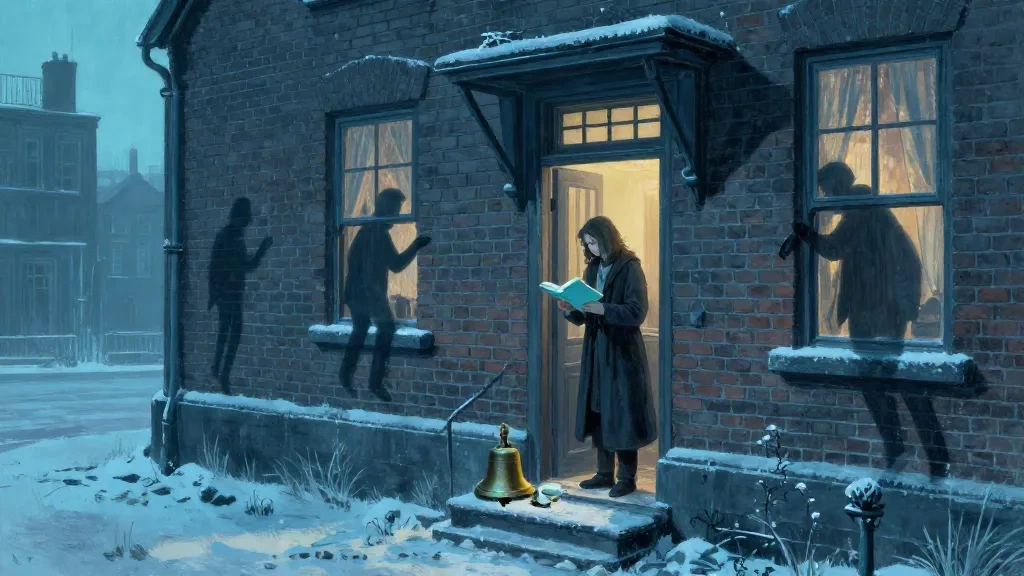
Mara kept the library beneath the old tram line, where frost gathered along the pipes and the windows refused to show the street outside. At dawn, the city’s shadows rose first: thin iron silhouettes stepping from walls, carrying briefcases, baskets, schoolbooks. By the time the citizens arrived, each had acquired a second shadow, darker and more obedient, cast in whatever direction the person had decided not to look.
On the lending desk waited an empty teacup and, beside it, a bell with a crack running through its bronze. The bell did not ring. It remembered ringing. Mara had inherited both with the desk, and with them the book.
The book had no title. Its cover was pale blue, soft as the impossible dawn that sometimes appeared behind the eastern tenements. Whoever opened it saw themselves reflected twice: once as they were and once as the city had agreed they were. The second figure always stood in a house. Sometimes it looked happy.
Mara’s customers borrowed the book, returned it changed. A widow read her own name in a ledger of departures. A dockworker discovered the house he had never owned. A girl kept asking why the shadow of her mother had entered through the wall.
The Child at the Stairs
The child came on the coldest day, carrying a paper crown softened by rain. He pointed toward the reading room.
“There is someone standing in the corner,” he said.
Mara looked. The corner held snow, a radiator, and the blue-grey shape of an old woman with one hand resting on the banister. The woman’s feet were planted on the floor, but her shadow climbed the wall and continued into the ceiling.
“No one is there,” Mara said.
The boy shook his head. “You said that too.”
He opened the book. The old woman vanished from the corner, leaving a damp mark shaped like a palm. On the page, beneath a floor plan of a narrow house, appeared a room that did not exist in any municipal record. Inside it stood a table, an empty teacup, and the cracked bell.
Mara knew the address. She had passed the house every morning for twenty years, though she could never remember seeing anyone enter it.
A House Willing to Open
Her desire was simple and had become difficult to confess: she wanted a home that accepted impossible residents. Her rooms above the tram line accepted only obedient shadows. They hung from the hooks by the door, neat and silent, and each morning left a little less of Mara behind.
At dusk she followed the old woman’s route through the alleys. The streets narrowed into passages between buildings that had agreed not to touch. Frost silvered the bricks. Iron dripped from every pipe. Above the city, the sky tightened into a single strip of cyan.
The house stood where the map had promised it: a narrow brick building with no windows on the ground floor. Its door was open a finger’s width. Beyond it was darkness, but the darkness breathed.
Mara entered.
Inside waited many rooms, each occupied by a thing the city had excluded from its ledgers: a drowned dog shaking seawater from its coat, a man made of chimneys, a child whose shadow was a black door. They turned toward Mara. None of them asked why she had come.
“Is this a library?” one asked.
She set the teacup on the table. The crack in the bell widened.
What the City Overlooked
The bell sounded then, not in the room but beneath the floor, under the streets, through every wall. Frost raced across the windows. The shadows detached from the residents and entered through the house, carrying their citizens’ abandoned shapes.
Mara opened the book.
On its pages, every possible resident had a place. The drowned dog received a dry room. The chimneys were granted a chimney. The black door found a handle.
The child from the stairs stood beside her. He pointed to the last blank page.
On it, the old woman held the cracked bell. Mara understood then that the city’s shadows were not servants. They were the parts of people the city had disowned, and the house was where those parts came home.
She wrote her name in the book.
At once, every shadow in the city stopped moving.
Then one by one they turned toward the little house, carrying their borrowed faces, their iron hands, their impossible dawn.
By morning, the building had no roof. The city had gained a hundred windows, and each one reflected a room where someone no longer pretending to be human was finally being counted.
Mara left the empty teacup on the desk. The bell remained cracked, but its note had changed. Whenever the city forgot what it had done, the house rang it back into being.





