 Netwrck
Folk Horror.
The Book of Borrowed Rooms
Mara Venn had learned that Bellwether forgot things in a particular order. First the names of children who had grown too old for the cliff path. Then the songs of women who left by boat and never came back. Finally, the doors of houses that had been demolished, their brass numbers polished by the returning sea.
The town library occupied a salt-white room above the boat sheds. Mara catalogued photographs, ledgers, tide tables, and the biographies of people who objected to being remembered. In a locked drawer she kept a book with no title, its cover bound in blue cloth that softened whenever the fog came in.
The book contained floor plans for rooms that did not exist. Every tenant of those rooms had once been told to leave. The tenant notes ended in the same sentence: Home will accept what the world refuses.
Mara had no intention of lending it. She had spent twenty years searching for a place where her sister, whose shadow pointed inland while everyone else's pointed toward the sea, could live without being explained away. Their parents had called the shadow a trick of light. The doctors had called it a symptom. Mara had stopped asking.
What the Tide Returned
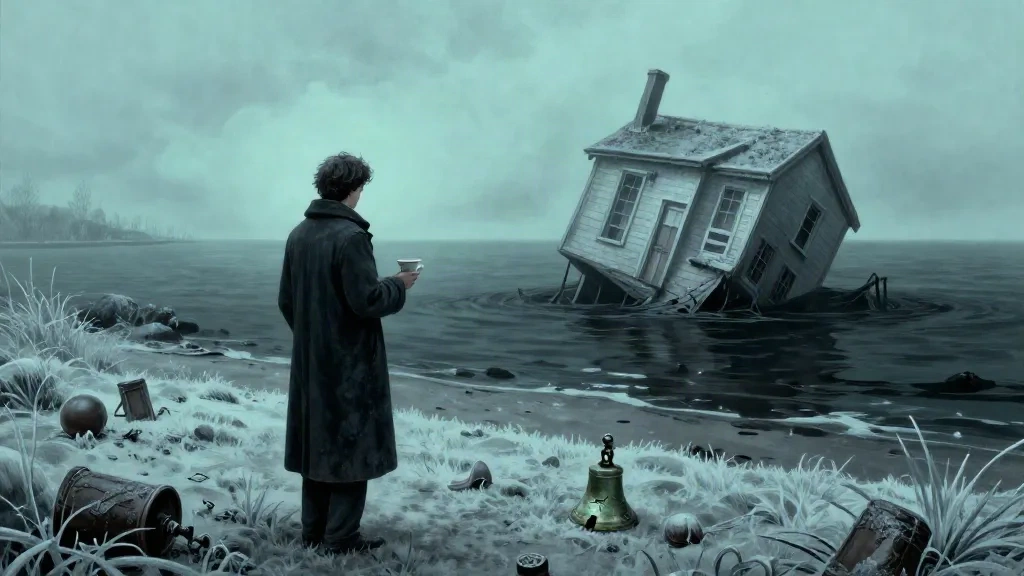
On the morning the sea gave back the teacup, Mara found it on the sill outside her window. It was empty, chipped at the rim, and painted with a small blue flower that had no name in the town's plant records. Beside it lay a cracked bell, bronze green with salt, its voice trapped inside like a swallowed insect.
That afternoon, a woman named Oren Pike asked to borrow the impossible book. She had been the last person to see the missing children, though she claimed she had forgotten their faces. Mara opened the drawer. The book leapt into Oren's hands.
“I need a room for my brother,” Oren said. “He is dead, but he follows me home.”
Mara handed over the book. On its first page, a narrow staircase appeared beneath a line of blue ink. Oren left without reading the rest.
By sunset, the tide brought back a silver door handle, a child's shoe, and a handful of pale nails. Bellwether's people stepped around them as they returned from the harbor. Someone always said they had been there all along.
The Child at the Stacks
The child appeared in the library three days later, barefoot and shivering despite the mild weather. She gave her name as Nell, though the town records listed no Nell for two hundred years.
“You can see it,” she said.
Mara looked at the window. Frost feathered the glass, though it was summer.
“See what?”
“The thing under the water.” Nell pointed toward the bay. Beneath the black water, just beyond the breakwater, a large pale shape moved against the current. It had the outline of a house, but the house was upside down, its roof pointing into the deep. Around it drifted the returning objects: cups, bells, buttons, wedding rings, a wedding veil folded into a square.
“Everyone agreed to overlook it,” Nell said. “That is how it stays.”
Mara understood then why the tide returned one thing each morning. The town was feeding the house. Each forgotten object made room inside it. Each denial enlarged it.
Nell opened the impossible book. The pages fluttered toward the shape in the bay. Between two drawings of the same empty room, a sentence appeared:
The house is not haunted. It is waiting.
What Home Accepted
They reached the house at the soft cyan edge of dawn, when the sky seemed lit from beneath the clouds. The cracked bell rang in Mara's coat pocket. The empty teacup trembled against her palm.
The drowned door opened upward. Inside, there were shelves, beds, kitchens, and windows looking into rooms no house could contain. At the center of the largest chamber waited a chair. Her sister sat in it, shadow and body alike.
“I thought home meant somewhere that accepted both of us,” Mara said.
Her sister looked at the pale house. “Then bring it here.”
Mara placed the teacup on the table. She set the cracked bell beside it. Nell read the tenant notes aloud, and each denied name rose from the pages. The house shuddered, not with hunger, but with recognition.
Behind them, the people of Bellwether began to remember. They remembered the door handles, the children, the women who left. The names hurt, but the house did not punish them. It simply opened more rooms.
At sunrise, Nell vanished from the threshold. The empty teacup held a little clear water. The bell's crack had healed into a thin silver line.
Years later, visitors to the library would ask why Mara never locked the drawer. She would place the blue book into their hands and answer that home is not built from walls alone.
Somewhere beneath Bellwether, the house kept its doors open, waiting for the next person willing to bring a monster inside.





