 Netwrck
Magical Realism.
The Story Plotter
On the night Mara Venn received her gardening assignment, the shadows of Lantern Quarter were filing into the alleys behind their owners. They carried folded complaints, unpaid debts, and small notes of affection. Each evening they voted on which windows deserved flowers, then returned beneath their citizens before the midnight bells.
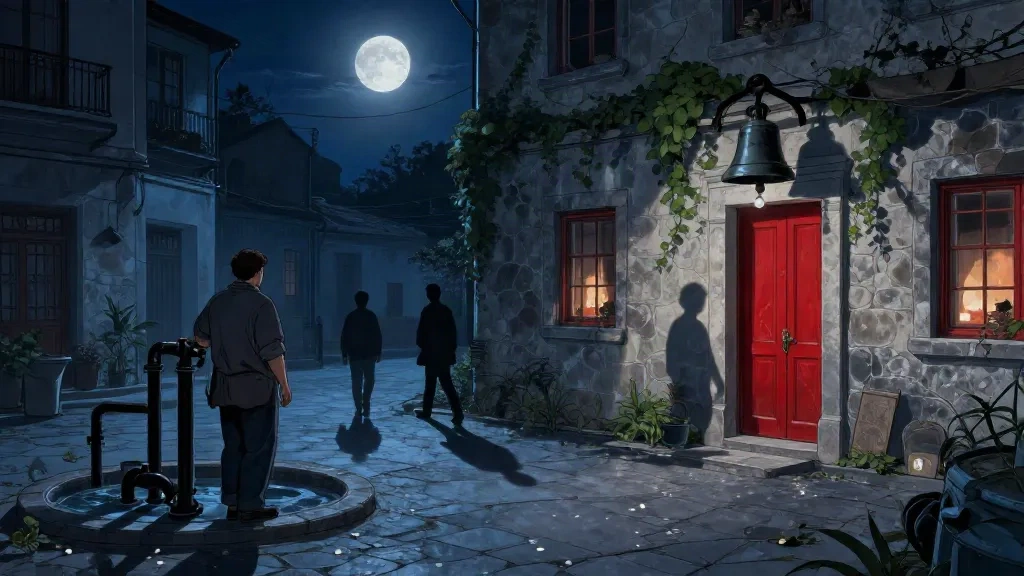
Mara did too. Her shadow was broad through the shoulders, because municipal gardeners were required to look taller in paperwork. She unlocked a neglected courtyard behind Alister Street and found only cracked paving, a dead fountain, and a single red door standing without a wall.
Her commission was written on blue paper. Plant stories in unoccupied ground. Preference: abandoned courtyards. She carried no seeds, only a ledger of stories people had abandoned. The Vale family’s filled the first page. Their grandmother had hidden beneath this fountain during the Night of Borrowed Shadows, singing arithmetic to frightened children until morning. The city had forgotten her, but her brass key remained in the municipal museum, tagged UNEXPLAINED.
There was also a cracked bell. The Vale children had rung it whenever someone needed to be found.
A Doubtful Machine
The fountain’s basin concealed a machine of black pipes, porcelain wheels, and a copper funnel shaped like an ear. Mara’s grandmother had maintained similar machines in the city archive, where stories were pressed into tablets that could feed poor neighborhoods through the pipes.
“This one was never finished,” the curator had said. “It collects a true story, but only while nobody believes it is working.”
Mara wanted to believe it. She wanted to know the family history had left any echo in the stone.
So she began testing disbelief. She left the courtyard unlocked and announced that the machine was merely plumbing. By noon, three beggars had entered looking for shade. By evening, a widow had slept beside the dry fountain. Mara told herself the machine was an empty basin and a locked cupboard.
At midnight, the pipes coughed. Gray words moved through them: She counted us in. Then came a child’s voice, thin but clear.
Mara stopped believing. The voice vanished.
The city was not fooled for long. Once the shadows reported that the machine could shelter strangers, superstition spread through Lantern Quarter. At dawn, the courtyard filled with inspectors carrying brass rulers. The shadows became solemn. The machine stopped.
What the Shadows Knew
Mara’s shadow refused to meet her eyes. It sat apart near the red door, holding the museum key in one long hand.
“You were told not to believe,” it said.
“I believed people were more important than plumbing.”
“So did the machine. You kept making it smaller.”
That night, Mara rang the cracked bell. Its note scattered through the quarter. The shadows followed, carrying the invisible citizens who owned them: bakers, bakers’ wives, night clerks, a ferryman long dead. They filled the courtyard and stood with their faces toward the machine.
Then they abandoned one another. Each stepped from its owner and crossed to someone new. A dockworker’s shadow held an old woman’s hands. A child’s shadow embraced a stranger in a soldier’s coat. For ten suspended minutes, nobody knew whom they belonged to.
Nobody believed in the machine.
It drank darkness.
Walls rose from the paving: chalked kitchens, a pensioned lion, rooms still fragrant with plum smoke. The Vale grandmother appeared in the fountain, younger than memory had made her, counting every borrowed face. The red door opened onto the largest room, and beyond it, the city’s lost people crossed without surrendering their names.
The Address of a Home
Dawn came with the inspectors still asleep. Mara climbed onto the machine and rang the cracked bell again. This time its voice came from every wall.
“Shelter is not faith,” the grandmother said. “A home is a story that makes room for the next sentence.”
Mara understood then. She had not needed the city to doubt the machine. She had needed it to doubt that strangers had nothing worth sharing.
She took the brass key from her shadow and fixed it beneath the red door. When the shadows returned to their citizens, they found the door waiting. They passed through carrying nothing but their owners’ weight, yet inside the courtyard every silhouette cast more than one life upon the wall.
No inscription named the Vale family. Mara would not need one. By winter, the place had no kitchen, no feast, and no lock that could be turned against a newcomer. Only a bell with a fault in its voice, brightening as it warned the lost to come closer.
On the final page of her ledger, Mara wrote: A family story planted here may shelter anyone who enters carrying the name of someone they have lost.
Then she planted the page.





