 Netwrck
Hopeful Science Fiction.
The homesick ward
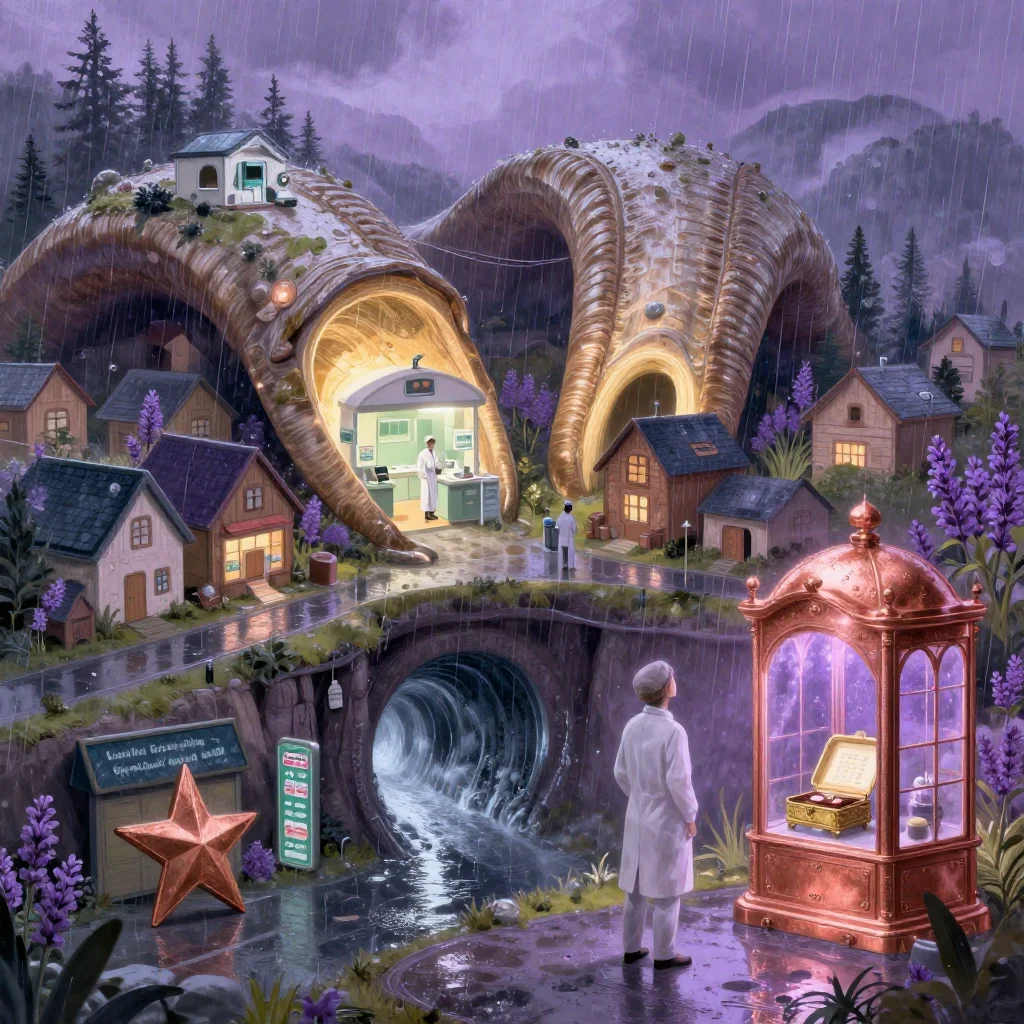
Mara Venn’s clinic occupied the sixth rib of the sleeping giant, where rain tapped through a seam in the bone and settled on the floor in warm, coin-sized drops. She had inherited the building from her grandmother, along with a brass music box and a copper star that no one would admit stealing.
Her patients did not complain of pain. They complained of thresholds.
“My house remembers the sea,” said Pell, a ferryman holding a blue scarf over his chest. “Every room leans toward the water.”
“The orchard is full of doors,” said Ilya, who had arrived with soil in both hands. “They open onto rooms where nobody lives.”
Mara treated homesickness with small acts of alteration. She moved a chair away from a window. She replaced a doorbell whose chime made someone remember a funeral. She prescribed a walk around the village and a story in which the traveller returned home changed.
Below the clinic, the giant breathed. Inhale, the old roads trembled. Exhale, dust sifted from the roof beams. Everyone pretended not to notice, except the children, who slept beneath its heart.
Mara’s purpose was simple: help people inhabit their lives without becoming imprisoned by them.
The machine that welcomed
The beautiful machine stood in the old grain exchange, its copper body polished until the lamps of the market floated across it. It was called the Welcome Engine. A single glass chamber held a miniature village: tiny houses, moving figures, a copper star turning above a lavender square.
When a visitor entered the square, the machine played eight notes from Mara’s music box. It projected a warm room, a table set for the person’s family, and the exact expression of welcome they had been missing.
The engine had been installed before Mara was born. Its inventor, Orin Vale, claimed it could cure distance. In time, nobody had to miss anywhere. The square welcomed them home before they arrived.
Mara disliked the machine. Its promise was too complete. A home should be somewhere a person could leave and return to, not a destination that erased every other road.
Then the river changed.
On the third night of rain, water entered the grain exchange through a crack in the floor. The miniature village spun. The copper star came loose and rolled beneath the benches.
When Mara bent to retrieve it, she found a second set of steps descending into the dark.
What the flood uncovered
The steps led to a vault beneath the village, its walls lined with green pharmacy-sign glass. The flood had washed away the cement from a buried project: a network of tunnels, kitchens, classrooms, gardens, and workshops built inside the giant’s old arteries.
Its plans were pinned to the wall. The Welcome Engine was not meant to cure homesickness. It was the lock.
Orin Vale had discovered that the village could survive only if its people remained near the giant. The tunnels were designed to hold everyone, but the machine had been altered to project belonging so constantly that no one felt permitted to desire anything beyond it.
Mara held the copper star in her palm. Beneath its point, a tiny date was engraved: the day the engine began.
She understood then why her grandmother had kept the music box locked away. The eight notes were not a welcome. They were a command, tuned to the village’s oldest fear: that without the giant’s shelter, they would become small enough to be forgotten.
Outside, water struck the clinic roof. The green pharmacy signs blinked through the flooded streets. People gathered at the exchange, shouting for the machine to start.
Mara carried the copper star upstairs and placed it in the engine’s glass chamber.
A door that stays open
The machine recognized the star and began to sing. Eight notes filled the exchange. Lavender light spread over the crowd.
Mara opened the music box.
The ninth note was wrong. Her grandmother had damaged it years ago, perhaps to keep the engine from remembering the real melody. Mara held the lid against the wheel until the note emerged: thin, human, unfinished.
The miniature village dissolved.
For one terrible moment, everyone saw themselves as they were: tired, frightened, hungry, and in need. No room appeared to receive them. No relative smiled from a remembered wall.
Then Mara opened the buried stairs.
“This is not the way out,” she said. “It is the way through.”
They descended into the tunnels as the flood poured behind them. The tunnels were not a perfect home. Damp seeped through the bone. The kitchens had no doors. The gardens were flooded.
But there were tools, seed jars, cots, and maps. There were names on every wall.
By morning, the villagers had turned the old project into workshops and shelters. The giant’s ribs became roofs over a market, a school, and a communal kitchen. The Welcome Engine stood empty, its glass chamber open to the weather.
Mara kept the copper star above the clinic door. Beneath it, the music box played its damaged ninth note every evening.
Some nights, the note sounded like a home. Most nights, it sounded like a door—open, difficult, and wide enough for someone to choose what came next.





