 Netwrck
Science Fiction.
The Door That Was Not There
At midnight, beneath the terracotta roofs of the night market, I repaired hinges for doors that no building admitted to owning.
The city stood on its first floor like a man refusing to kneel. Below that floor, there was only market: tunnels of steam and copper, stalls selling pepper broth, bottled weather, and locks polished until they reflected your uncertainty. Above us, towers leaned together over streets that had never sunk. The lowest official level was the first. Everything beneath it was temporary.
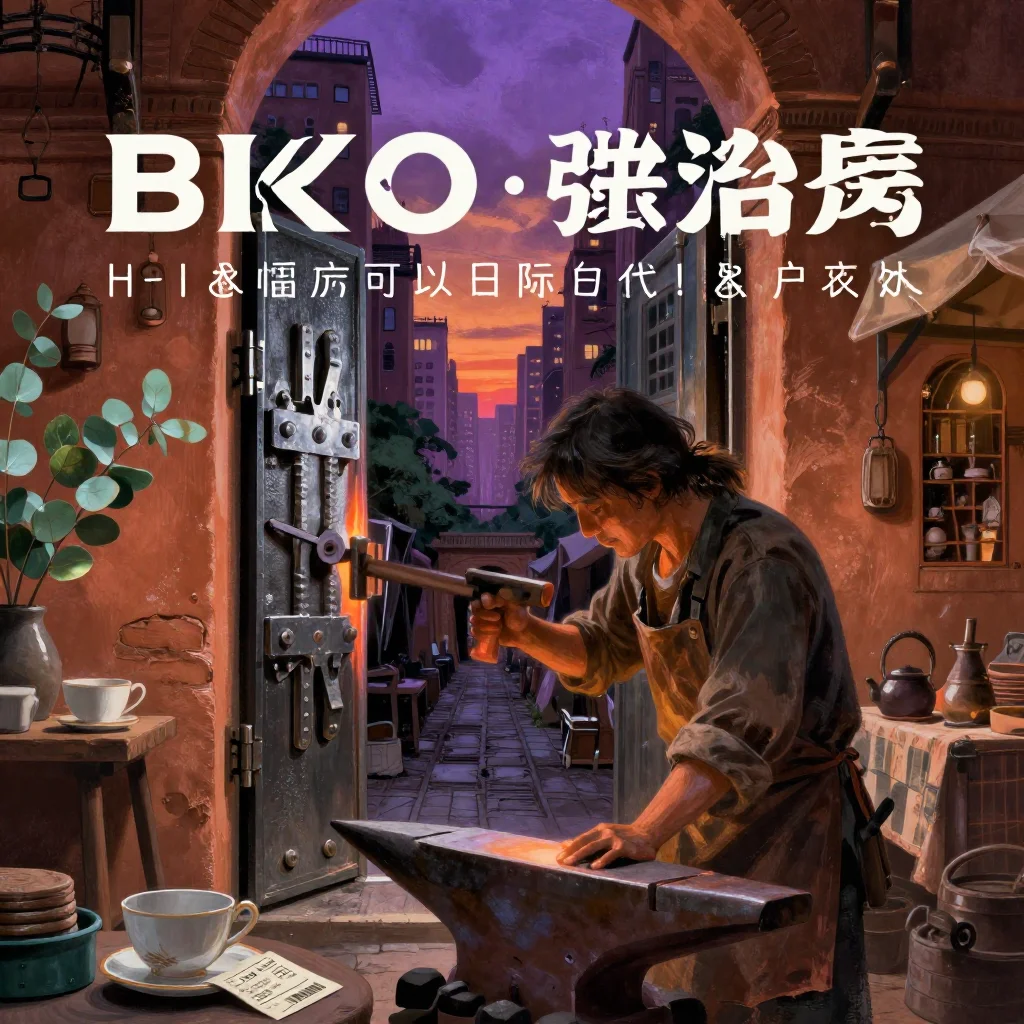
My forge occupied a rented corner between a tea seller and a woman who sold railway maps. The forge belonged to a dead man, though no one knew how he had died. Each morning I found his tools warmed. Each evening I found fresh work waiting.
The work orders arrived without buildings attached.
Repair north hinge. Door forty-three. Opens toward departure.
Oil west hinge. Door twelve. Closes against regret.
Replace rose pins. Door one. Tomorrow, pending.
I accepted them because iron was honest about the future. It did not promise permanence. It merely resisted force.
On the night the stranger came, an empty teacup sat beside my anvil. No steam. No ring of tea.
The stranger placed a train ticket on it.
“You are repairing the wrong future,” he said.
The ticket bore no station, only a departure time: 06:14, tomorrow.
The Company of Closed Questions
He wore the brass badge of the Office of Threshold Affairs, the local power that licensed doors and taxed anyone who asked what stood behind them. The Office did not sell passage. It sold certainty.
“Door one is due to close,” he said. “When it does, the city will forget the lower levels. The market will become a basement again. Everyone here will wake above ground, convinced they came to buy vegetables.”
“Then I will repair it.”
“You will not.” He touched the empty teacup. “Every hinge you save makes a possibility heavier. If tomorrow remains unfinished, no present can be trusted.”
I knew the claim. The Office had posted it on every stairwell: Closure is mercy. An ending prevents disappointment.
But the stranger’s ticket contradicted him. It was dated tomorrow, yet its ticket number had been punched away. A future with no identity. No witness. No privilege.
I slid the ticket into my apron.
“Who are you waiting for?” I asked.
“The person who gets to choose.”
He left without touching the cup.
What the Locks Remember
At 02:00, the Office sent inspectors with a seal stamped over my anvil. They ordered me to dismantle the hinges from doors twelve and forty-three. Their faces were calm. Their hands were not.
Door twelve opened onto a childhood room where every promise I had failed to keep stood breathing behind the wallpaper. Door forty-three opened onto a railway platform beneath a bruised-fruit sky, with the stranger’s empty teacup waiting beside the departure board.
Neither door had a handle. Both had hinges.
The inspectors watched.
“If you close them, the city becomes stable,” one said.
“If you do not, it becomes chosen,” said the other.
“Chosen by whom?”
“By whoever survives the choosing.”
I had repaired hinges for people who wanted escape, wealth, forgiveness, and one more hour. They always believed the door would decide for them. The Office had sold them certainty because certainty was quieter than responsibility.
I placed the ticket beneath my hammer.
“Bring me the door,” I said.
The Ending Before It Earns Us
They brought it at dawn, before the market opened.
Door one was small, iron-backed, and warm as a sleeping animal. Its hinge had been removed. The empty teacup had been placed inside the frame, visible through a narrow window of black glass.
The inspectors carried tools. The stranger carried nothing.
“Forge it shut,” the Office ordered.
I looked at the cup. No tea. No fingerprint. Only the faint circle left by a vessel that had once been full, then emptied by choice.
The train sounded somewhere above us.
06:14 approached. The market smelled of eucalyptus smoke, terracotta dust, and rain falling upward through the tunnels.
I took the ticket from my apron and placed it inside the empty teacup.
Then I built a hinge that could turn both ways.
The door opened. Not onto a room. Not onto a platform. Onto the street the city had denied itself, where thousands of people stood beneath the bruised sky, holding cups, tickets, and questions.
None of them knew where to go.
That was not an ending. It was permission.
Behind me, the Office raised its seals. I struck the first hinge with my hammer.
The sound was small, iron-bright, and open.





