 Netwrck
Speculative Fiction.
The Market of Unclaimed Hours
Every morning, the market rises with the tide.
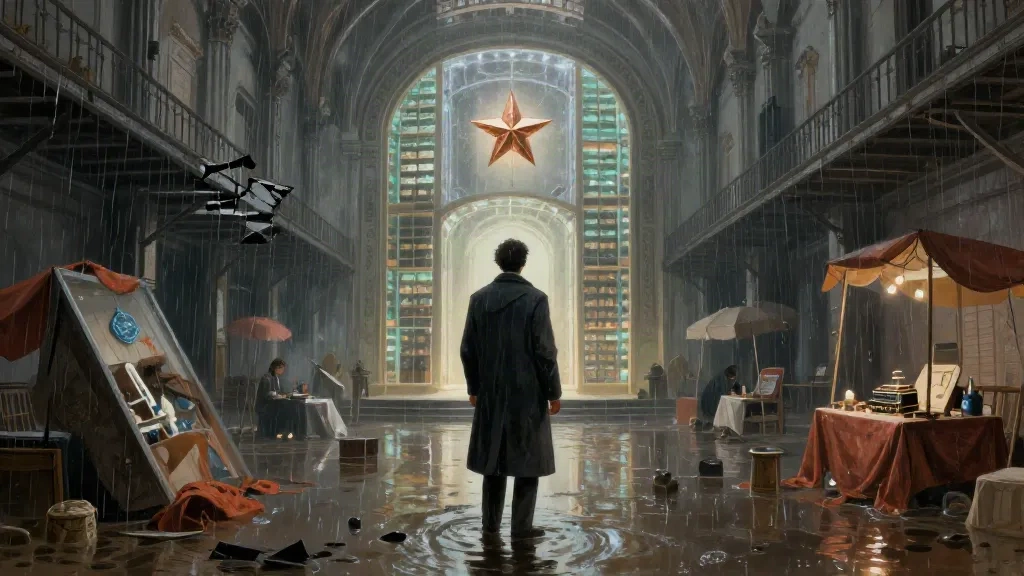
Its stalls hang from old bridges and warehouse cranes, their boards silvered by frost. Under rust-red awnings, sellers arrange memories in labeled cases: a ballroom seen through summer rain, a child’s hand closing around a silver bead, the exact hush before a mother calls from an upstairs window. Each has lost the person who lived it. A brass scale weighs them by grief.
Dr. Iona Vale walks the narrow catwalks with a physician’s satchel at her hip. She treats homesickness, though the disease lives nowhere near the blood. It appears in people who have forgotten why they continue living in a particular place. Their clocks run accurately. Their names remain correctly spelled. Still, they stand at windows facing doors they cannot recognize.
Iona diagnoses a market clerk who keeps borrowing kitchen memories. She examines a ferryman whose childhood has begun dissolving at the edges. In every case, she prescribes return: the missing hours, recovered and surrendered to their owners.
That evening, a little girl in a red wool cap sets a music box on Iona’s table. The box has no keyhole. Its lid is painted with a copper star.
“My mother left this,” the girl says. “She says it remembers her. But the music makes her smaller.”
Inside the lid, a slip of paper bears a name.
The Flood Beneath the Market
The tide arrives early the next morning.
It strikes the market from below, lifting stalls sideways and sending crates of remembered rooms spinning into the gray water. The market ropes hold. The bridges do not. A wall drops into the channel, taking with it a bronze plaque dated forty years earlier: NORTH CIVIC MEMORY RESERVOIR, RESTORING THE CITY TO ITS OWNERS.
As the water recedes, it exposes a structure beneath the floating platforms. A vast glass hall, its corridors branching underground. Doors stand open. Inside, adults sit beneath pale winter light, wearing clothes from different decades. Some smile. Some press their hands against the glass.
The copper star is mounted above the central chamber.
Dr. Vale finds the music box’s owner there: Municipal Engineer Sera Holt, who designed the reservoir after the old city drowned. Holt remembers the project with perfect clarity. She also remembers the moment when the machine stopped returning memories and began keeping the people who carried them.
“It had to work,” Holt says. “The city was disappearing. Everyone asked for a past, and we supplied it. But a memory without a living owner is unstable. We thought living memories would preserve it.”
“You thought a person was a container.”
Holt looks at her hands. “We thought love was safe.”
The reservoir’s archive appears intact beneath the water. Beside it lies a control chamber, still dry, containing a single red lever. A label reads: DISCHARGE ALL MEMORIES TO THE LIVING.
Releasing them will return thousands of lost lives to people who may no longer exist. It will also free the people inside the hall—though the machine may dissolve them with the borrowed histories they have been made to carry.
The Door Without a Lock
Iona climbs down carrying the music box.
Its melody begins without a key. One note at a time, the sound travels through the flooded corridors. The copper star glows with a dull, reflected flame. At the hall’s outer door, the trapped residents begin to answer.
Not with words. With memories.
A man recalls the smell of wet pavement. A woman remembers a red scarf crossing a crowded room. A child sings a tune that has no author. The archive brightens around them, showing thousands of screens, each displaying a life returned to its proper shape.
The machine was beautiful because it promised that nothing beautiful had to be lost. Its prison was beautiful because it gave each prisoner a reason to remain: the memory of being loved.
Iona sets the music box beneath the copper star and turns the lever.
The machine screams in the language of rooms.
Memories pour through the pipes. Floodwater rises around everyone’s knees. Sera Holt steps free first, then catches the arm of a woman who has forgotten which life she is returning to. They lean together, two strangers holding each other upright.
The children of the market watch the water carry luminous fragments past their boots. A ballroom waltz. A hospital corridor. A kitchen at midnight. Each fragment enters a sleeping face below the plaza, and each face changes.
Iona feels the market’s grief loosen inside her. For the first time, homesickness feels less like a missing place than a misplaced need.
What the City Could Bear
By dawn, the hall stands empty except for the machinery and the water.
Some rescued residents walk home. Some remain uncertain, carrying only the memories that belonged to them. The engineer’s copper star has fallen into the channel. Iona carries it back to the little girl in the red cap.
“Does your mother remember you?” the child asks.
Iona looks at the music box. The lid is empty now. No painted star. No name.
“She remembers enough to bring you something,” she says.
Across the square, new stalls open. A woman sells the smell of her father’s tobacco. An old man offers a winter morning with no frost. Iona sets out her instruments beneath a rust-red canopy. The market is not a place for returning home. It is a place for discovering what home can carry.
When the next flood comes, the city has learned to open its doors before the water enters.





