 Netwrck
Speculative Fiction.
The Door-Bearing Tree
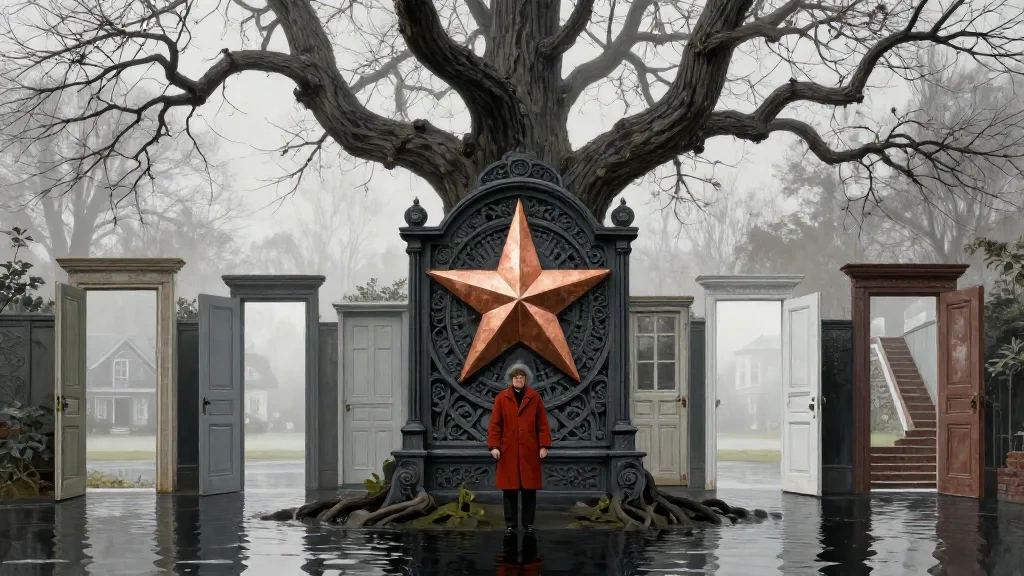
Every winter, the garden lost something: a gate, a greenhouse, a road sign, a child’s red mitten. The tree at its center produced replacements. Its branches thickened into oak, cedar, and iron-dark limbs, then split into doors that opened onto rooms far beyond the frost-rimed glasshouses.
Dr. Mara Venn walked beneath it in a coat the color of rust. She treated homesickness, though her patients rarely admitted the disease. They came with headaches, sleeplessness, appetites gone mechanical. Their memories had begun returning to a place that no longer existed.
On the tallest branch hung a music box of blackened silver. It played whenever someone tried to leave. One turn of its tiny key produced a melody no visitor could remember from childhood, and the garden gates promptly forgot which direction was outside.
The Machine of Welcome
The tree was beautiful. So was the machine that governed the garden: patient as geology, exact as hospitality. It measured longing, found matching rooms, and arranged them with impeccable care. Roses leaned close. Dust settled like snow. No resident ever received a cruel room.
That was the prison. No door opened toward a place where one might not be needed.
On Mara’s desk lay a copper star, a navigational relic found inside the oldest recovered wall. Its six points corresponded neither to months nor constellations. It bore one stamped number: 215, the last day the garden had accepted new memories before the river changed course.
What the Flood Remembered
Rain arrived as a rumor, then a pressure, then a wall. The river rose through the botanical garden and forced open a brick arch beneath the lotus ponds. Behind it lay stairs descending into pale winter light.
The flood exposed the project the founders had buried: a public hall built before the tree, when the land was still considered common ground. Blackened signs identified it as the Assembly of Unhoused Memory. Citizens were meant to bring grief there, surrender its burden, and choose together what deserved preservation.
Mara descended through ankle-deep water. The copper star fit a socket in the hall’s bronze map. The music box emerged from the sediment, its key still intact. Together they revealed the machine’s true mechanism: every doorstep removed a destination from the living world and stored it inside the garden.
Not erasing homes. Hoarding them. Its perfect rooms were the remainder after each community had been quietly subtracted.
A Door That Failed
With the water nearing the hall’s roof, Mara carried the music box upstairs. The garden filled with alarmed bells. Door after door opened and shut, each displaying a place its occupant had lost. The machine offered flawless replacements: a grandmother’s kitchen, a schoolyard, the coast where someone had first learned to swim.
Instead of choosing among them, Mara set the box beneath the tree and struck its key. The melody escaped. A flute answered from somewhere beyond the wall. Then a train whistle, a market bell, human voices arguing across a border.
She drove the copper star into the machine’s exposed governor. The beautiful mechanism shuddered. Doors stopped pretending to be rooms and became doorways again, opening onto roads choked by floodwater, towns beyond the ridge, lives that had continued without permission.
By dawn, the survivors stood beneath branches stripped of hinges and brass latches. The tree bore no doors. It bore only buds shaped like small, uncertain houses.
Mara kept the music box. She placed the copper star in her coat, point downward, as a patient reminder that healing did not mean making a person comfortable. Sometimes it meant opening the wall and accepting the cold, deliberate light beyond.





