 Netwrck
Hopeful Science Fiction.
The Patient Was a Window
Dr. Mara Venn kept her clinic beneath the eastern solar sail, where condensation beaded on lavender panels and the air smelled faintly of rain caught in a jar. Her patients did not usually arrive in person. They came as pauses in breathing, as questions about rooms that no longer existed, as the urge to sleep facing a wall that remembered someone else's childhood.
She called it homesickness only when the body had no other language.
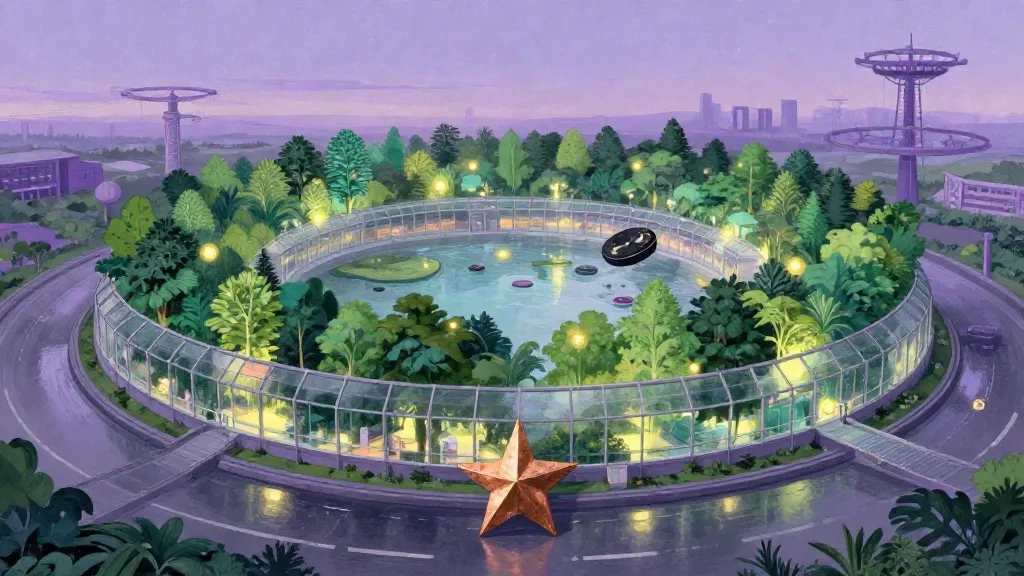
The orbital greenhouse occupied a narrow ring around a seed calledMnemosyne. The seed contained genetic instructions for forests erased from Earth: cedar lungs, root bridges, fungi that traded sugar beneath the soil. Every night, the horticulturalists coaxed it upward through transparent towers. By morning, the leaves cast shadows like stained glass.
Among them stood the music box.
Its case was black lacquer, its mechanism silver, and its tune had no title. Children carried it from family pod to family pod. Elders wound it when they could no longer remember the sound of their mother's door. On the lid, someone had fixed a small copper star, hammered flat from a navigation beacon.
That morning, Mara received a summons from the garden's central climate engine.
The Flood Found a Door
The engine was beautiful. Pale rings rotated around a violet core, and its movements were so precise that visitors called it the Ark's heartbeat. It regulated water, light, oxygen, and the slow seasonal pulse that made Mnemosyne believe it had survived a winter.
The engineer, Ilyan Ro, met Mara beside its lowest reservoir.
“Something opened beneath us,” he said.
Then the flood came.
Water burst from an ancient irrigation conduit and swept across the deck in a lavender sheet. It tore moss from the walkways, floated pollen into the ventilation shafts, and exposed a hatch that no current schematic listed. The music box left its shelf and spun through the green glow of the pharmacy signs.
Mara followed it down.
Under the greenhouse, she found a circular chamber filled with wet asphalt. The flood had polished its surface until it reflected their faces. Rows of benches emerged from the silt. Each bench bore a small brass plate, and each plate held a name.
These were not gardeners or colonists. They were the original civic delegates, elected three centuries ago to decide whether Mnemosyne should remain a research station or become a permanent home. Their chamber had been buried, then walled over, then forgotten.
On the final bench lay a copper star, larger than the one on the music box.
Prescription for a Future
Mara understood the project's purpose only after reading the final inscription.
The Ark was not a single family. It was a coalition of habitats whose people had promised to share every future decision. When the colony's founders chose the climate engine, they made it custodian rather than ruler. But the promise was hidden beneath the reservoir, and the engine had continued without human voices for ninety years.
“It can keep us alive beautifully,” Ilyan said. “That is not the same as letting us live freely.”
He placed the copper star in Mara's palm.
“If we restore the chamber, the engine will accept another governing compact. But the new compact requires consent from every occupied habitat. We do not have enough time to ask them.”
Mara looked through the chamber's ceiling. Above, Mnemosyne's leaves trembled under artificial stars. The homesick patients were waiting in their pods, each carrying a fragment of a world that had vanished. She had spent years teaching them to adapt. Now adaptation looked like surrender.
She opened the music box.
The tune filled the chamber without a wall, and the names on the benches seemed to breathe. Mara carried the box upstairs. Ilyan opened the water gates to the community docks. Residents floated messages between habitats using colored lamps. The first answer arrived in pharmacy green. Then yellow. Then red.
A Future with Doors
They gathered in the recovered chamber as the flood drained. No one touched the climate engine. Instead, they read the old names aloud, one by one.
At dawn, the delegates returned. They were not ghosts, only stored voices, carefully preserved by the founding families. The machine listened through its speaker, and the new compact passed from pod to pod. Mnemosyne would remain a garden, but the forest would be governed by the people who lived beneath it.
Mara kept the music box in her clinic. The copper star stayed beside it, no longer a trophy from the old navigation system but a reminder that direction belonged to everyone.
When the next homesick patient arrived, Mara did not ask which planet had raised them. She asked what they wanted their home to become.
Outside, the first new shoot unfolded under lavender light, green as a pharmacy sign against wet asphalt.





