 Netwrck
Weird Fiction.
Arrival at Platform Eight
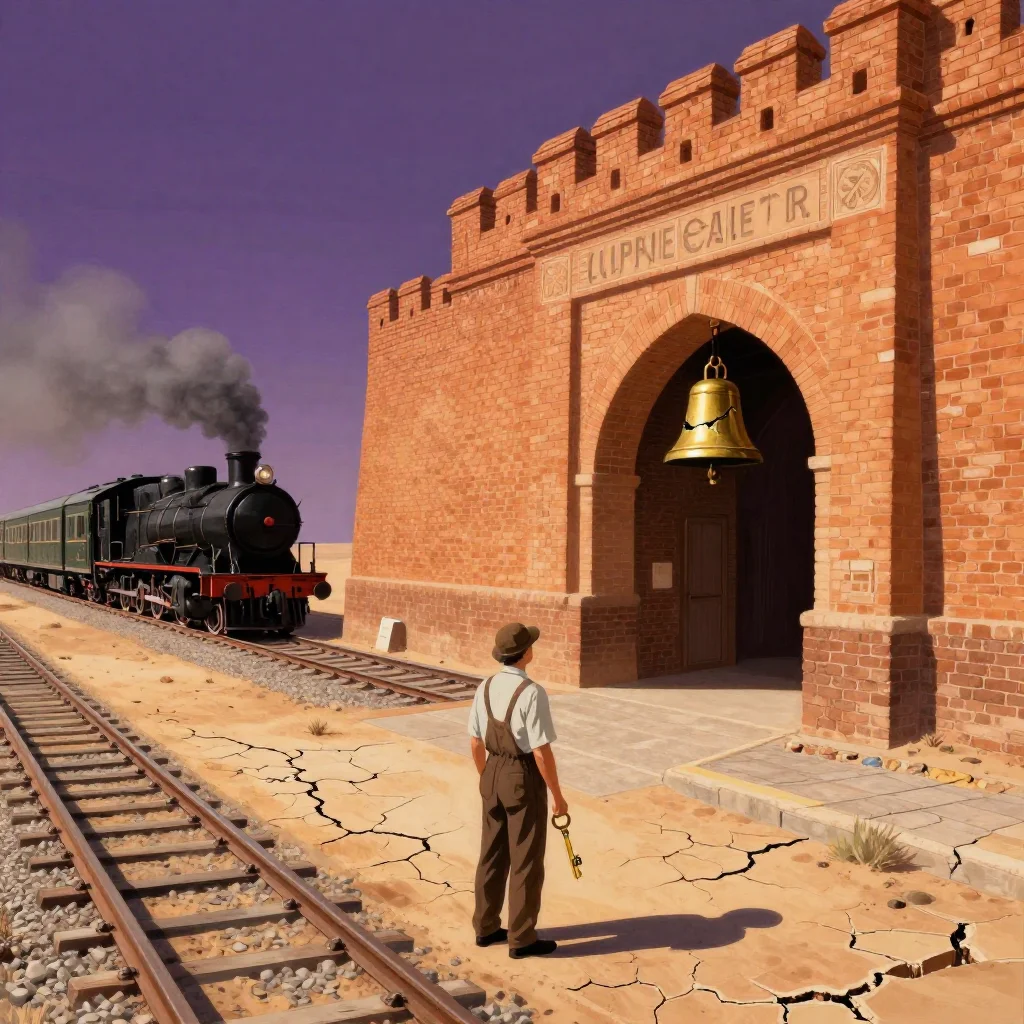
The train arrived without tracks.
It came out of saffron afternoon across the desert, its black engine trailing smoke-grey air, and stopped precisely at Platform Eight, though the station had only seven platforms. Amira had planted the eighth courtyard that morning: a rectangle of shade between two dead acacias, watered from a cracked municipal pipe, its soil still dark. She planted stories there, one handful for each neglected place, though she had never explained this to the clerks.
Her own story was the first she had ever planted. In her mother’s telling, their family had crossed this desert during the year of the white locusts. A railway porter gave them shelter in a locked waiting room. When they returned after dark, the porter was gone, the room remained, and a brass key lay inside an empty teacup. Her mother always ended by saying it was kinder than a miracle because somebody had unlocked the door.
Amira wanted to build that kindness again. She wanted strangers to sleep beneath the station, fed and unquestioned, while trains from other centuries sped over sand where no rails had ever been laid.
The Machine That Refused Witnesses
The brass key opened the signal box behind the abandoned platform. Inside stood a machine of blue iron and plum-black rubber, assembled from levers, lenses, and what appeared to be several thousand tuning forks. A faded sign read: THE MUNICIPAL CERTAINTY ENGINE FOR THE CONSTRUCTION OF SHELTERS BELIEVED IN BY NO ONE.
Amira remembered no such machine in the station inventory. The instruction plate beneath it was simpler: Provide one true family story. State no desired result. No participant may believe this apparatus.
So she told the story aloud to the empty signal box. When she finished, the machine remained still.
“A machine,” she said. “Of course I don’t believe in it.”
The tuning forks began to ring. A wall of saffron bricks rose from the courtyard, then a roof of smoked glass. Doors appeared in it, each marked with a brass number. Amira counted eighty-eight before the engine stopped.
First test: an old woman crossed the courtyard carrying two sacks. Amira welcomed her without mentioning the machine.
“It really built itself?” the woman asked.
“No,” Amira said, showing her the levers and dead forks. “That would be foolish.”
The old woman tried the first door. It opened onto a pantry, warm bread steaming on the shelf. Belief flickered across her face.
The wall cracked from roof to foundation.
Eighty-Eight Witnesses
By nightfall, people had gathered. Families slept in the desert. Merchants from the saffron market came with blankets. A railway clerk brought water in every bucket the station owned.
Amira repeated her family’s story and described the machine, but hope proved contagious. Hope was belief wearing softer clothes. Doors jammed shut. Walls began returning to sand. One by one, the forks sprang loose and lay glittering in the courtyard.
“We can still use the story,” said a boy with burnt hands. “We can mend the walls ourselves.”
“We don’t know how.”
“Then don’t pretend,” he said. “Give us the key.”
Amira held out the brass key.
The machine gave one dry click. Nothing else.
She had misunderstood the obedience required. The shelter did not need every passerby to disbelieve in the machine. It needed every one of them to place belief in someone else: the stranger who might answer, the neighbor who would share water, the child who would keep the fire alive.
At dawn, Amira stopped telling her mother’s story. Instead, she asked the old woman to teach the boy to knead bread. She asked the boy to show the merchant where the blanket tower had fallen. The merchant asked the railway clerk to mark the water level. No one admired the machine. No one praised the walls. Each person was too busy placing trust in another.
What the Key Opened
By sunrise, the wall stood again. Not because the engine believed in itself, and not because the desert did. It stood because the courtyard had learned a habit larger than belief.
Amira planted her mother’s story beneath the final door, then planted a thorn, a scrap of yellow cloth, and the cracked bell from the signal box. She rang it once.
Across the desert, the borrowed century answered with a train whistle. The eighty-eight doors stood open. The brass key remained in her pocket, useless and necessary.
That night, no one asked whether the shelter was real. They asked what breakfast would be.





