 Netwrck
Folk Horror.
Seven Hundred Empty Rooms
Every morning, the lift opened on a different floor, though the building had only seven. Its tenants remembered tomorrow in fragments. They left wet umbrellas beside radiators before storms arrived, argued about songs not yet written, and slept beneath alarm clocks set hours ahead of waking. Letters came from the future addressed in their own handwriting. The brass mailboxes held apologies, warnings, and smallerbills for funerals that had not happened.
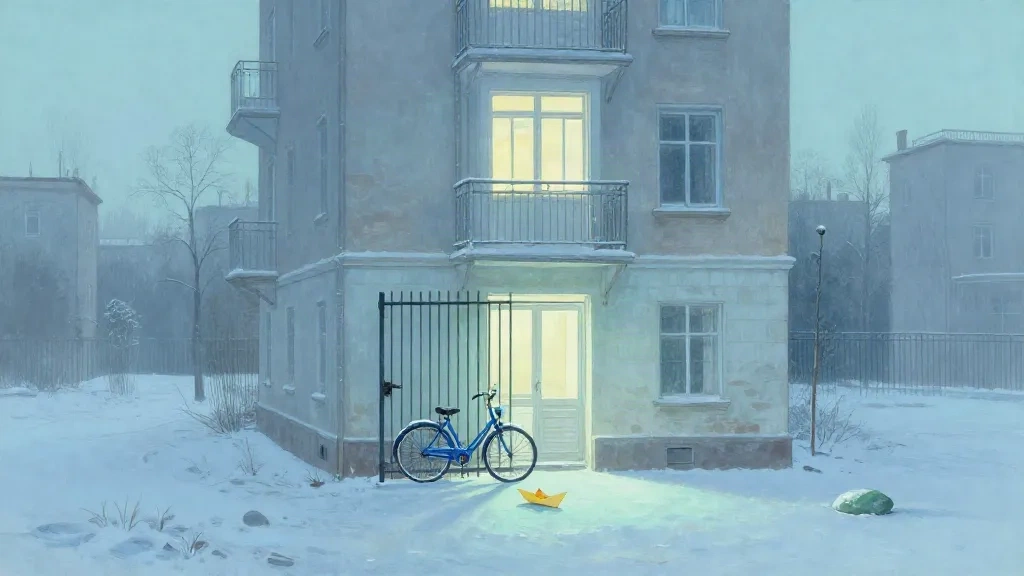
Mara Venn carried none of their messages. She rode a blue bicycle through the sleeping district, and its wheels slipped through closed doors whenever she was near enough. The tenants called her a courier, though nobody remembered hiring her. They remembered only that she had always brought the future, until the morning she arrived with empty panniers.
That morning, Mara had found a paper boat beneath the seventh landing. Its folded sail carried three words in her own hand: LISTEN UNDER HERE. In its hollow lay a green stone, smooth as a river worn down to nothing.
She carried both into 700, apartment seven hundred, which the lift announced in a voice like a nail drawing across slate.
The Land Beneath the Floor
The tenants met in the basement laundry, standing above a drain filled with frost. No pipe ran beneath it. Each person remembered a different future, and all those futures had stopped the same morning.
Old Mrs. Senn held up the building’s lease. Its final page was yellow skin, stitched with black thread.
THE LAND RESERVES THE RIGHT TO LISTEN TO EVERY PROMISE MADE ABOVE IT, INCLUDING THOSE MADE BY THINGS WITH NO MOUTH.
“The treaty,” she said. “The one beneath the city.”
Mara unfolded the paper boat. Inside its paper seams appeared lines of tiny writing: the lease, the drain, the roots, and her name. The green stone warmed against her palm. The building shuddered, and frost crawled from the drain in the shape of a mouth.
She understood then. The land had always listened. The future had not vanished because the world ended. It had gone quiet after the treaty was broken.
Tomorrow Held Its Breath
At midnight, Mara took the stone into the stairwell and placed it on the landing. Each tenant brought something remembered: a birthday candle, a hospital bracelet, a key cut for a house not yet built. They spoke the futures they carried, and the walls answered.
Rain on roofs that had not been built. A child laughing in a kitchen that would burn. Names whispered through telephone wires. The land gathered them beneath the floor, sorting them, borrowing them, keeping the echoes where they could no longer be spoken.
Then the door at the end of the hall appeared. It had no handle and stood beneath frost-white light.
“That is tomorrow,” said the boy from 703, who remembered a red bicycle and a mother’s funeral.
“No,” Mara said. “That is what the land kept.”
She placed the paper boat against the door. The green stone fit neatly into its paper hull. On the other side, something knocked three times.
“If we open it,” Mrs. Senn said, “we will hear ourselves again.”
“If we don’t,” Mara replied, “the future will have no witnesses.”
The Courier’s Return
Mara pushed the bicycle through.
For a moment she saw a white corridor filled with closed doors, each one marked with a date belonging to somebody alive. Beyond them came the soft cyan glow of an impossible dawn, a color found between winter and morning. The air smelled of iron, wet earth, and frost retreating from stone.
She rode. The bicycle carried her through every door, collecting the stolen tomorrows in its panniers. Behind her, tenants remembered one another: a shared meal, an argument ended before it began, a hand resting on a shoulder in winter.
At the final door, Mara placed the green stone on its threshold. The future did not flood back. It waited.
“I only wanted to know why the letters stopped,” she said.
“They never did,” the house answered. “They were waiting for a witness.”
Mara took the paper boat from the sill. When she returned to the basement, the drain was empty, the lease had lost its final page, and dawn lay cyan across the floor. In the mailboxes, a single envelope bore her name.
Inside, written in her hand, was one sentence:
Thank you for opening the door.
Mara did not deliver it. She folded it into the paper boat, placed the green stone inside, and set both on the windowsill where everyone could see them.
Then she waited for tomorrow to arrive.





