 Netwrck
Historical Fantasy.
The Unlending Room
Mara Venn had been born in a house that disagreed with the census. Her grandmother had arrived from a country no atlas admitted to, bringing a brass key, a jar of black salt, and a daughter whom the registry officer insisted was not present. Mara learned early that ordinary documents were only doors pretending not to be doors.
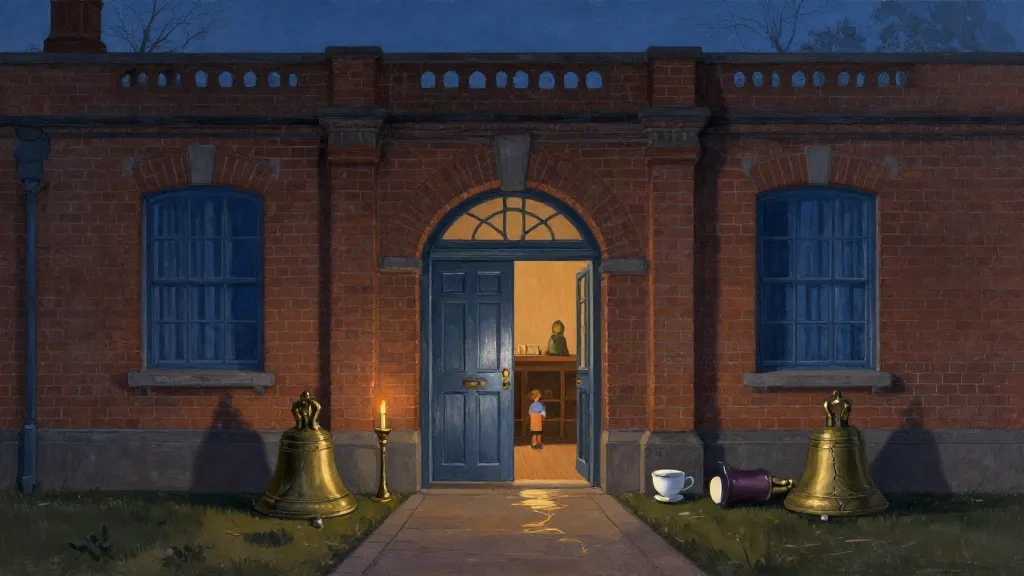
She became librarian of the Museum of Doors, a narrow brick building behind the old customs house. Its galleries contained no paintings, statues, or treasures. They contained thresholds: a blue door smelling of winter sea air; a red door opening onto a field of marching soldiers; a white door whose darkness whispered names. Above each arch, a brass plate named the courage beyond it. Mercy After Betrayal. Refusal. The First Step Into Dark Water.
Mara’s favorite room held nothing but an oak table, an empty teacup, and a book bound in blue leather. The book had no title. Its first page read: You may borrow me once. Tell the truth while I am gone.
She lent it to a widow who needed to speak to her absent son, to a ship’s captain afraid of the open sea, to a young mapmaker who had drawn a road where none existed. The book returned before dawn, warmer than before. Each borrower found the courage named on the nearest door.
Mara’s desire was modest until it became impossible: she wanted a home where impossible residents could remain. Not a museum. Not a lodging house with a tolerant landlord. A place where a grandmother from an unlisted country, a door that walked, and a child born with no shadow could sleep without explaining themselves.
The Child and the Missing Thing
On the wet evening of November 18, a boy named Thomas came to the museum with his aunt. He was eleven, thin as a ruled line, and dressed in a coat too large for him. He carried the empty teacup in both hands.
“You found it,” he said.
Mara looked at the cup. It was the same cup that had sat on her table for years, chipped at the rim, its tea long since vanished.
“I did not find it,” she said.
Thomas pointed toward the central gallery. “The thing inside the wall. The one everybody agreed not to notice.”
There was, beneath the soot above the third arch, a hairline crack shaped like a doorway. Around it, visitors walked as if the wall were solid. Even Mara had spent years looking elsewhere.
Thomas set down the teacup. “My mother says the house we live in is hiding. She says it is ashamed of what it used to be.”
When Mara touched the crack, the wall opened inward. Beyond it stood a room made of reflected candlelight. Steel-blue windows showed a city under tobacco-brown clouds. Shelves climbed into darkness. On every shelf lay a cracked bell, each with a different piece missing.
At the center stood a chair. The book lay open upon it.
A Door That Would Not Close
“That is my book,” Mara whispered.
Thomas picked up one of the bells. His fingers passed through it, then returned holding the bell solid. It rang once, deep and clear.
The room shuddered. Brass letters appeared across the far wall: No home without a witness.
Mara understood then what the book had been taking from her. Every borrower had received courage, but the book had kept the cost: the memory of having been lent. The empty teacup had been waiting for the final borrower. The bells were the voices erased from her city’s histories.
She reached for the book. A child’s hand closed over hers.
“You cannot take it back,” Thomas said. “Not if you want a home.”
“Then who keeps it?”
“The overlooked thing does.”
The cracked bell rang a second time. Outside, the city’s bells answered, one by one, until the museum trembled. Mara saw her own house reflected in the blue windows—but its windows were open, its rooms crowded with impossible residents, and a lantern burning above the door.
She understood the courage on the hidden threshold: it was not entering the unknown. It was allowing the unknown to enter.
Mara placed the book in Thomas’s hands. The room sealed itself around the choice. Every bell returned to its shelf, whole.
The House That Stayed
By morning, the hidden room had become a narrow passage ending at an unnumbered door. Mara opened it and found her house waiting on the other side, unchanged except for the open windows. A woman with brass keys for hair sat at the kitchen table. A shadowless child slept beneath the stairs. Someone had placed a cracked bell beside Mara’s empty teacup.
Thomas’s aunt stared at him. “You were gone since midnight.”
“I was helping,” he said.
From that day, the Museum of Doors kept a chair beside its lending room. It belonged to anyone whose courage had been mistaken for foolishness. The blue book remained there too, though no one could read its pages clearly. They said the words changed according to the reader.
And when the lamps were low, the city passed by. Sometimes it brought a forgotten person. Sometimes a house. Sometimes only a bell with one missing note. Mara always opened the door, and always set another cup upon the table.
For once, it was never empty.





