 Netwrck
Mystery.
The Map Given at Dawn
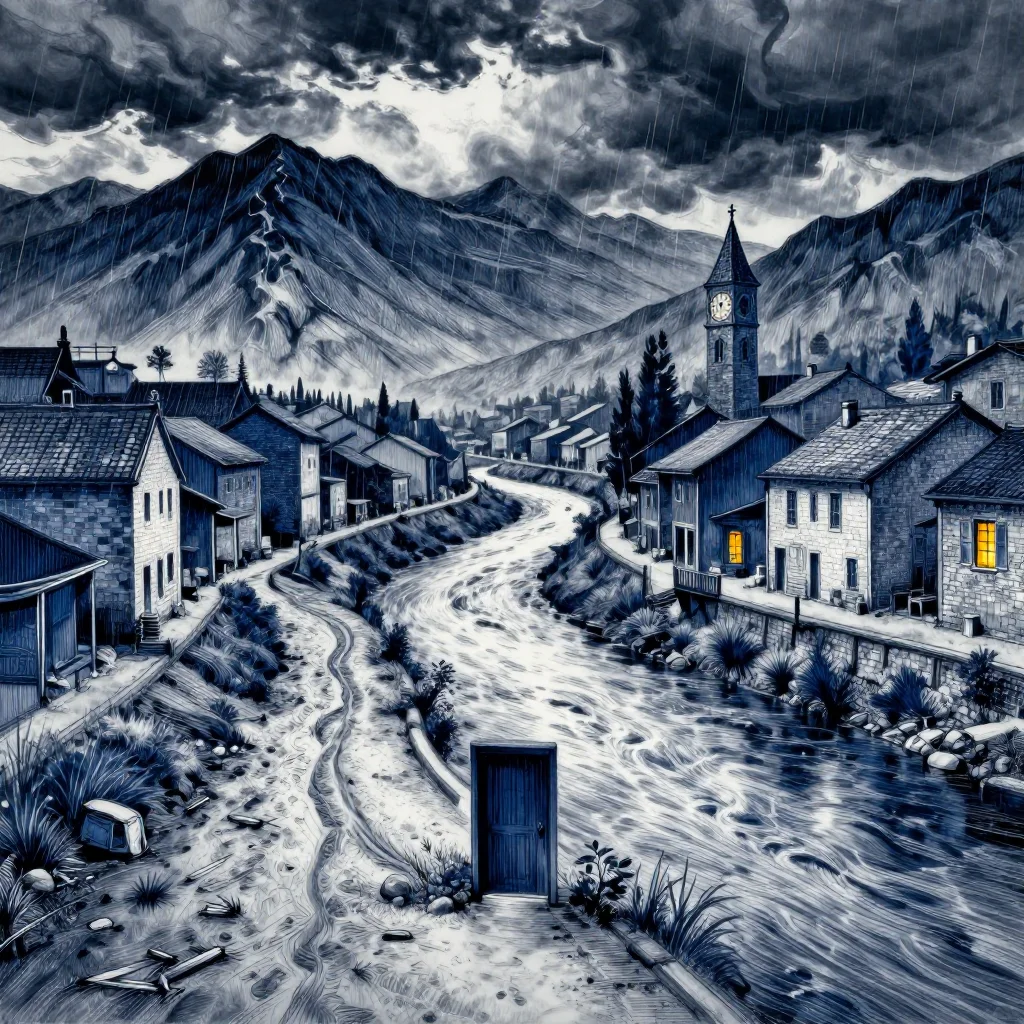
On the night Mara Vale arrived in Orison, the river ran north beneath a rain-silver sky. Every midnight it changed direction, though no bridge marked the turn and no boatman would explain it. By morning, the current had souled south, carrying leaves, bottle glass, and sometimes voices against the town’s stone walls.
Mara came for the wages. The town paid her to decipher the dreams of sleeping machines: retired signal boxes, drowned clocks, and the great civic engine that governed the water gates. She translated their electrical murmurs into images, then claimed the visions were messages from the future.
Her employer placed a map on the table. It was old, blue at the folds, and marked with a route from the eastern bank to a place called Bellwether. “A better map than the one received,” Mara said, tracing the line with one finger. “Then I’ll leave.”
The map had been delivered anonymously three mornings earlier. On its reverse, in nine different hands, someone had written: At the dry riverbed, wait for the door.
Four Versions of a Promise
The family responsible for the map lived in two houses joined by a wall. On the north side lived the Vales, who kept the water gates. On the south side lived the Arnes, who once dug the river’s old channel. Between them stood an unmarked door, set into the boundary wall, with no handle and no hinges.
Each family remembered the promise differently. Elian Vale said their grandmother had promised the Arnes safe passage across the river. Nessa Arne said the Vales promised half the water to them forever. Their daughter Sefa claimed the promise was silence: neither side would speak while the other crossed. Their grandfather, too ill to walk, said the promise had been broken before either family was born.
Mara listened to their machines. A child’s mechanical toy stammered in the dark. A clock beneath the north house dreamed of a bell ringing underwater. In the civic engine, she found the same image repeating: a lantern, a narrow stair, and a door opening onto dry stone.
“You’ve seen this before,” she said to the engine.
Its reply came as a map drawn in blue sparks.
The Riverbed Remembers
At midnight, the river turned. Mara walked down to the exposed channel with Sefa, carrying the map and a brass compass that spun whenever it crossed the old waterline. The dry riverbed glittered with broken silver. Beneath the mud, they found footprints leading toward an unmarked door in the eastern embankment.
The door stood where the map ended. It opened onto a stair descending below the town. At the bottom waited a room full of sleeping machines, their faces dark, their cables threaded with warm amber light. In the center stood a table, and on the table lay a newer map.
It showed the river changing direction but never leaving the same valley. The town was a lock, and the border was a machine designed to keep two families apart. Sefa’s grandfather had not lied. He had helped build the river-turning mechanism after the original promise failed. The Vales had sealed the mechanism. The Arnes had erased the route.
Mara saw her own name written beneath the newest route. Beside it: Translator of the returning map.
“What is it asking me to return?” Sefa whispered.
“The truth,” Mara said. “Not whichever version keeps us safe.”
The Door in the Water
She placed the received map over the newer one. Their lines met, except at one blank stretch near the amber window on the north bank. There, the machines had drawn a small square of light.
Mara understood. The map was not a route through the river. It was a promise made visible: every person who crossed had to carry one piece of the other side’s memory. The families had hidden that truth because remembering together would have required forgiving one another.
She took the blank to the unmarked door in the boundary wall. Sefa held the compass. At dawn, the river began moving north again, but the machines sang one clear note. The door opened by itself.
On the other side stood the room Mara had seen in her own dreams, though she had never entered it. Its single window shone amber against the rain. The sleeping machines waited for a new map.
Mara drew it carefully: both banks connected, the river reversing, and the door left open. Then she crossed with Sefa. Behind them, the wall dissolved into silver water.
The town woke to two sets of footprints crossing the dry riverbed. No one asked which family had kept the promise. By evening, every door in Orison stood open, and the machines dreamed of daylight.





