 Netwrck
Science Fiction.
The Midnight Turn
At noon, the river ran east beneath the terracotta roofs of Bellwether. At midnight, it turned and ran west, carrying the reflections of both towns with it. The border was never marked by a fence. It was marked by the water, and the water had no respect for property, families, or lovers.
On the eastern bank lived Mara Venn, a seamstress with steady hands and an inconvenient gift: she could mend the distance between two people. A tear of cloth became a bridge. A ripped sleeve could close an old quarrel. She had repaired a marriage by sewing the two worn cuffs together, though neither spouse had wanted it. The gift had taught her that repair was not the same as permission.
For years, she had refused the work. Then her brother crossed the midnight river and returned as a stranger.
The Agreement in Bone
He left behind a village agreement sealed with black wax. The town council carried it from house to house, asking families to sign away the right to change banks. No living reader could understand a word. The letters were pale, narrow, and arranged in columns that seemed to shift when viewed from the corner of the eye.
Mara recognized the language. Her mother had spoken it to the dead, in a voice like rain inside a locked room.
“The dead read it,” Mara told the council.
They looked at her as if she had announced the weather would obey them.
At sunset, the council placed the agreement on an old stone table. The dead came without procession. They arrived as pressure in the walls, as cold hands on the backs of necks. One by one, they touched the document.
Its meaning rose through Mara like heat through iron: the river may turn, but the boundary remains in the hearts of those who cross. A door may be built only where both banks freely open.
The village had forgotten how to ask. The agreement preserved a border everyone feared, because consent had been made unreadable.
A Door That Would Wait
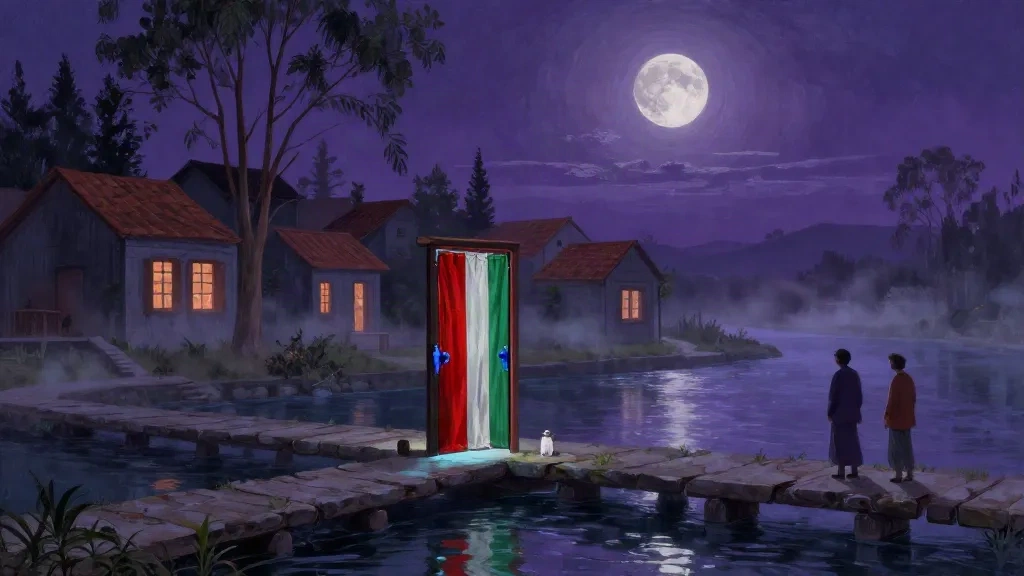
Mara carried her mother’s salt jar to the ferry landing. In it, she placed the glass seed found beneath the eastern bell tower, a blue bead that contained the first drop of the river at dawn. She began with a strip of red cloth from her brother’s coat, then a strip of green from a child’s school dress, then a strip of white from the funeral shroud of the last person who had died on the border.
She would not use the living. The dead had already given her the truth.
At midnight, the river reversed. Mara stitched the pieces into a narrow door-shaped frame and set it across the stones where the current divided. The glass seed she placed in the hinge. The salt she poured around its base, one grain for each person who stood on either side.
The first to approach was Tomas, the ferryman. He had crossed the river every night for thirty years, but never once asked the far bank whether it wanted him. Beside him waited Lio, a girl from the western town with her father’s key clenched in her fist.
“Do you consent to open?” Mara asked.
Both said no. The door remained a frame of wet cloth.
Then Mara’s brother stepped forward, followed by the people whose memories the dead had uncovered. One by one, the living named the harm they had carried: confiscated boats, withheld names, marriages torn apart by midnight water.
At last, Tomas took Lio’s hand. “I consent to try,” he said.
Lio looked at the opposite bank. “I consent to be met.”
They spoke the same words, but not the same promise. The salt dissolved. The glass seed opened with a soft click. Mara stitched the final seam, and the door opened only wide enough for one person to pass.
The Distance Remaining
Mara did not follow. Her brother paused at the threshold, astonished to be recognized by people he had wronged.
“You can come back,” she said, “but you must ask each time.”
He nodded. Across the river, the eastern bell rang once, then the western bell answered.
At the next midnight, the water turned again. The door stayed where Mara had made it, neither wall nor ornament, a patient seam between two towns that had mistaken refusal for safety.





