 Netwrck
Mystery.
The Shadows Arrived First
By the time the first guests climbed from the snow coaches, the shadows were already waiting beneath the eaves.
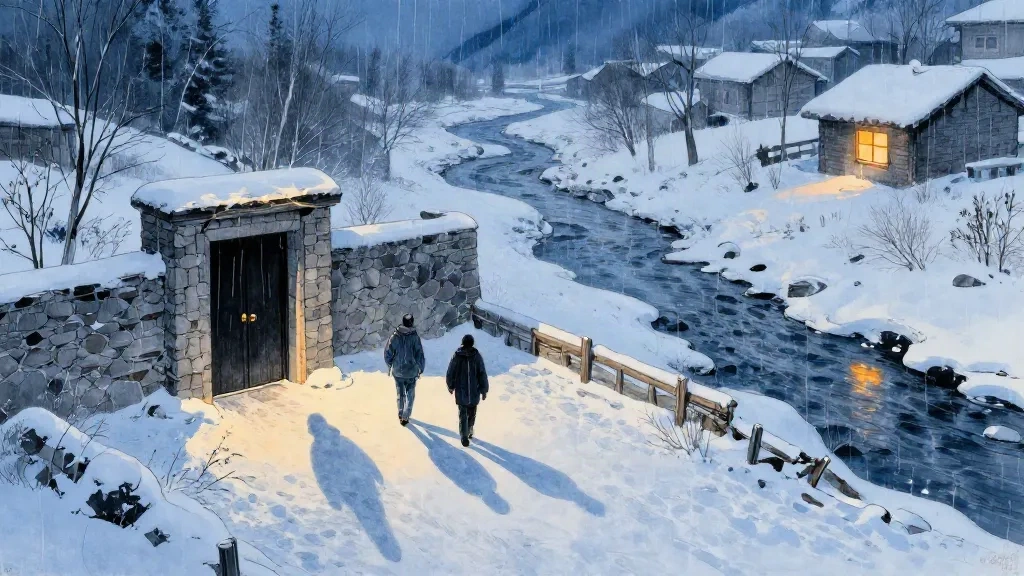
They belonged to people who had not yet arrived. One long shadow stretched across the frozen terrace, though its owner was still fastening her gloves. Another knelt beside the dry riverbed, cutting a thin black line through the salt-white stones. The resort manager called it an optical fault. The porter blamed the mountain. Mara Venn, paid to decipher the dreams of sleeping machines, said nothing until she saw a shadow detach itself from the chimney and cross the snow toward the unmarked door.
She was the translator because machines had forgotten how to speak plainly. In sleep, they leaked images into their housings: a metal moth, a drowned bell, a child counting backward from ten. Owners brought them to the resort for winter repairs. Mara listened, translated, and wrote warnings in the narrow black books kept beneath the front desk.
The Map Was Not Wrong Enough
Her employer had given her a map of the resort with a red line marking every safe passage. It showed the lake, the cable station, the boiler room, the dry riverbed where winter water had vanished centuries ago. The red line ended at the unmarked door.
That was the first mistake. Maps were not supposed to end at doors.
The second mistake was the family.
They arrived together and separated within minutes. Anya, the mother, carried a silver key she refused to use. Tomas, her son, searched the riverbed for something he said had been buried there. Lena, the daughter, refused to cross the bridge. The grandmother, Mrs. Vale, watched from the one warm amber window in the west wing.
They were related to the resort's former owner, who had promised his children a way through the winter. Each remembered the promise differently.
Anya said he promised to leave the door unlocked. Tomas said he promised to bury the key. Lena said he promised to return. The grandmother said nothing, though Mara saw her reflection move before she did.
What the Machines Dreamed
That night the boiler machine dreamed of a red line crossing a blue map. The lift motor dreamed of footsteps descending beneath the riverbed. A sleeping snowblower whispered the same phrase over and over: Do not follow the person who remembers.
Mara followed the dream instead.
Behind the unmarked door she found a narrow passage filled with wind. Its floor was smooth, polished by years of use. At its end stood the dry riverbed, indoors, running through the wall. The machines had been built over it. Their sleep had kept the passage from collapsing.
On the river stones lay seven brass plates. Each held a different version of the promise.
“I will leave the way open.”
“I will bury what must not be followed.”
“I will return before the shadows arrive.”
“I will keep one warm light.”
“I will forget only my enemies.”
“I will take the map away.”
“I will give the family a road.”
Mara understood then. The promise had not been broken. Its meanings had been used like stones, each person building a different wall from the same material.
The family stood behind her. The amber window had vanished. Somewhere above them, a machine sighed in its sleep.
A Better Map
At dawn, Mara drew a new map on the back of the old one. She marked the riverbed, the door, the places where shadows waited, and the passage that could be crossed without waking the machines. It was not a map of ownership. It was a map of return.
She gave one page to each member of the family. No two pages showed the same route, but all of them led to the others.
When they left, the shadows followed their owners at last. The unmarked door remained open behind them, and the dry riverbed glittered with fresh water.
Mara kept the last page. It was the first map she had ever made that did not tell her where to go. It told her what she had been trusted to bring back.





