 Netwrck
Magical Realism.
The Tide’s Borrowed Things
At low water, Brineward’s beach became a shelf of black sand, and every tide returned one forgotten object. A silver button. A child’s shoe. A spoon silvered by salt. The town collected them in a shed behind the lifeboat house, though no one could say who had brought them there.
Mara Vale worked for the municipality as a gardener, though her tools were seed packets, chalk, and a narrow trowel. She tended the neglected courtyards between the harbour road and the old sea wall. In summer she painted weeds green and made stone walls look intentional. In winter she planted bulbs that no one saw bloom.
Her own family had left Brineward in a fishing boat thirty years ago. The storm had taken the boat, the house, and the story Mara’s mother used to tell about the door that opened only for the lost. Her mother had kept a brass key in a biscuit tin, though she never said what it opened.
One morning the tide brought Mara a cracked bell.
A Shelter With No Name
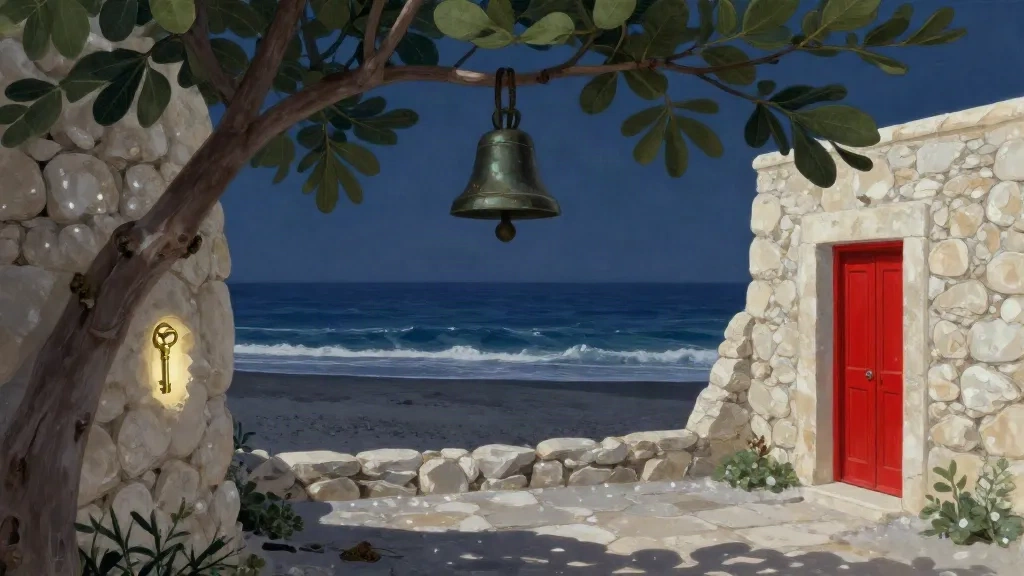
The bell was no larger than a fist, its bronze split by a dark vein. It lay outside the courtyard on Al得了 Street, where a municipal notice had promised drainage that never came. Mara carried it inside and hung it from the fig tree.
She cleared the weeds, repaired the gate, and planted a story in the neglected soil.
When my mother’s boat was lost, the sea gave her back one thing: a key. She said it opened a door for anyone who had nowhere to go.
Mara wrote the story on a wooden sign and fixed it above the courtyard gate. SHELTER FOR STRANGERS sounded too official, so she painted over the words with salt-blued paint and left only the story.
At first nobody came. Children cut across the courtyard to reach the sea. Gulls stole the chalk. Shopkeepers saw only weeds and a bell with a crack.
On the seventh evening, the brass key appeared in the lock of the courtyard door.
Mara had no lock. She had no idea how the key had found its way there.
The Machine That Refused Belief
The machine stood behind the lifeboat house, beneath a tarpaulin striped with rain. It was a brass-and-wood contraption built by a mechanic named Abel Quill, who had died before the flood walls were finished. Its purpose was known only from a faded notice: For the construction of shelters in emergencies.
The machine could turn loose boards, canvas, rope, and fishing nets into a roof, a bench, a door, or a bed. But its gears moved only when no one believed in it.
People brought it scraps and watched it fail. A widow offered it timber and called it a miracle. A boy said it was a rubbish machine. The town laughed, and the machine stayed still.
Mara brought the cracked bell.
“It has brought us a key,” she said.
“Keys open locks,” said the boy.
“Yes,” Mara replied.
That night she left the bell beside the machine and told no one what the courtyard was for. In the morning, the machine had woven fishing nets into a narrow awning. A brass handle gleamed beneath the folds.
The Door in the Wall
Strangers came because the courtyard was open, not because they believed in it. A woman waiting for a bus slept beneath the awning. A boy whose father worked the boats learned to mend nets. An old man repaired the bell, binding its crack with copper wire.
One evening, Mara’s mother’s key turned in the courtyard wall.
There was no visible door, only a seam between two stones. When Mara pressed it, the wall became warm. Through it came the smell of salt, lamp oil, and bread baking in a tin oven. Her mother stood beyond, unchanged by the years.
“I built this for the lost,” her mother said.
“Then why did you leave me?”
Her mother looked through her. “I did not leave you. I left you a place.”
The tide rose behind the sea wall. The courtyard bell began to tremble, but no one rang it. The machine worked quietly in the dark, making another roof from nothing that anyone could name.
At dawn, Mara found a strand of her mother’s hair caught in the key. She planted it beside the fig tree, where the stranger-shelter would grow. The cracked bell finally sounded, a clear note over the rooftops, heard only by those who had arrived with nowhere else to sleep.





