 Netwrck
Science Fiction.
The Blue Suitcase
The monastery sat above a valley where clocks had stopped trusting one another. Farmers opened their shutters according to bellbirds, ferrymen calculated crossings by the blue hour, and government messengers carried two clocks: one for appointments and one for surviving the journey.
Mara carried neither. She carried a library.
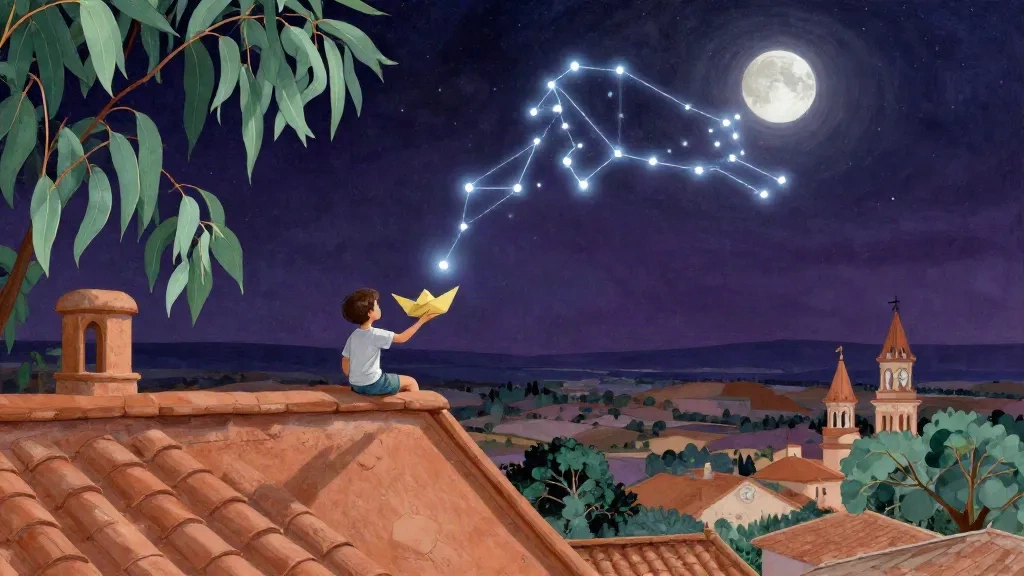
Her suitcase was painted the deep blue of distance before rain. Inside, between waxed maps and narrow shelves, were nine hundred and twelve books, most of them blank until observed at the correct angle. The abbot forbade her to take the collection beyond the eastern wall. Mara left through the western wall, carrying the case beneath one arm and a paper boat in her coat pocket.
In the last book lay a constellation made of two hundred fifty-two points. Mara had copied it from the sky on the night of a storm, though the sky had denied the copy ever afterward. The missing pattern had been removed, she learned, by an astronomer named Ilyan Venn, and hidden in the monastery’s lower observatory.
She intended to return it to the sky.
Living Inheritance
The deadline arrived in a letter written by a hand that trembled but had not yet stopped.
“At the first hour that is not measured by any clock,” Venn wrote, “bring the pattern to the roof. If I am alive, I will explain the theft. If I am dead, the monks will tell you what I omitted.”
Below the signature was a drawing: a wool glove with one finger removed.
Mara found the glove in the archive, folded beside an inventory of instruments. A single left thumb remained, stuffed with lavender. The other fingers were gone. She recognized the glove from the old stories of Venn’s expeditions, though every photograph showed him wearing it.
“He is not dead,” said Sister Anja, who had been appointed keeper of time when the monastery’s regulators disagreed. “He is upstairs.”
They climbed toward the locked western tower. Anja carried no clock, only a red thread tied around her wrist. Mara understood the precaution. Somewhere below them, a clock began to strike thirteen.
The tower door stood open. Ilyan Venn waited beside a telescope turned toward the blank western sky. He was old, alive, and missing his right hand.
“You brought the library,” he said.
“You left the deadline.”
“Deadlines are easier than people. They cannot revise themselves.”
He showed her the glove on the table. Its fingers had been restored, but they were thin as dried stems. “The observatory took them one at a time. Each removed finger measured a different sky.” He glanced toward Mara’s pocket. “You still have the boat.”
She touched the paper boat. “You made it.”
“I made it before the theft. It is the only map that can return a pattern to its place.”
Thirteen Bells
At midnight, the monastery’s clocks stopped. Venn pulled the glove from his hand and held it toward the telescope. The tower filled with the smell of eucalyptus, wet stone, and old wool.
“Place the constellation on the horizon,” he said. “The sky is waiting.”
But the pattern would not hold. Its two hundred fifty-two points blurred whenever Mara lifted the book. The observatory had been built to divide the stars into safe compartments, each chamber storing a different portion of the night. Returning the constellation required opening every chamber at once.
Monks climbed the stairwell. They brought shutters, ledgers, censers, and children who had learned to tell time by hunger. Each carried a piece of the old order. Mara unfolded Venn’s paper boat and used it to hold the book open.
“You were supposed to destroy the pattern,” Venn said.
“You were supposed to die before asking.”
“I was told I would.”
He smiled. It was the first uncareful expression Mara had seen on him.
The monks opened the chambers. A terracotta star appeared in the east. Then a eucalyptus-colored point in the north. The final light formed low above the valley, not as an abstract diagram but as a small animal carrying a lantern in its teeth.
Mara stepped onto the roof with the paper boat in one hand and the wool glove in the other. Venn placed his remaining fingers over hers.
“The deadline is now,” he said.
“I know.”
An Hour Without a Name
She released the constellation.
The stars did not return one by one. They rushed upward, joining the bruised sky with a sound like a thousand clocks agreeing on the same hour. The valley below looked briefly older. Every roof turned the same shade of rust. Every shadow pointed toward the monastery.
When the pattern settled, two hundred fifty-two lights hung where the western sky had been empty. Venn was still beside her, breathing, though older than before. The glove in Mara’s hand had lost its wool, leaving only a paper-thin cuff.
She placed it in the paper boat. “I cannot return the library. Not yet.”
“Keep the empty book,” Venn said. “Someone will need to remember what belongs there.”
At dawn, the country began its slow argument with time. Clocks disagreed more loudly than ever. Mara’s train departed whenever it pleased, and the monastery marked her departure with thirteen bells.
Before boarding, she unfolded the boat and checked its hull. A faint blue stain ran through the paper, shaped like a horizon.
On the seat beside her lay the removed fingers of the glove, each one dusted with stars.





