 Netwrck
Historical Fantasy.
The Door in the Bell Tower
At dawn, Sister Anja folded the monastery’s last official letter and placed it inside her coat. The paper smelled of tobacco, iron, and candle smoke. Outside, the country had no dependable morning: sun could rise behind the mountains while clocks in the valley rang noon, and the tax carts arrived before the previous day’s roads had dried.
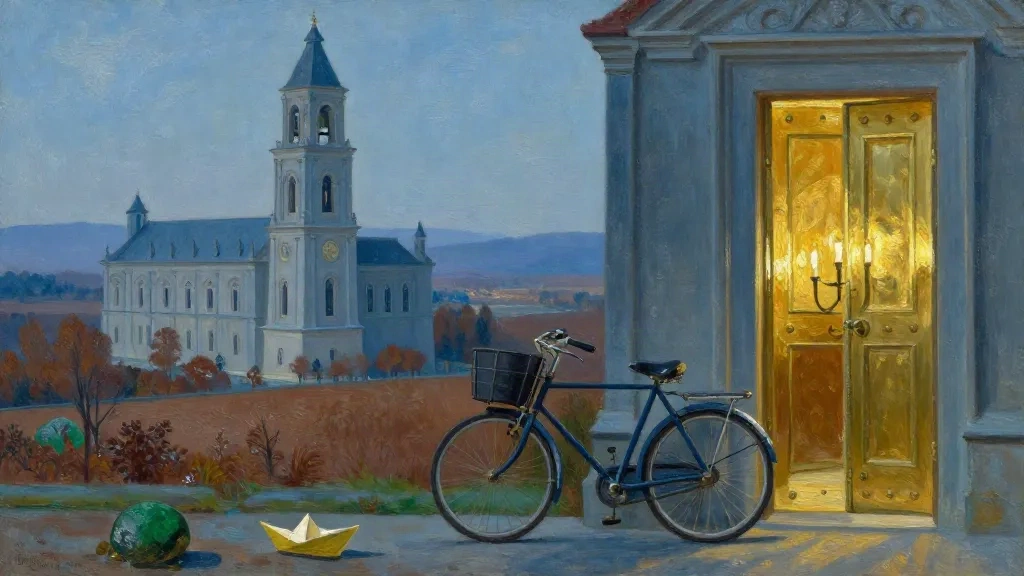
Anja’s bicycle waited beneath the bell tower, its steel-blue frame polished by use. Her predecessor had called it the Closed-Door Bicycle because its thin wheels passed through locked gates, barred stairways, even the wooden doors of the clockmakers’ cells. The trick was useless unless the rider knew which door needed opening, and every letter Anja carried had stopped before reaching its destination.
For three years the monastery had received letters from the future. They arrived without stamps, bearing dates that slid farther ahead: 18 April, 2 June, 19 November. They contained harvests, weddings, wars avoided, names of children not yet born. Then, on the same grey morning, the future ceased.
Anja wanted to know why. She tucked the unopened packet beneath her shirt and pushed the bicycle toward the eastern wall. There, behind a blank stone where no door should be, a narrow brass plate shone with reflected candlelight.
The Treaty of Listening Ground
The wall opened onto a cellar older than the monastery. Barrels lined the floor, their labels faded to tobacco brown. At the center stood a listening chair: oak, high-backed, wired with copper filaments that entered the stone beneath it.
Anja had been told never to use it. The prohibition was older than her vows.
She unfolded the treaty.
The land shall lend its ears to the appointed clockmakers, that no future permitted above ground may be lost beneath the ground.
The paper crackled. Its final clause had been scraped away, then carefully rewritten: The land retains legal permission to listen until the last appointed clockmaker forgets the sound of a bell.
Anja looked at the listening chair. A green stone lay in its seat, polished smooth, veined with darker green. When she touched it, she heard a whisper beneath the cellar floor.
Not a clock. Not a voice.
Paper tearing.
She placed the stone on the floor and the bicycle against the wall. The machine trembled. A door appeared where the earth had been, edged in candlelight.
A Country Behind the Door
Beyond it lay the same valley, but seen from the wrong side of time. Fields hung between seasons. Trees carried autumn leaves beneath their bare winter branches. In the distance, the monastery burned without smoke, its windows filled with black water.
Anja rode.
Doors opened before her: a customs barrier from 1946, a sealed grain store, a room marked in three languages. Each threshold led farther through the country’s hidden hours. People stood behind the windows, writing letters and folding them into paper boats. Their faces were calm. Their hands were empty when released.
At the river, a boy in a grey cap waited beside a paper boat. The boat floated against the current, carrying a green stone.
“You are late,” he said.
“Late for what?”
“The appointment.”
He pushed the boat into her hands. She recognized the paper. It was the missing letter, though every word on it had been washed blank by the river.
At the far bank stood the city’s record office. A clerk opened its doors and displayed a ledger bound in black calfskin.
“The future stopped sending letters,” Anja said.
“No,” the clerk replied. “It stopped believing they would arrive.”
The Last Bell
Anja understood then. The treaty had not preserved the future. It had preserved the land’s authority to listen, and the land had become a vast post office, receiving every message while withholding every answer. The future continued to write because it was permitted. It stopped sending because no promise compelled it.
The clerk offered her a pen. “Sign the amendment. Return the listening right, and the letters resume.”
She looked at the bicycle, the bicycle that crossed doors no one could open. The green stone pulsed in the paper boat.
Anja signed with the paper boat’s saturated bow. The treaty dissolved into pale blue fire. Across the hidden valley, every clock rang once.
The future’s letters began to fall from the sky, striking rooftops and rivers, offices and monastery roofs alike. Anja caught one before it struck the ground. The date was tomorrow. The handwriting was her own.
On the back, in letters still wet with reflected candlelight, she read: You asked why we stopped. We were waiting for permission to begin.
Then the bicycle rolled toward the last closed door, carrying her home.





