 Netwrck
Mythic Fiction.
The Theatre Below the Sand
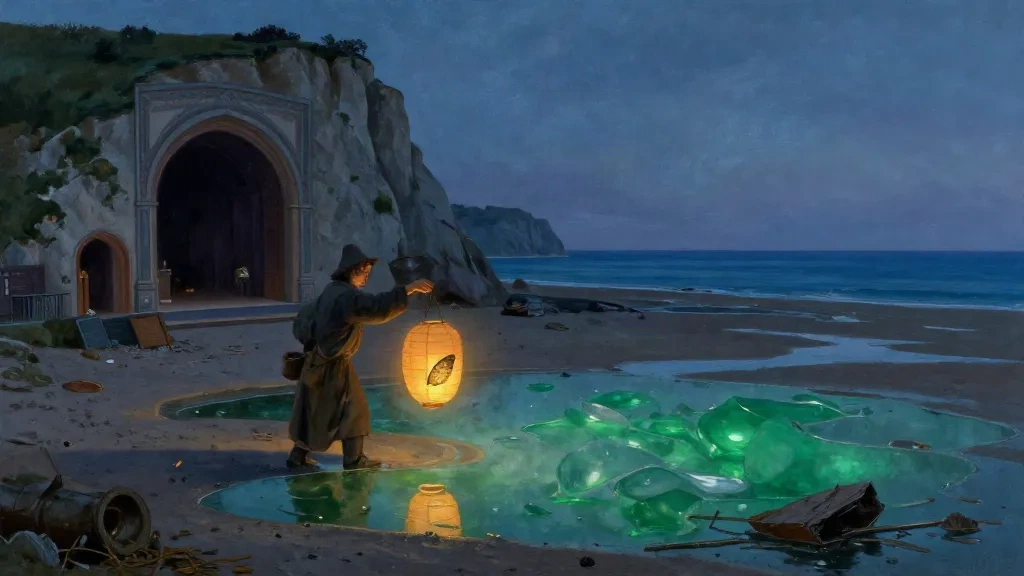
At low tide, the theatre showed its true doors: black arches set into the sea-cliff, their thresholds polished by centuries of wet feet. Above them, the town kept its ordinary houses, chandlers and gull-black roofs. Below, Lio Vale repaired clocks for seasons rather than hours.
His workshop occupied a chamber between the auditorium and the brine. Shelves held winter clocks with blue shadows trapped in their gears, spring clocks wound by sap, autumn clocks that ticked only when rain began. The summer clock was empty. Lio had made it for a year that had not yet arrived.
Each night, the theatre performed tomorrow’s discarded endings. A door opened onto a coronation abandoned before the oath. A balcony held a farewell where neither person had spoken. In the last row sat audiences made of salt, their laughter arriving late.
That night, the curtain rose on an unperformed scene: a girl returning a blue glove to the sea. Lio recognized the glove’s stitching, though the girl’s face remained turned away.
The Wing in the Escapement
After the audience dispersed, Lio found a paper lantern beneath his bench. It was folded flat, damp with seawater, and warm as a living palm. Inside it lay one moth wing, translucent as a scrap of moon. When he touched it, the summer clock began to tick.
The wing belonged to his sister, Mara, who had made lanterns for the theatre’s lost endings. She had vanished nine years before during a storm, carrying a lantern toward the cliff. The town said the sea had taken her. Lio refused that sentence. He wanted to return what she had made to the person who had made it.
He placed the wing in the lantern and opened the clock’s back. A narrow strip of hidden time appeared: the hour Mara had spent inside the theatre, before she carried the lantern away. In that hour, she had chosen not to leave. The choir remembered her differently.
She went north. She went south. She burned. She forgave. She waited.
The voices rose from beneath the stage. They were memories: her laughter, her anger, her mother’s grief, the wet silence after her disappearance. Each voice wanted the same return, but each wanted a different recipient.
The Choir’s Conflicting Gifts
Lio set the lantern on the conductor’s podium. The moth wing lifted itself and became a small white shape against the cobalt shadows.
“Give the wing to the girl,” said the laughter. “She was the one who waited.”
“Give it to the sea,” said the grief. “Only the sea returned her kindness.”
“Give it to me,” said the anger. “I am the only memory that remained honest.”
He asked what each remembered. The laughter said Mara had promised to return before dawn. The grief said she had promised never to return. The anger remembered no promise, only the lantern burning in her hands.
Lio wound the summer clock backward. The theatre rejected the impossible hour. On stage, discarded endings peeled away: a city drowned in bells, a king kneeling before his own name, a child holding a door open forever. The choir sang louder, each memory trying to possess the wing.
Then the paper lantern showed him the truth beneath the conflict. Mara had not been lost to the sea. She had entered the theatre to repair its final discarded ending, an ending in which everyone who made something lost the person who waited for it.
What the Morning Refused
Lio understood then that the lantern had not been lost. Mara had left it behind because she knew he would make the same choice she had: return a thing to its maker, even when the making had been wrong.
He carried the lantern into the auditorium and placed the moth wing at its center. The choir split apart, each voice taking a different memory with it. The theatre fell silent except for one clean tick.
The summer clock began again. Its hands moved through dawn, green light spreading over the cliffs. On the stage, the paper lantern lifted without wind. The moth wing lifted with it, whole at last, and a woman stepped from the discarded ending.
Mara looked older than Lio remembered. Her hands were scarred by hot wire and salt. She looked at the lantern, then at him.
“I made that for you,” she said.
Lio wanted to ask why she had abandoned it, why she had left him with nine years of searching, why every return had become another loss. But the clock struck once, and Mara placed the wing in his palm.
“It was always yours to return,” she said.
The theatre opened its doors. The audience entered carrying tomorrow’s abandoned hours, but no one looked at the stage. Beyond the cliffs, the sea shone sea-glass green, and the paper lantern became a small sun in the cobalt shadow.
Lio closed the summer clock. For the first time, it kept time without asking him to repair it.





