 Netwrck
Science Fiction.
The catalogue of the missing
At dusk, when the eucalyptus trees turned the colour of old coins, Mara Venn found her own name in a catalogue dated three hundred years hence.
She was an archivist of absences, keeper of the city’s municipal memory. Every person possessed a shadow that voted, paid taxes, attended hearings, and entered contracts. Every shadow obeyed its citizen until sunset. Beyond dusk, the city belonged to their darker doubles.
Mara read the entry twice: Venn, Mara. Name withdrawn from the land. No successor.
The glass seed on her desk dimmed at the second reading. A clear sphere the size of a plum, it contained a single red fleck that looked less like a seed than a drop of remembered clay.
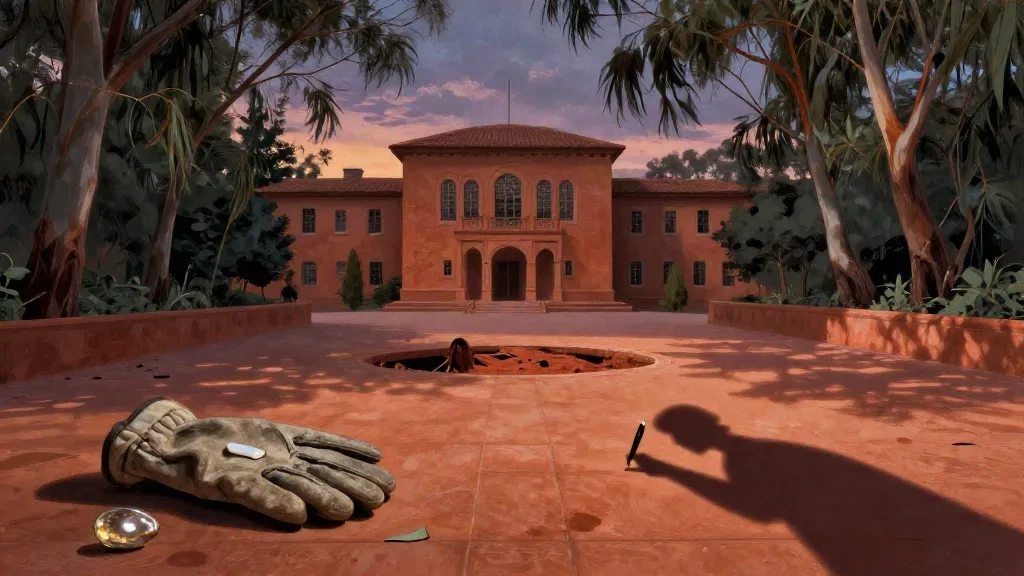
Beside it lay her missing wool glove, its fingers grey with paper dust. The city’s founding records said her family had been granted land in the First Settlement, but the deed was absent. Without a deed, the land had no legal memory of Mara. Without her name in a public archive, she had no legal memory of herself.
A document in borrowed skin
She took the catalogue to the Evening Court, where shadows signed deeds after their citizens went home. The courthouse stood on a terrace of terracotta tiles, its windows reflecting a sky like bruised fruit.
At the final desk sat a shadow made of ink and warm air. It wore a judge’s collar, though no judge remained.
“The archive is closed,” the clerk said.
“The record is active.” Mara placed the catalogue beside it. “I require the original deed.”
The clerk’s hand moved across the page. The pen left letters before its nib touched paper. Mara understood then that the shadow had learned more than countersigning. It could write a name into a document and make the document believe it had always been there.
“Produce your ancestor’s glove,” it said.
Mara felt the wool beneath her coat. The glove had survived a warehouse fire, a flood, and the collapse of her first home. It was the only possession she could prove her family had carried from the First Settlement.
She set it on the desk.
The clerk pressed its fingers into the cloth, then wrote: Consent established.
At that moment, Mara’s shadow detached from her heels. It bowed to the clerk and offered her a pen.
The land refuses the signature
The deed emerged from a wall of files: Venn family, 643 square metres, bounded by a dry river and a garden of silver leaves. Mara knew the ground. She had walked it as a child, though every official sign had been scraped away.
To restore her name, she needed three witnesses. Her old neighbour had forgotten her. The gardener had died before she was born. The river had changed course twice.
Her shadow offered the quickest solution. One signature, it whispered in the courtroom’s dark corners. Sign for the ancestors. Sign for the city. Sign for the land.
Mara almost did. Then she remembered the wool glove’s stiffened fingers, shaped by her mother’s work and no one else’s.
She cut the glove along its seams instead.
Inside its lining she found a narrow strip of red clay, stamped with the mark of the First Settlement: a hand holding a small open door. It was not a signature. It was a covenant, promising that the land would belong to whoever returned it to the forgotten.
Mara laid the clay on the deed. The clerk reached for it, but its hand passed through the wool.
“Consent requires a living witness,” the shadow said.
“The glove was alive,” Mara said. “It carried them.”
What the city remembers
At sunrise, the court opened its doors. Mara placed the glass seed, the clay fragment, and the dismantled glove before the city registrar.
“No living witness,” the registrar said.
Mara opened the seed. Inside, the red fleck unfolded into a small leaf. It had been made from the first seed planted on the settlement, a record kept in matter rather than ink.
When the leaf touched the deed, the courtyard soil began to rise beneath the tiles. Roots lifted the terrace, split the dead riverbed, and pushed up a tree that had been waiting underground for three centuries. Its bark was terracotta. Its leaves smelled of eucalyptus after rain.
The city’s shadows emerged at once. They did not attack Mara. They gathered around the tree, signing its bark with names that had been abandoned, married, translated, or stolen.
The clerk searched the catalogue with a pen that moved too quickly to follow. At last it found a page it had tried to erase.
Venn, Mara. Name restored by witness: the land itself.
Her shadow stepped back to her feet, but no longer matched her shape. One hand remained extended toward the deed.
Mara understood the cost. The city could not keep a name freely given unless someone accepted responsibility for the land that carried it.
So she signed beneath the newly risen tree, using the same hand that had once been empty. The clerk copied the signature exactly, then stamped the deed in red clay.
At sunset, Mara walked through the restored garden. The sky split open like overripe fruit, spilling violet light across the eucalyptus. Behind her, the court clerk closed its books.
On the first page of the new catalogue, beneath her restored name, someone had written:
The land remembers the hand that returns it.





