 Netwrck
Weird Fiction.
The Last Screening
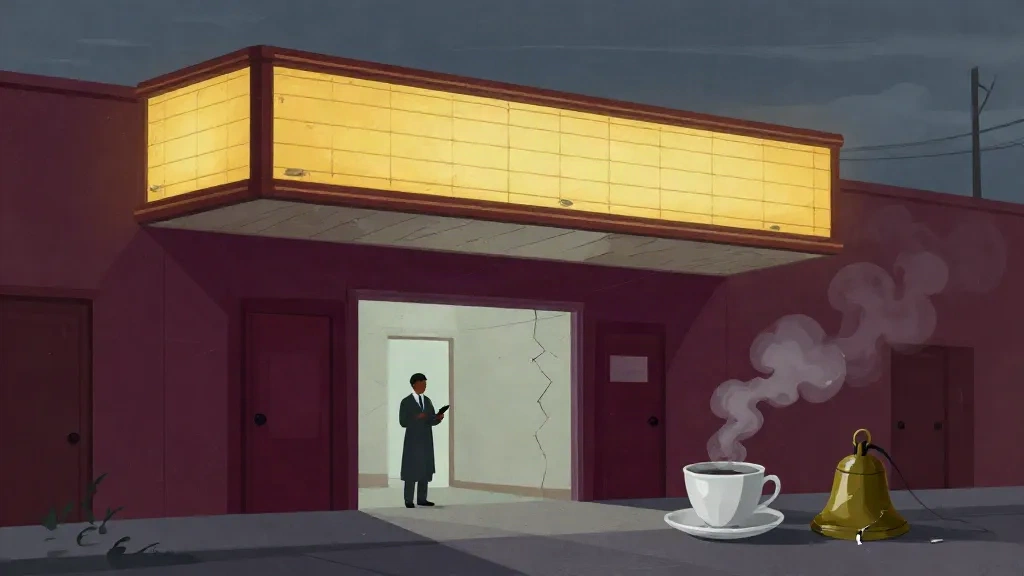
The Orpheum had closed for thirty-seven years, but its marquee still flickered whenever the saffron afternoon tilted toward plum. Mara found the cinema on the first day of her new job, seated behind a desk in a lobby whose carpets had forgotten the shape of footsteps. Every film in the Orpheum showed a future that had almost happened: the bridge surviving its flood, the hospital opening before the epidemic, the town keeping its name after the river changed course.
No one came to the screenings. That was not why Mara accepted the position.
On the desk waited a ledger, a brass key, and one book with no title on its spine. The book opened only for a borrower. Inside were blank pages until the reader spoke one true desire. Then the page filled with a possible address.
Mara wanted a home that accepted impossible residents. She did not say this to the book. She had learned that asking directly made the possibilities nervous.
Borrowers
A ferryman came first, looking for a house that did not vanish when the tide changed. A woman with silver wings asked for a room where her mother could visit without becoming afraid. A boy carrying a shadow shaped like a drowned dog requested a kitchen with enough chairs for everyone who had followed him home.
Mara lent them the same impossible book. She carried it through the lobby, down the sticky stairs, and into the saffron dark. Each borrower returned before midnight, their eyes bright and their hands trembling.
“It showed me a place,” the ferryman said.
“Everyone saw a place,” Mara replied.
That was the arrangement. The book did not open doors. It gave people enough courage to knock.
On a cracked screen, a future flickered: a woman returning to the Orpheum, opening the locked exit, and finding a house behind it. The audience watched in silence. Then the image collapsed into static.
Mara noticed the empty teacup on the usher's stand. It had been there every evening, though the concession stand had been stripped bare. Beside it lay a cracked bell, its mute note trapped inside the fracture.
The Child in the Smoke
One night a child appeared in the third row. No ticket, no shadow. She was perhaps seven, wearing a plum-colored coat and holding a small paper crane.
“You can see it too,” she said.
Mara followed her gaze. Nothing.
“The missing future,” the child said. “Everyone says there isn't one.”
Mara looked at the screen. Beneath the grainy image of a house, she saw a pale door standing in the projection beam. It was the same door shown in the ferryman's future, the winged woman's future, the boy's future. It had been there all along, overlooked by agreement.
“Why can you see it?” Mara asked.
The child lifted the crane. “Because I haven't agreed yet.”
The cracked bell trembled. A drop of smoke-grey air seeped from the bell's split and spread beneath the seats. The emergency lights went out. In the darkness, the empty teacup began to fill with a liquid the color of saffron.
Mara understood then that the cinema had been making the same mistake as the town: everyone had agreed to overlook what could not be admitted.
A Door Behind the Screen
She took the book to the projection booth and opened it for the child. The pages remained blank.
“You must want something,” Mara said.
“I want the people who were overlooked to come home.”
Words appeared, thin as wires: Bring the door out of the picture.
Mara rang the cracked bell. The note it should have made arrived as a gust of warm air, lifting the curtain and striking the screen. The pale door shuddered free of the projection and landed in the lobby with a heavy, impossible weight.
Beyond it was not a house but a hallway. Along the walls, thousands of doors opened. Behind each stood a person, creature, or vanished version of the city who had never belonged anywhere else.
The child walked in first. Mara followed, carrying the book and the empty teacup. The cracked bell rang behind them, each imperfect note adding another room to the hall.
By dawn, the Orpheum had no seats left. The neighborhood had stopped agreeing to overlook its impossible residents, and the future that had almost happened was no longer almost.
It was simply home.





