 Netwrck
Fantasy.
Tomorrow’s Discarded Endings
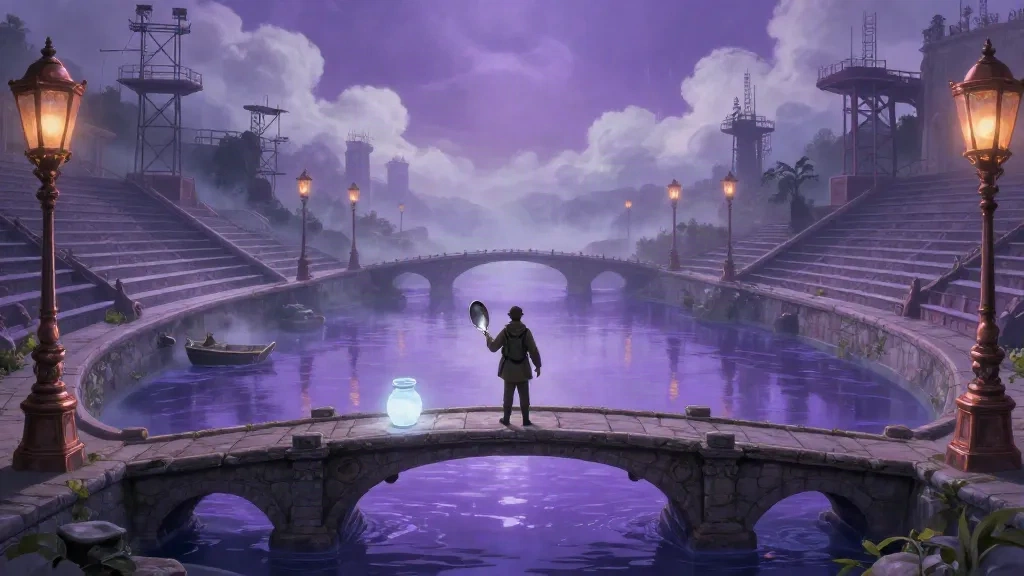
At violet dusk, Mara Venn carried a silver spoon to the theatre and balanced it on the river running beneath its stage. The water was not the ordinary river. It passed through the flooded auditorium in a bright, impossible channel, then emerged behind the scenery smelling of rain, burnt paper, and endings no audience had wanted.
For eleven years Mara had surveyed that moving surface. She measured emotion as others measured depth: with weighted threads, copper markers, and a private ledger kept beneath her coat. Longing moved east. Apprehension clung to eddies. Grief ran deep, but only where the current divided.
The theatre performed tomorrow’s discarded endings. On one night a queen surrendered her kingdom. On another, the sea withdrew and never returned. The actors spoke the lines that had been rejected before dawn, while the river carried away whatever those versions had cost.
Every seventh night, after the doors closed, Mara took a silver spoon from the prop cupboard and walked the channel alone. She placed the spoon on the water. If it turned upstream, someone in the theatre had lied. If it circled, someone had changed their mind. If it sank, someone had begun to grieve without admitting it.
Her ritual had never appeared in a play. Mara wanted it to become the theatre’s opening act: the hour when strangers watched one another’s feelings move beneath the floorboards.
The Record in the Current
On the night she planned to speak to the director, the spoon stopped moving.
It hovered above a bridge that was not there. Mara saw its arches form in the violet reflection, first as wavering lines and then as stone darkened with age. Oxidized copper lanterns hung from its rails. Beneath them, names turned like leaves in the current.
She lowered the thread. It struck bottom, though the theatre channel had never been deep enough to require a sounding line. The river carried records of every bridge ever built: not the builders’ plans, but the promises made while crossing. Husbands and thieves. Refugees and armies. Children carrying bread home. The bridge preserved every departure, every arrival, every promise that had either held or fallen.
A second bridge appeared beside the first. Then a third. Their reflections multiplied until the channel was crowded with impossible spans.
Mara pulled up the line. The silver spoon spun once and pointed toward the stage.
On the boards stood a woman in a travel coat, holding a salt jar sealed with wax. Mara recognized her own mother, though the woman wore a face from no portrait. Beside her waited a ferryman with empty hands.
“You promised not to cross after midnight,” the ferryman said.
“I promised to come back before dawn,” Mara replied. The distinction had seemed sufficient when she was nine years old and grieving.
A Public Kind of Grief
The director refused to schedule the ritual. Performers complained that the river had begun reflecting unfinished scenes from their lives. Stagehands found copper filings in their pockets, each stamped with a date that had not yet arrived.
Mara opened the theatre early. She filled a plain jar with river salt, the coarse white crystals gathered where the water met the walls. Beside it she set the silver spoon. She intended to pour a line between them, making a boundary no actor could cross without admitting what they carried.
Instead, the bridges rose.
They burst through the stage in showers of mineral light, each span joining the theatre to another place: a flooded market, a mountain road, a city under cloud-white snow. Voices rose from them. Some begged forgiveness. Some repeated names. Some laughed as if crossing were the easiest thing they had ever done.
Mara climbed onto the central bridge. The river surged beneath her, dense with all the things people had called temporary. Her mother’s ferry appeared below, still waiting.
Mara held up the salt jar. The theater filled with the hush that comes before a decision made in public.
Then she offered the jar to the nearest stranger.
The First Crossing
The stranger caught it without asking what it contained. A woman in a copper hood broke the wax and scattered one pinch over the bridge. The salt glowed cloud-white, revealing every hidden footprint.
Others followed. A child took the spoon. An old actor carried the jar. They crossed from one unfinished ending to another, leaving the river to record not the bridges they might have built, but the bridges they had built in full view.
By dawn, the theatre had a new opening. Mara stood before the audience without a ledger, without a measuring thread, and without her mother.
On the last bridge, the ferryman raised one hand. The woman in the travel coat did the same. They did not cross. They simply watched Mara step onto the boards.
The river closed behind her with the sound of a spoon turning once against the current. Mara understood then that a map was not a promise to arrive safely. It was a record of what the crossing had asked of you.
Outside, violet dusk deepened over the copper roofs. The theatre opened its doors, and the water began performing again.





